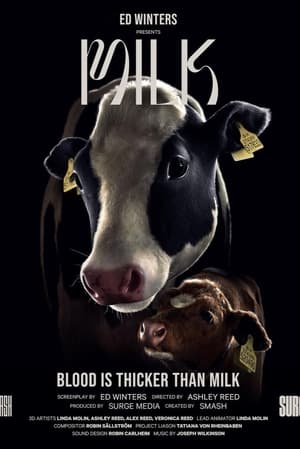
What we show in Milk is literally the best of the best when it comes to dairy farming, yet, as soon we view what happens from the perspective of the mother cow, it becomes clear that this is an industry that runs on the exploitation and suffering of animals. By using animation, we are able to show a unique perspective and tell the story of the mother cow in a way that cannot be done from investigative footage alone. Milk centres the cow as the protagonist of her own story and allows us to view what is happening to her from an up close and personal perspective. Organic, free-range, high-welfare, humanely raised. It doesn’t matter what label we put on dairy products, all dairy cows are victims of an industry that forcibly impregnates them, takes their babies from them, exploits their bodies and then sends them to a slaughterhouse to cut their throats. It's time to end the dairy industry.
St James's in London is renowned for being Britain's poshest high street. We meet the characters who run the stores, and the customers who buy their premium products.
Gilles Groulx's first film shot in 1955 with a camera borrowed from his brother and edited during his spare time when he worked as an editor at the Radio-Canada news service a few years before he joined the NFB. Silent film, presented as its author left it, where the soil and the dialectic of Groulx's work are already there: documentary realism, the social space to be explored, daily life, the relationship between individual and society, social disparities, the consumer society, seduction and happiness.
Gimme Green is a humorous look at the American obsession with the residential lawn and the effects it has on our environment, our wallets and our outlook on life. From the limitless subdivisions of Florida to sod farms in the arid southwest, Gimme Green peers behind the curtain of the $40-billion industry that fuels our nation's largest irrigated crop-the lawn.
A docudrama on the closing of the town of Schefferville. When Raoul loses his job at the mine because the operations are ending, he's been settled there for ten years with Carmen and their son. They're now forced to leave the town, leaving behind the traces of an ephemeral prosperity.
A serious docu-comedy about the commercialization of Christmas. What Would Jesus Buy? follows Reverend Billy and the Church of Stop Shopping Gospel Choir as they go on a cross-country mission to save Christmas from the Shopocalypse: the end of mankind from consumerism, over-consumption and the fires of eternal debt!
A Eurovision singer, Iceland's strongest woman, a male model, a plumber who wants to direct movies. They all work in the shopping mall that this documentary focuses on ... most of them want to get out, even just to the bigger mall down the road.
A young woman, who has inherited her grandparents' huge house, a fascinating place full of amazing objects, feels overwhelmed by the weight of memories and her new responsibilities. Fortunately, the former inhabitants of the house soon come to her aid. (An account of the life and work of Fernando Fernán Gómez [1921-2007] and his wife Emma Cohen [1946-2016], two singular artists and fundamental figures of contemporary Spanish culture.)
A symphonic journey into our obsessive consumption. The many objects we accumulate begin their production journey in silent secluded industrial site where borderline men work in isolation without any interference. These men trigger, unconsciously, the long chain of creation, transport, commercialization and destruction of the objects feeding our bulimic lifestyle.
Las Preguntas que Perdimos
Julia always said that her upbringing as a biological child in a foster family was a happy time. But something is wrong. In The Foster Family, we follow director Julia's journey back in time, where she, together with her parents Ewa and Lennart and the foster child Patrik, recollect the shocking events that changed their lives over thirty years ago. The children are at the center of this strong, touching and warm documentary about a system where you can love, but not too much.
Viva I Romantici: Il Sogno
Record high oil prices, global warming, and an insatiable demand for energy: these issues define our generation. The film exposes shocking connections between the auto industry, the oil industry, and the government, while exploring alternative energies such as solar, wind, electricity, and non-food-based biofuels.
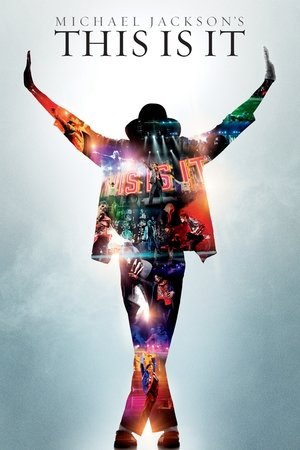
A compilation of interviews, rehearsals and backstage footage of Michael Jackson as he prepared for his series of sold-out shows in London.
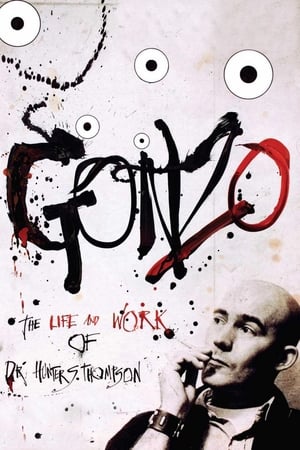
Fueled by a raging libido, Wild Turkey, and superhuman doses of drugs, Thompson was a true "free lance, " goring sacred cows with impunity, hilarity, and a steel-eyed conviction for writing wrongs. Focusing on the good doctor's heyday, 1965 to 1975, the film includes clips of never-before-seen (nor heard) home movies, audiotapes, and passages from unpublished manuscripts.
The history of arguably the most famous shop in the world, which has been based on Brompton Road in London for more than 175 years, employs more than 6,000 people and still welcomes 15 million customers every year. This documentary tells the story of the people behind the department store, including Robin Harrod, the great-great-grandson of the store's founder, and culminates with the recent allegations against former chairman Mohamed Al-Fayed
Then, now, where? how?
Told mostly in flashbacks, the film tells the story of Pamela Digby Churchill Hayward Harriman, one of the greatest and probably most famous courtesans of the twentieth century. While not showing her childhood, first marriage to Winston Churchill's son, or most of her affairs, we do get to see her affair and eventual marriage to Broadway producer Leland Hayward, and then her marriage to politician Averell Harriman, with whom she had an affair while both were married to others in World War II. We also see her as ambassador to France during her last years, and her death in 1997. While some (mostly her lovers) adored her, others (mostly her son and her husbands' children) hated her.
Swedish documentary film on consumerism and globalization, created by director Erik Gandini and editor Johan Söderberg. It looks at the arguments for capitalism and technology, such as greater efficiency, more time and less work, and argues that these are not being fulfilled, and they never will be. The film leans towards anarcho-primitivist ideology and argues for "a simple and fulfilling life".
The film spotlights the soaring success of Barbie, with sales of three hundred thousand dolls in the first year, to over two billion before Ruth Handler died. The enormous financial rewards for both multi-millionaire parents are exposed, and this leads to a surprising story of betrayal, sex, drugs and excessive partying.