Roger Boussinot directed this episode of the French television show Italiques, which features an overview of the art and career of Fantastic Planet illustrator Roland Topor. It aired on August 8, 1974.
A remarkable walk through the life and work of the French artist Marcel Duchamp (1887-1968), one of the most important creators of the 20th century, revolutionary of arts, aesthetics and pop culture.
Ester Hernandez, winner of the San Francisco Foundation 2004 Community Leadership Awards (Helen Crocker Russell Award) - for fostering community and raising social consciousness through her groundbreaking art, for her work with Creativity Explored, and for inspiring and mentoring the next generation of artists.
Zakarya Diouf, winner of the San Francisco Foundation 2005 Community Leadership Awards (Helen Crocker Russell Award) - for his vision in unifying the African cultural arts community, for serving as a mentor and educator of young artists, and for his artistic contributions to the development of African-based performing arts.
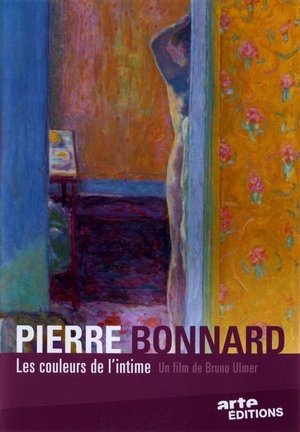
The tender and tragic love story of French painter Pierre Bonnard and his wife and lifelong model Marthe. The artist recorded their relationship on canvas and, 50 years after his death, these paintings have established him as one of the masters of colour and light.
Exhibition on Screen's latest release celebrates the life and masterpieces of Hieronymus Bosch brought together from around the world to his hometown in the Netherlands as a one-off exhibition. With exclusive access to the gallery and the show, this stunning film explores this mysterious, curious, medieval painter who continues to inspire today's creative geniuses. Over 420,000 people flocked to the exhibition to marvel at Bosch's bizarre creations but now, audiences can enjoy a front row seat at Bosch's extraordinary homecoming from the comfort of their own home anywhere in the world. Expert insights from curators and leading cultural critics explore the inspiration behind Bosch's strange and unsettling works. Close-up views of the curiosities allow viewers to appreciate the detail of his paintings like never before. Bosch's legendary altarpieces, which have long been divided among museums, were brought back together for the exhibition and feature in the film.
The Kabul National Museum, once known as the "face of Afghanistan," was destroyed in 1993. We filmed the most important cultural treasures of the still-intact museum in 1988: ancient Greco-Roman art and antiquitied of Hellenistic civilization, as well as Buddhist sculpture that was said to have mythology--the art of Gandhara, Bamiyan, and Shotorak among them. After the fall of the Democratic Republic of Afghanistan in 1992, some seventy percent of the contents of the museum was destroyed, stolen, or smuggled overseas to Japan and other countries. The movement to return these items is also touched upon. The footage in this video represents that only film documentation of the Kabul Museum ever made.
Through interviews and guerilla footage of graffiti writers in action on five continents, the documentary tells the story of graffiti from its origins in prehistoric cave paintings thru its notorious explosion in New York City during the 70’s and 80’s, then follows the flames as they paint the globe.
GUDISAI is an inspiring indie musical documentary that chronicles the vibrant journey of aspiring artists in the open mic scene. Set against the backdrop of Chennai's thriving music culture, the film captures heartfelt performances, personal struggles, and the transformative power of creativity. Through a series of candid interviews and electrifying live sessions, GUDISAI showcases the resilience and passion of musicians as they navigate their paths from rejection to success, highlighting the importance of community, art, and self-expression. Join us in celebrating the raw talent and unwavering spirit of indie artists as they take the stage and share their stories.
This retrospective exhibition gives brilliant insight into the artist’s work of the last 4 decades. Credit for this highly sensitive selection of Morris’ work goes to Rosalind Krauss, who curated the exhibition. We invited artist and curator to come back to the Guggenheim Museum for a second look at the exhibition. The filmed walk-through gives a vivid sense of the artist’s progress and documents the views of the artist and Rosalind Krauss, one of the most significant critics of our time.
The video revolution of the 1970s offered unprecedented access to the moving image for artists and performers. This Is Not a Dream explores the legacies of this revolution and its continued impact on contemporary art and performance. Charting a path across four decades of avant-garde experiment and radical escapism, This Is Not a Dream traces the influences of Andy Warhol, John Waters and Jack Smith to the perverted frontiers of YouTube and Chatroulette, taking in subverted talk shows and soap operas, streetwalker fashions and glittery magic penises along the way.
The film follows Postcommodity, an interdisciplinary arts collective comprised of Raven Chacon, Cristóbal Martinez and Kade L. Twist, who put land art in a tribal context. The group bring together a community to construct the Repellent Fence, a two-mile long ephemeral monument “stitching” together the US and Mexico.
Narrated by Uncle Jack Charles and seen through the eyes of Indigenous prisoners at Victoria’s Fulham Correctional Centre, this documentary explores how art and culture can empower Australia's First Nations people to transcend their unjust cycles of imprisonment.
400 years ago, in Japan, a revolutionary art was born and would influence the greatest Western artists of the late nineteenth century, the Ukiyo-E "floating images of the world." A wonderful trip in a world of beauty and discovery. The concept and objectives of this documentary are, on the one hand, to show, teach and discover Japanese art (Japanese stamps and prints) and, on the other hand, to demonstrate the influence of Japanese stamps on Western modern art, showing in comparison some of the Most famous paintings (impressionism or paintings by Van Gogh).
Admirers of Lawren Harris, founding member of the iconic Group of Seven, discuss his paintings and his place in the pantheon of Canadian artists.
This documentary deals with the great injustice and pain caused by anti-personnel mines and demands the urgent need for all the countries involved to sign the demining protocols. The short begins with a 24-hour isolation carried out by the author in a hole/crater in the middle of the desert to empathy with the Saharawi people, from there progressively through their commitment and coexisting for getting close to the reality of the victims of antipersonnel mines and their everyday live. Denunciations and wishes of this people who have suffered a hard exile are verbalized. In parallel, the author is interviewing, listening, sharing and designing an ingenuity that he is building to exploit the mines. The melphas (costume of the Sahrawi woman) make up the sail that moves the wheels that trace with phosphate powder the path with the word FREE and end up exploiting the mine, to show the inhuman damage it cause. A call for peoples to sign demining protocols urgently.
Conceptual visual artist Ján Mančuška died in 2011. However, in his short 39 years of existence, he managed to create a number of remarkable works, many of which have been exhibited in renowned galleries around the world – including the Centre Pompidou in Paris and MoMA in New York. In his homeland, however, his work reflecting everyday life, social reality or the meaning of language has never achieved comparable fame. Together with the children of an artist who was not afraid to confront the public with the question of the meaning of art, the director embarks on a journey that aims not only to get closer to Mančuška, but also to reveal him in hitherto unrecognised shades, thus filling in the gaps that are increasingly appearing in the context of the fading memory of his personality.
Discover the extraordinary life and art of John Craxton in this captivating documentary feature. From early success with Lucian Freud to his vibrant years in Greece and Crete, Craxton’s bold, colorful paintings mirrored his passionate personal life and relationships with icons like Lee Miller and Margot Fonteyn. This film unveils how his artistic genius and unconventional lifestyle cemented his legacy as one of the most celebrated English artists of the 20th century.
Ron Padgett (1942- ) is a poet and editor whose artistic career took off during his teenaged years in Tulsa, Oklahoma. There, along with Joe Brainard and Dick Gallup, he produced The White Dove Review, an art and culture magazine. Both Padgett and Brainard serendipitously moved together to New York City, where Padgett studied at Columbia University under the tutelage of Kenneth Koch and interacted with various Beat poets. He has taught poetry at various schools in the City, edited volumes such as the Full Court Press and Teachers & Writers Magazine and written volumes of poetry including 2013’s Collected Poems which won the Los Angeles Times Book Prize. He also wrote “memoirs” of both Brainard and fellow Tulsan Ted Berrigan.