William Hart McNichols is a world renowned artist, heralded by Time magazine as "among the most famous creators of Christian iconic images in the world". As a young Catholic priest from 1983-1990 he was immersed in a life-altering journey working as a chaplain at St. Vincent's AIDS hospice in New York city. It was during this time that he became an early pioneer for LGBT rights within the Catholic church. "The Boy Who Found Gold" is a cinematic journey into the art and spirit of William Hart McNichols. The film follows his colorful life as he crosses paths with presidents, popes, martyrs, and parishioners, finding an insightful lesson with each encounter. McNichols' message as a priest, artist and man speaks to the most powerful element of the human spirit: Mercy.
Through interviews with key AIDS Healthcare Foundation (AHF) stakeholders from over the years coupled with archival video footage culled from AHF's 30 years of advocacy, care and activism, 'Keeping the Promise' tells a compelling story of AHF's history while offering a glimpse of, and road map to its future.
With his soaring falsetto and magnetic yet understated stage presence, Jimmy Somerville burst onto the 1980s new wave scene, making the world dance to songs rooted in struggle and resilience. From the harsh realities of Glasgow’s working-class neighborhoods to the challenges of growing up gay in a hostile world, and the devastating impact of the AIDS crisis, Somerville transformed pain into anthems of freedom. First with Bronski Beat, then The Communards, and later as a solo artist, he became both rebel and diva—the unmistakable voice of a generation fighting for equality. Through intimate stories from those who have stood by him for four decades, this portrait reveals a rare artist who has never wavered in his convictions.
German iconoclast filmmaker and gay-rights activist Rosa vonPraunheim examines his own life and career in the documentary Phooey Rosa! With a quickly paced editing style, the film is a mix of personal banter, candid interviews, and clips from his filmography. It also includes footage from his early film Bed Sausage to his later work Neurosia. At the age of 60, vonPraunheim reveals intimate details about his past relationships and his childhood growing up after WWII. He also implicates some of his friends and inspirations, including Luzi Kryn and Rainer Kranach.
In 1992, at the height of the AIDS pandemic, activist Terence Alan Smith made a historic bid for president of the United States as his drag queen persona Joan Jett Blakk. Today, Smith reflects back on his seminal civil rights campaign and its place in American history.
Voices of Positive Women is a ground-breaking documentary examination of the impact of HIV and AIDS on the lives of women working from material published in the book "Positive Women", a collection of personal accounts of women from all over the world living with AIDS and HIV. Bravely sharing their experiences publicly in what until now has been a void of information and support, and in some cases medical and bureaucratic denial that women are even at risk, the nine women presented in Voices of Positive Women speak compellingly on their own terms of their personal struggles for survival and voice.
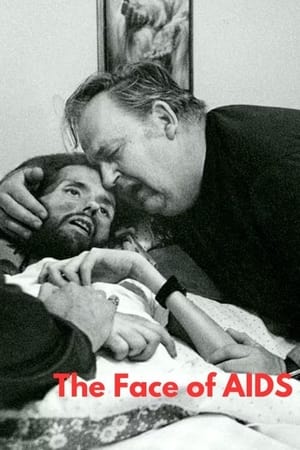
One of the earliest documentaries to deal with AIDS.
A revolutionary trans HIV+ sex worker manifesto.
Outraged by the controversial January, 1988 article in Cosmopolitan magazine, the women in the AIDS Coalition to Unleash Power, (Act Up, New York), organized the first AIDS demonstration focused on women. Doctors, Liars and Women:AIDS Activists Say No To Cosmo not only documents the efforts of the Women's Committee to organize this protest, it also serves as a how-to-guide for direct action.
An artist leads his Infection Procession to the water.
Documents 18 months in the lives of three crack addicts in Lowell, Massachusetts.
Join stars Paula Abdul, Luke Perry, Sinbad, Pauly Shore, Jaleel White and many, many more as they take an entertaining, music-filled and honest look at HIV and AIDS. You'll get all the latest facts, important dos and don'ts, and you'll meet some wonderful people. Co-hosts Arsenio Hall and Earvin "Magic" Johnson even hit the court for a little one-on-one, and then take "time out" for an informative heart-to-heart! For people who already know about HIV and AIDS, and for those who don't, TIME OUT is a video you can't afford to miss.
As a child, Michael Stock was sexually abused - by his own father. 25 years later he is still looking for inner peace. In conversations with his family and friends and his own reflections, he paints an ever clearer, if contradictory picture of what happened and of the consequences for each of the family members. Old family films seem to show a happy family - excerpts from Michael's first feature film hint at his extreme adult life, overshadowed by his lifelong trauma. Yet in spite of the intense drama, the film doesn't have an atmosphere of anger and hatred but rather a surprising air of hope and love of life. Michael's aim is not to accuse the "perpetrator" but to understand. In the end, he takes his video "Postcard" to his father. With the camera running, he confronts him with his past.
Made during the last months of actor Kurt Raab, who died of AIDS in 1988. Raab, who had worked in both theatre and film, most notably with Fassbinder, was in the process of making a series of video sketches for a new production when he learned that he had AIDS. Despite his deteriorating health, and with the caring support of his friend Hans Hirshmuller, he carried on working. This tape is his last testimony.
In this intimate portrait addressed directly to Hélène Hazera, filmmaker Judith Abitbol revisits a key figure of France’s countercultures from the late 1960s to the 1990s. A member of the Gazolines and the FHAR (Homosexual Front for Revolutionary Action), Hazera was a tireless LGBTQ activist who founded Act Up’s Trans and AIDS commissions—one of her proudest achievements. Her true victory, however, was becoming the first transgender journalist at a major national newspaper (Libération), and later a producer at Radio France and France TV. Through her story, Abitbol reconnects with the insurrectionary spirit and creative chaos of those decades—an era when French culture was shaken by radical imagination, humor, and defiance. The film celebrates these modern Antigones who dared to live their desires beyond the reach of any law.
Tsai interrupted his pre-production for The River to make this pioneering documentary for Taiwan's nascent AIDS-awareness campaign. Ignoring instructions to 'play down the gay angle', he centres the film on his own very candid conversations with two HIV+ young men. Sadly the identities of the interviewees have to be concealed, and so the freewheeling camerawork focuses most often on Tsai himself; but the sense of rapport between the director and his 'new friends' is palpable and very moving, even to Western viewers already only too familiar with these issues.
This follow-up to the 1989 documentary ONE YEAR IN A LIFE OF CRIME revisits three of the original subjects in New Jersey during a five-year period in the 1990s. We share in their triumphs and setbacks as they navigate lives of poverty, drug abuse, AIDS, and petty crime.
Freddie Mercury (1946-91) was not just a man with one of the most pure and amazing voices the world has heard, but he was also the lead singer for Queen, the most enthusiastic rock band in history.
Natural. Rock star. Outsider. In the 80s, race car driver Tim Richmond lived his life the way he raced cars – wide open. Born into a wealthy family, Richmond was the antithesis of the Southern, blue-collar, dirt-track racers who dominated NASCAR. He also was a flamboyant showman who basked in the attention of the media and fans – especially female admirers. Nevertheless, it was Richmond’s on-track performances that ended up drawing comparisons to racing legends. And in 1986, when he won seven NASCAR races and finished third in the Winston Cup series points race, some believed he was on the verge of stardom. But soon his freewheeling lifestyle caught up to him. He unexpectedly withdrew from the NASCAR racing circuit, reportedly suffering from double pneumonia. In reality he had AIDS. Richmond returned to the track in 1987, but he was gone from the sport by the next year as his health deteriorated. He spent his final days as a recluse, dying on August 13, 1989, at the age of 34.
A documentary juxtaposing the events of the 20th century with the commentary of stand-up comedians.