An account of the life and work of the multidisciplinary Spanish artist Mariano Fortuny Madrazo (1871-1949), textile and fashion designer, set designer, photographer, painter and engraver, known as the Leonardo Da Vinci of the 20th century.
In 1940, the German artist Charlotte Salomon (1917-43) undertook an extraordinary artistic adventure, during which she combined painting, text and music: in only eighteen months, she painted more than a thousand paintings. In 1943, she was arrested by the Nazis and sent to the Auschwitz extermination camp.
Hugues Aufray, l'éternel jeune homme
The official solutions to the treasure hunt "On The Trail Of The Golden Owl" - the second longest treasure hunt ever organized - which has captivated thousands of researchers for over thirty years.
Albert Camus died at 46 years old on January 4, 1960, two years after his Nobel Prize in literature. Author of “L'Etranger”, one of the most widely read novels in the world, philosopher of the absurd and of revolt, resistant, journalist, playwright, Albert Camus had an extraordinary destiny. Child of the poor districts of Algiers, tuberculosis patient, orphan of father, son of an illiterate and deaf mother, he tore himself away from his condition thanks to his teacher. French from Algeria, he never ceased to fight for equality with the Arabs and the Kabyle, while fearing the Independence of the FLN. Founded on restored and colorized archives, and first-hand accounts, this documentary attempts to paint the portrait of Camus as he was.
Czech painter and illustrator Alphonse Mucha (1860-1939) ranks among the pioneers of the Art Nouveau movement at the end of the 19th century. Virtually overnight, he becomes famous in Paris thanks to the posters that he designs to announce actress Sarah Bernhardt’s plays. But at the height of his fame, Mucha decides to leave Paris to realize his lifetime project.
Jérôme was sexually abused as a child by a priest. In a deeply personal film, he tries to search for clues in his memories and come to terms with the complicity of his former social environment.
For ten years, Raymond Depardon has followed the lives of farmer living in the mountain ranges. He allows us to enter their farms with astounding naturalness. This moving film speaks, with great serenity, of our roots and of the future of the people who work on the land. This the last part of Depardon's triptych "Profils paysans" about what it is like to be a farmer today in an isolated highland area in France. "La vie moderne" examines what has become of the persons he has followed for ten years, while featuring younger people who try to farm or raise cattle or poultry, come hell or high water.
This documentary about legendary French chanteuse Edith Piaf begins at her birth (which was helped along by a cop), travels through her turbulent romantic history, follows her to the pinnacle of her success and reports on her death. Piaf was queen of the torch song, her plaintive wail speaking volumes of the tragedy and joy she'd faced. Hers wasn't exactly, in the words of one of her famous songs, "La Vie En Rose," but it was quite a life.
A tribute to Italian filmmaker Sergio Corbucci (1926-90), presented by American filmmaker Quentin Tarantino.
I AM RAQUEL WELCH is a feature documentary that celebrates the life of a trailblazing actress and single mother who not only redefined the world's idea of a Hollywood "Sex Symbol," but also led the way for modern-day action heroines.
Aristide Gagnon... le huitième jour
Marco Paolini interviews Luigi Meneghello about growing up under fascism, his involvement with the Italian resistance movement, his later self-exile, acclaimed literary work and its relationship with dialect.
With a maddening sensuality, the unforgettable actress of the film "A Special Day" embodies the golden age of Italian cinema. From the suburbs of Naples to Hollywood, this biographical documentary looks back at the flamboyant career and destiny of Sophia Loren.
Zénon is the hero of “The Abyss”, the famous novel by Marguerite Yourcenar published in 1968. He is also the main character in André Delvaux’s film, played by Gian Maria Volonte, for the movie adaptation of the same book in 1988. But what does Zénon represent for us today, and what has become of him? How can this entirely fictional philosopher, doctor, alchemist and inventor from the Renaissance help us understand the era in which he lived as well as our own in these uncertain times? This is what this documentary sets out to do.
For years, artist Drew Friedman has chronicled a strange, alternate universe populated by forgotten Hollywood stars, old Jewish comedians and liver-spotted elevator operators. Drew Friedman: Vermeer of the Borscht Belt is an in-depth documentary tracing artist Friedman's evolution from underground comics to the cover of The New Yorker. The film, directed by Kevin Dougherty, features interviews with Friedman's friends and colleagues, including Gilbert Gottfried, Patton Oswalt, Richard Kind, Mike Judge, Merrill Markoe and many others.
Documentary about war photographer James Nachtwey, considered by many the greatest war photographer ever.
A captivating portrait of French actor Michel Piccoli, who has worked with the greatest filmmakers of his time and has built a dazzling career of remarkable merit and success, focusing on his work during the 1970s and his professional relationship with Claude Sautet, Romy Schneider, Marco Ferreri and Luis Buñuel.
The documentary Felipe González approaches some of the most important facets and stages of the Andalusian politician's life, before becoming President of the Government of Spain: his early years, his high school studies at the school of the Claretian Fathers in Seville, his years in the Catholic Action University Youth and the Catholic Workers' Youth, his entry into the Spanish Socialist Workers' Party (PSOE).
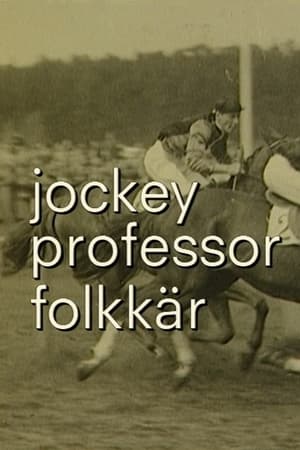
The well known host and entertainer, but also an eccentric who enjoyed reveal parts of himself on live TV. Behind Sten Broman's colorful costumes and his comic academic comments, there was a complicated picture hidden.