The Isle of Mull is one of the UK's largest islands, located in the Inner Hebrides, and is home to one of the largest Eurasian otter populations in Europe. This documentary delves into the intricate relationship shared between this fascinating species and humans - through several sequences, each offering a different perspective.
Animals and plants play an important role in the Christian festival. This documentary answers questions about the natural history of Christmas: How are the descendants of the biblical donkey doing? How do Santa's reindeer survive the winter? And what does the robin have to do with all this? Adventurous stories set in dreamlike landscapes around the world.
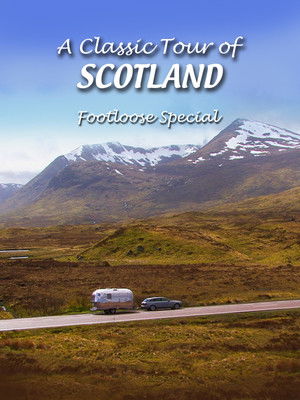
A spectacular feature-length travelogue of many of the best parts of Scotland. Hosted by UK filmmakers Debra Rixon and cameraman husband David, touring with their vintage Airstream travel trailer: Glasgow, Stirling Castle, Loch Lomond, Glencoe, a motoring tour and hike on the Isle of Skye, Loch Ness, Urquhart Castle, Inverness. Ends with a visit to Edinburgh, Castle, and the Royal Yacht Britannia.
Author Helen Macdonald follows Britain’s greatest river over four seasons, encountering salmon, beavers and the microscopic creatures helping to answer science's biggest questions.
Looks at the baobab trees that grow in the dry bush country of Africa and shows the ecosystem created by them.
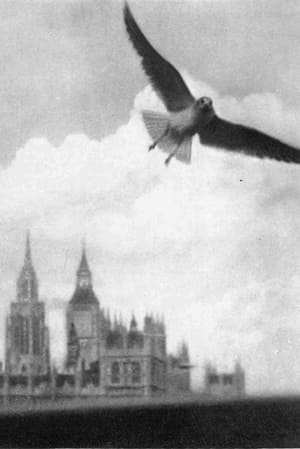
The film takes us to the North of England to follow the migration of the black-headed gull down to London. There, the narrator asks viewers to "listen to their gossip", before demonstrating the bird’s flight in slow motion. We see a polecat feasting on gull eggs, and then a man collecting the eggs for human consumption, with the film telling us that they are considered a “delicacy” in London. Indeed, according to the British Trust for Ornithology, around 300,000 gull’s eggs were sold every year in Leadenhall Market in London during the 1930s, when London Visitors was made.
A documentary about wild dogs. Features the Arctic fox, the desert jackal, the raccoon dog and the red fox. Produced, directed, and edited by Phil Coles.
Les Fantômes du Pétrole
Madman's dictionary
After a life spent travelling the globe, the world’s most famous naturalist turns his attention closer to home to explore the wildlife of England’s iconic capital. Having lived in London for 75 years, Sir David has an intimate knowledge of the city’s natural history, and there's no better guide to introduce us to its most spectacular wildlife secrets. Captured over his centennial year, this personal and poignant film is a timely insight into how cities can become homes for wildlife as well as ourselves.
This astounding documentary delves into the mysteries of the Tunguska event – one of the largest cosmic disasters in the history of civilisation. At 7.15 am, on 30th June 1908, a giant fireball, as bright the sun, exploded in the sky over Tunguska in central Siberia. Its force was equivalent to twenty million tonnes of TNT, and a thousand times greater than that of the atomic bomb dropped on Hiroshima in 1945. An estimated sixty million trees were felled over an area of over two thousand square kilometres - an area over half the size of Rhode Island. If the explosion had occurred over London or Paris, hundreds of thousands of people would have been killed.
During four years of shooting in the icy waters that surround the volcanic archipelago of the Crozet Islands, we have followed the trial and tribulations of Delphine, a young female adolescent killer whale. Living and growing within her family group she gradually learns how to find her bearings, how to hunt king penguins or Minke rorquals and how to get stranded in order to catch sea elephants. Directed by Bertrand Loyer.
The Kurdish Iraqi poet and actor Zeravan Khalil travels with his dog through an Alpine gorge after fleeing from IS war and genocide. As he remembers the abomination, he writes a poem with the title “You drive me mad” in Kurmanji Kurdish. In his home country, Yazidic Kurds are forbidden to work in his profession. Then he eats his apple and wanders through Europe’s middle with more hope.
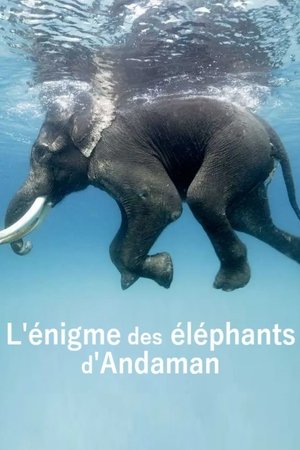
L'énigme des éléphants d'Andaman
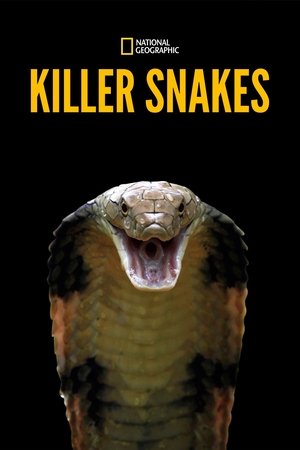
Packed with a potent neurotoxic venom, one family of snakes kill more people than any other on earth. Scientists around the world race to uncover how.
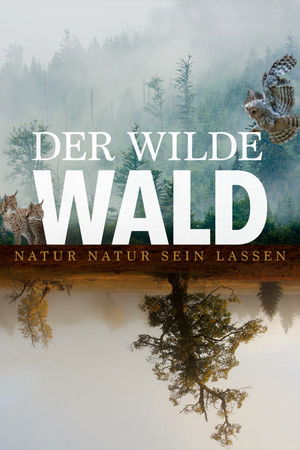
“Let nature be nature” is the philosophy of the Bavarian Forest National Park. Despite massive resistance, this vision has become a groundbreaking showcase project. Because humans do not interfere with nature, the former commercial forests grow into a primeval forest, a unique ecosystem and a refuge for biodiversity. People from all over the world come here. They are looking for answers to the question of why we need more wild nature and what we can learn from it to preserve forests for future generations in times of climate change.
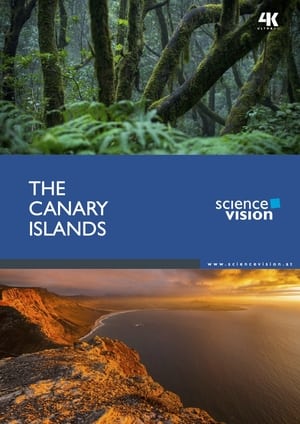
There are few places on earth that have such a diverse variety of terrain and range of climates concentrated in a relatively small area - temperate coastline, scorching arid deserts and tundra, tropical rainforests and frozen snowcapped mountains. And there are few places that are as heavily exploited by humans, yet remain a wilderness.
David Attenborough and scientist Johan Rockström examine Earth's biodiversity collapse and how this crisis can still be averted.
Every day, fishermen venture out into the polluted waters of Sepetiba Bay to provide for their families, searching for what remains of the region's marine life.
Rwanda was once a country of peace, beauty and fabulous wildlife. Romain Baertsoen arrived there in 1966 and started to film two of Rwanda's secrets, the Bahima tribe and rare mountain gorillas. The Rwandan Civil War shattered the peace in 1994, as warring factions pillaged towns and plundered the forests. Remarkably, the gorillas survived, but the world around them is increasingly uncertain.