In Campo Grande, the precariousness of public transportation affects daily routines and the right to come and go. Real stories reveal the struggle for a more dignified and accessible system for all.
Derived from the Greek sēptikós (“related to putrefaction”) + haîma (“blood”), it is a medical condition characterized by the presence of pathogenic microorganisms in the bloodstream, triggering a systemic inflammatory response that can progress to organ dysfunction, sepsis, and risk of death.
A critique of the culture of transparency and excessive exposure. The spectacularization of the body empties intimacy and destroys the depth of relationships. Based on the book The Transparency Society by Byung-Chul Han.
On a dark night, a horrible thing happens: a man stains his hands with red.
Amélia Lopes is the charismatic presenter of the television program "Pilot Episode", a talk show with strange sketches, presentment, interviews and employees. Amélia tries her best to keep the show engaged and on the air, but TV magic is not in the best of its time.
Célia is a very dedicated health agent who works to prevent Dengue in homes in the capital of Mato Grosso do Sul. Committed to inspecting the entire neighborhood, the agent finds herself frustrated when she cannot get permission to complete the last house she lacks. Stubborn, Celia will try everything to do her job and annihilate any sign of the mosquito.
A frustrated detective must get his own hands dity in order to vanish the scum off his city
In an age obsessed with visibility, Sofia lives connected, but feels increasingly empty. After a moment of reflection, she decides to break the digital pressure.
Rubem leads a mediocre and systematic life until the inconvenience of a haunting puts his way of life and the world he lives in to the test.
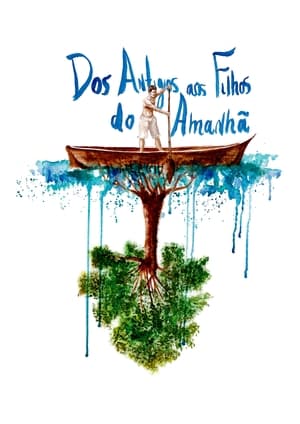
Dos Antigos aos Filhos do Amanhã
73 years after the birth of Israel and the “Nakba” (‘catastrophe’), Rothschild 16, where Israel’s declaration of independence took place, is still a popular location for different tour guides who highlight diverse narratives of the event.
Mishka is a boy of many faces – a petty criminal and a promising alpine skier who enjoys life to its fullest despite his physical disability and difficult living conditions. He is captured at a key moment when he enters adulthood and receives the last opportunity to take part in the Paralympics.
Mattis is different and was the target of bullies while growing up, while society looked the other way. His entire family was subjected to severe harassment by a gang of youths, and late one night in October 2007, his father took out his rifle and tragedy struck. One young boy was shot dead and another was seriously injured. Everyone was a loser, and Mattis and his best friend Stoffe were at the center of the drama. How could life go on?
Forty years after the bloodiest one-day encounter between Americans since the Civil War, the dead remain buried along with the truth. Until now. Based on interviews with eyewitnesses who just now are telling their stories, as well as access to newly discovered documents, the film sheds new light on exactly what happened at Attica between September 9-13, 1971. Criminal Injustice raises compelling new questions about the 39 deaths at Attica, White House involvement, and the corrupting influence of Nelson Rockefeller’s political aspirations before, during, and long after the deadly retaking of the prison. Former hostage Michael Smith said that “the cover up started as soon as the shooting stopped.” This film reveals that the truth actually may have been concealed long before that.
What does it mean to be a Jew in Poland now? Piotr Szczepański reveals another surprising piece of the cultural mosaic of Łódź in his documentary. The protagonists' lives prove that close ties with their religion and history do not exclude their relationship with counterculture and propensity for creative provocation. Thanks to people like them – open-minded and unconventional – the Jewish culture has a chance to last and thrive in our country. Besides, ‘@miriamfrompoland’ is a story, which presents a traditional, yet not quite typical, family with impressive observational virtuosity.
A beautifully illustrated story of a contemporary village and its unconventional dwellers who are of different age but have one thing in common – their strong attachment to folk culture. In this film, music is as important as images, since it accompanies the protagonists during key events in their lives.
The first Swedish film by photographer Ernest Florman. Kung Oscar II welcomes King Chulalonkorn of Siam, now Thailand, at Logårdstrappan. King Chulalonkorn visited Sweden in connection with Stockholmsutställningen 1897.
Compilation of actuality footage and short films capturing public and royal scenes from the life of King Oscar II of Sweden — including arrival at Expositions, jubilees, parades, naval activities, and official receptions. Serves as a visual tribute following his death.
A young filmmaker takes us on a walk through a rather peculiar neighborhood in the city of Maceió, where he meditates on his memories and the urban space from a sociological perspective.
A continually pendulating perspective of a tree on a sunny day.