Impossible Figures and other stories I is the first and—paradoxically—the final part of the triptych. The city, which is its subject, grows not only in space but, most importantly, in time. With all consequences.
Screen song from Fleischer Studios
Prologue depicts Spartan and Athenian warriors locked in a gory battle to the death.
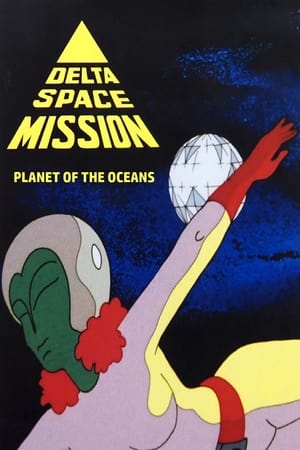
The heroes of futuropolis are Captain Garth, Spud, Liutenant Luna and Cosmo. These four space cadets are sent to investigate series of mutations and destructions of peaceful worlds. The brain behind this chaos is Lord Egghead, the inventor of the "mutation ray".
Sponsored as part of the Electricity Council's 'Understanding Electricity' campaign, Play Safe is a series of three hard-hitting fillers designed to highlight to children the potentially fatal consequences of playing near overhead electric lines and substations. The carefree attitude of the youngsters as they fly their kites and radio-controlled planes in the open air is undermined by composer Harry Robinson's electronic soundtrack, which pulsates with menace throughout.
Two petty and foolish thugs extort a poor farmer and his wife in the countryside near Rimini. But the farmers, tired of always being the victims, decide to take revenge and devise a diabolical plan that will land the bandits in prison for murder.
This is the story of a small Japanese boy whose only interest is drawing pictures of cats...even while everyone else in the village is struggling to defeat a mysterious demon that plagues the countryside. Although first seen as entirely useless, it is the boy's peculiar talent that ultimately restores prosperity to the land. This haunting and enchanting folktale about finding your place in the world resonates with deep respect for and appreciation of Japanese culture.
The adventures of Anatole, a suave and debonair French mouse, in a cheese factory.
A montage of scenes that describe how people can be as bad as animals.
A young boy is transformed as he watches the Olympics on TV.
Shinji, Rei, and Asuka in their states at the end of “Evangelion: 3.0.” A post-Impact world.
Black, brown, and white chocolate marshmallows on a world map background split into groups by colour after a playful chase. Leaders from each group stand silently, and when bitten, reveal the same inside. A children’s voice says, “We are all alike inside,” and hands from various nationalities stamp the slogan in 9 languages.
The 25 minute film tells the tale of an ailing elderly woman named Itako who encounters a fox named Okon. The story opens with Itako lying bedridden, as she has for a long time. Okon enters her home and Itako tells the fox that he is welcome to take anything that he wants, for she has no use for anything anymore. Okon is delighted and in order to return the favour (the act of ongaeshi), Okon performs a magic jyōruri (a ballad with shamisen accompaniment) that heals Itako so that she is fit enough to walk again. Everyone is surprised by Itako's sudden recovery. She then hears of a hunter who has been badly injured and is near death. Itako hides Okon in the back of her shirt and has the fox sing the song while she plays shamisen in order to heal the man. This act of kindness is repeated for others until Itako's good fortune leads some to be suspicious of her.
The original version is monochrome, but in 1967 it was remade in color as an international version. In the international version, the first and twelfth episodes and the fake commercials have been omitted.
The train just runs. A collage of various images, including cel animation and drawing, animates smoke emitted from trains. The title comes from both the sound of a passing train and Pop Art (Yōji Kuri).
The humble line has a life of its own. As it travels from one point to the next it can take whatever route it fancies. With plenty of ups and downs, it encounters all manner of random items and beings as it endlessly travels towards its destination. But when lines become objects it can all go wrong. - MUBI
Along with graphic designer / ad-man Ryohei Yanagihara (柳原良平) and renowned book cover designer Hiroshi Manabe (真鍋博), Kuri formed the Animation Sannin no Kai (Animation Group of Three) in 1960. In doing so the three animators followed the footsteps of the 1950s Sannin no Kai composers (Yasushi Akutagawa, Ikuma Dan & Toshiro Mayuzumi) who banded together to stage performances of their avant-garde style of music. The Animation Group of Three showcased their work at three events: November 1960, December 1962, and April 1963. After 1964 this event expanded into a wider Animation Festival, that annually showcased the experimental fare of such artists as Taku Furukawa, Sadao Tsukioka, Goro Sugimoto, Keiichi Tanaami, and even Osamu Tezuka until 1971. Stamp Fantasy was introduced at the first Animation Group of Three screening on November 26, 1960 in the Sogetsu Art Center.
Satire on those who interrupt other peoples' peace and quiet.
This short children's film by Co Hoedeman tells the story of 2 children and their encounter with an angry dragon, all represented by colourful building blocks.
Mr. O. Verlast, a spruce man, can no longer stand the nuisance caused by people around him. A ball against his window, a caller in his train compartment: he tells them off with a roaring voice. In the end, the nuisance turns against him.