A documentary on the life of the people of the Aran Islands, who were believed to contain the essence of the ancient Irish life, represented by a pure uncorrupted peasant existence centred around the struggle between man and his hostile but magnificent surroundings. A blend of documentary and fictional narrative, the film captures the everyday trials of life on Ireland's unforgiving Aran Islands.
Film capturing a family holiday on the North Antrim coast, with trips to the Giant's Causeway and the Carrick-a-Rede Rope Bridge.
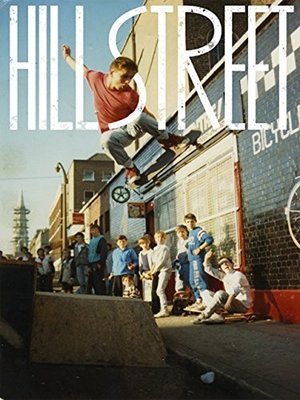
The evolution of skateboarding culture in Ireland since the late 1980s.
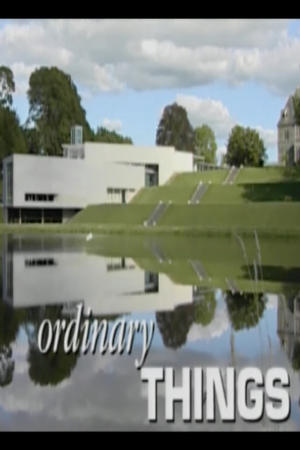
A short documentary about everyday objects, the people who used them, and the beauty of that use. From the video description: "An encounter with the past. The introductory film for visitors to the National Museum of Ireland (NMI) - Country Life. It tells a story about Irish traditional folk life, the self-sufficiency and community spirit by which people's lives were played out against a challenging physical environment. That environment quite often dictated the materials, crafts and traditions by which lives were lived. The museum's collection of 'ordinary things', on display in Turlough Park, illustrate these stories." Written and narrated by Irish writer and broadcaster Theo Dorgan. Made in association with the NMI — Country Life. Available online on the Youtube channel of the NMI — Country Life: https://www.youtube.com/watch?v=GCYrq8yWSSQ
Perry Como's last great concert special, filmed in Ireland and screened in 1994. Como appears before an audience of 4,500 in Ireland's celebrated Point Theater, with Irish President Mary Robinson and actress Maureen O'Hara in attendance.
Three young Irish women struggle to maintain their spirits while they endure dehumanizing abuse as inmates of a Magdalene Sisters Asylum.
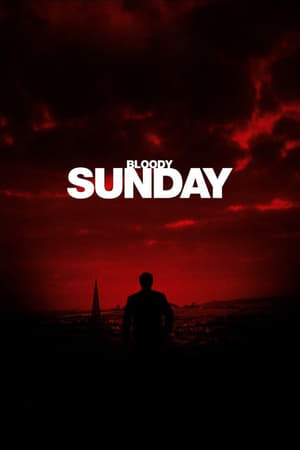
The dramatised story of the Irish civil rights protest march on January 30 1972 which ended in a massacre by British troops.
A short documentary exploring the ways LGBT couples show affection, and how small interactions like holding hands in public can carry, not only huge personal significance, but also the power to create social change.
Narrated by Oscar-winning actor Jeremy Irons, The Genius of George Boole assembles academics and industry leaders from across the globe to explore the life and importance of one of the world’s greatest unsung heroes.
A biography of the poet W. B. Yeats and his contribution to the Irish independence movement as a Protestant nationalist.
"Man of Arran" is a cinematic exploration of the beauty of Ireland's coastline, juxtaposed with the inner strength of 83-year-old Paddy Conaghan, a man who refuses to let age define him. Embarking on an extraordinary adventure: circumnavigating Ireland, diving into winter seas, literally immersing himself in Irelands rugged coastal beauty, and promoting the cause of mental health awareness. Through, stunning visuals, heartfelt interviews, and Paddy's captivating storytelling, Man of Arran aims to transport the audience into Paddy's world and his mission.
Oscar Wilde is a married playwright who has occasionally indulged his weakness for male suitors. After much toil, Wilde debuts 'The Importance of Being Earnest' in London, and a chat at the theatre with Lord Alfred 'Bosie' Douglas leads to a full-fledged romance. However, this affair leads to a legal dispute with Lord Alfred's oppressive father, the Marquess of Queensberry, and, given the local anti-gay laws, Wilde is jailed. Wilde's vast intellect helps him survive until he regains his freedom.
In 2012, Stephen Vaughan and Kay Ferreter are invited to address the congregation at St. Joseph's Redemptorists Church in Dundalk, Ireland for the Solemn Novena Festival. In a powerful speech, the pair describe their experiences being gay and lesbian in Ireland, feeling excluded by Catholic doctrine, and the importance of a more inclusive church.
In rural Ireland in the 1840s, a land dispute makes a man kill his brother. He buries the body at the bottom of his field but soon, his crops begin to die. This earthy horror blends the pagan traditions of the English folk horror cycle with more surreal and paranoid sensibilities, viscerally placing you into the protagonist’s deteriorating mind.
Through economic necessity, an Aran Islander is forced to travel to England to work on building sites so that he can earn money to support his family back on the Islands.
Ireland's Deep Atlantic
Ornithologist Seán Ronayne from Cobh, Co. Cork is on a mission to record the sound of every bird species in Ireland – that’s nearly 200 birds. Often joined by his partner Alba, he travels to some of the country’s most beautiful and remote locations to capture its most elusive species and soundscapes: the busy seabird colony of Skellig Michael; a native woodland free from road noise in the Burren; the corncrake stronghold of Tory Island; a solitary nest in the Donegal uplands. Along the way we get to know Seán, whose hypersensitivity to sound has proven both a struggle and a strength. At once inspiring and cautionary, Seán’s journey illustrates the beauty and importance of sound, and what listening can tell us about the state of our natural world.
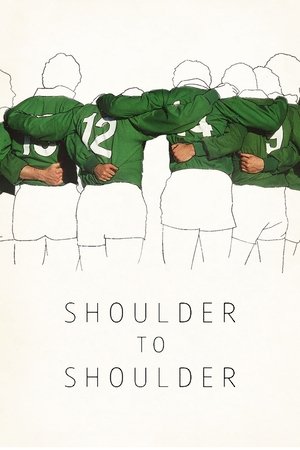
Before the summer of 2022, Ireland had never beaten the All Blacks in New Zealand. Using behind the scenes footage and interviews with players and coaches this documentary reflects on the experience of triumphing in New Zealand for the first time.
Glasnevin Cemetery is the final resting place of 1.5 million souls; it is Ireland's national necropolis. ONE MILLION DUBLINERS reveals the often unspoken stories of ritual, loss, redemption, emotion, history - and the business of death.
Mise Éire ("I am Ireland") is a 1912 Irish-language poem by the Irish poet and Republican revolutionary leader Patrick Pearse. In the poem, Pearse personifies Ireland as an old woman whose glory is past and who has been sold by her children. The poem inspired this 1959 film of the same name by George Morrison. Here, Morrison painstakingly assembled historical footage of the events surrounding the 1916 Rising from archives across Europe and deals with key figures and events in Irish Nationalism between the 1890s and the 1910s. The narration is by Liam Budhlaeir and Padraig O'Raghallaigh and the musical score is by Seán Ó Riada.