Much-loved actress, comedian and writer Mel Giedroyc heads to Dorset on a travel adventure with a twist. Inspired by her passion for books, Mel hooks up with her friend and Dorset local, Martin Clunes, to explore the spectacular scenery and iconic locations made famous by some of Britain's favourite books and films.
Dix Jours dans la guerre d'Espagne
Emma Dabiri looks at racism in Britain via the world of modern dating, love apps, and a national survey suggesting that young Britons could be more segregated than ever.
Festival panafricain d'Alger is a documentary by William Klein of the music and dance festival held 40 years ago in the streets and in venues all across Algiers. Klein follows the preparations, the rehearsals, the concerts… He blends images of interviews made to writers and advocates of the freedom movements with stock images, thus allowing him to touch on such matters as colonialism, neocolonialism, colonial exploitation, the struggles and battles of the revolutionary movements for Independence.
An exploration —manipulated and staged— of life in Las Hurdes, in the province of Cáceres, in Extremadura, Spain, as it was in 1932. Insalubrity, misery and lack of opportunities provoke the emigration of young people and the solitude of those who remain in the desolation of one of the poorest and least developed Spanish regions at that time.
Megacities is a documentary about the slums of five different metropolitan cities.
Les États-Unis d'Afrique
This shocking documentary reveals the plight of young Nigerians branded as witches.
Switzerland still carries out special flights, where passengers, dressed in diapers and helmets, are chained to their seats for 40 hours at worst. They are accompanied by police officers and immigration officials. The passengers are flown to their native countries, where they haven't set foot in in up to twenty years, and where their lives might be in danger. Children, wives and work are left behind in Switzerland. Near Geneva, in Frambois prison, live 25 illegal immigrants waiting for deportation. They are offered an opportunity to say goodbye to their families and return to their native countries on a regular flight, escorted by plain-clothes police officers. If they refuse this offer, the special flight is arranged fast and unexpectedly. The stories behind the locked cells are truly heartbreaking.
Santiago Mitre co-directs his first movement following The Student together with choreographer Onofri Barbato. Although it would have been more accurate to say “his first film-story-adventure-movie-great movie following The Student”, the word movement fits perfectly in Los posibles, the most overwhelmingly kinetic work Argentine cinema has delivered in many, many years. The film deals with the adaptation of a dance show directed by Onofri together with a group of teenagers who came to Casa La Salle, a center of social integration located in González Catán, trying to find some refuge from hardship. Already entitled Los posibles, the piece opened in the La Plata Tacec and was later staged in the AB Hall of the San Martín Cultural Center. Now, it dazzles audiences out of a film screen, with extraordinary muscles and a huge heart: Los posibles is a rhapsody of roughen bodies and torn emotions. Precise and exciting, it’s our own delayed, necessary, and incandescent West Side Story.
The story of a group of Cubans who arrived in Miami during the Mariel Boatlift and were housed in an improvised camp in the heart of the city. Everyone lived together —men and women, homosexuals and heterosexuals, separated only by cloth curtains that hung from ropes suspended between the beds, like floating walls.
A Palestinian grain miller in a Jordanian refugee camp safeguards her culture and shares her people’s history through food prepared with love, longing, and sumud—the Palestinian spirit of steadfastness.
“There was excitement in the air,” says Donga, now in his late twenties, describing his feelings when the uprising against Muammar Gaddafi’s rule broke out in 2011. He was 19, living in Misrata, and boldly went to film the fighting with a friend. A decade later, in a hotel in Istanbul, where he has been living since he was wounded in battle, he looks back on the past ten years through excerpts from his videos. And he reflects on how that period has affected him.
Rwanda was once a country of peace, beauty and fabulous wildlife. Romain Baertsoen arrived there in 1966 and started to film two of Rwanda's secrets, the Bahima tribe and rare mountain gorillas. The Rwandan Civil War shattered the peace in 1994, as warring factions pillaged towns and plundered the forests. Remarkably, the gorillas survived, but the world around them is increasingly uncertain.
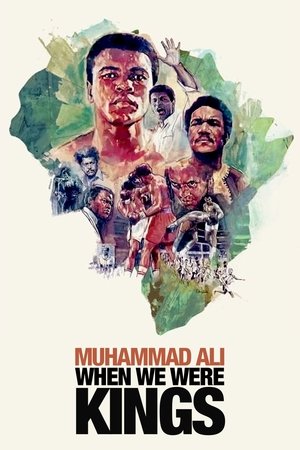
It's 1974. Muhammad Ali is 32 and thought by many to be past his prime. George Foreman is ten years younger and the heavyweight champion of the world. Promoter Don King wants to make a name for himself and offers both fighters five million dollars apiece to fight one another, and when they accept, King has only to come up with the money. He finds a willing backer in Mobutu Sese Suko, the dictator of Zaire, and the "Rumble in the Jungle" is set, including a musical festival featuring some of America's top black performers, like James Brown and B.B. King.
Thomas Haemmerli is about to celebrate his fortieth birthday when he learns of his mother's death. A further shock follows when he and his brother Erik discover her apartment, which is filthy and full to bursting with junk. It takes the brothers an entire month to clean out the place. Among the chaos, they find films going back to the 1930s, photos and other memorabilia.
In Uganda, AIDS-infected mothers have begun writing what they call Memory Books for their children. Aware of the illness, it is a way for the family to come to terms with the inevitable death that it faces. Hopelessness and desperation are confronted through the collaborative effort of remembering and recording, a process that inspires unexpected strength and even solace in the face of death.
"Childhoods without Borders: Voices in Motion" is a documentary in which migrant boys and girls narrate the experiences and challenges they have faced in search of a better life.
Animari and Zlatko's mission is to help children from disadvantaged backgrounds get the best possible care and education. Will they manage to find funding to welcome more children and to start a high school?
The start of a long-term observation of the Bronnmann family from Cologne, who have seven children - what are their concerns, plans, and dreams?