In a futuristic city sharply divided between the rich and the poor, the son of the city's mastermind meets a prophet who predicts the coming of a savior to mediate their differences.
After a spectacular college football career, John Harkless leaves the university to pursue a place in Indiana politics. He buys the failing Plattville Herald and, using the newspaper to expose various illegal activities, sets out to rid the county of all mobsters and corrupt officials.
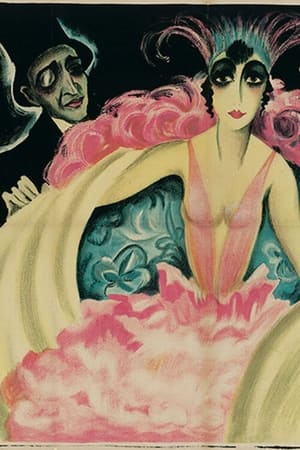
Else Riedel (Lissy Arna), locked out by her authoritarian father, seeks refuge with her boyfriend Hans. Complications threaten when Hans's roommate Max falls in love with her, but the situation is resolved: the three remain friends, and decide to form a music hall act. They want to ascend, but how? A way out beckons when a theatrical agent named Nevin enters Else’s life. He is played by Hubert von Meyerinck as a slick and oily villain, who oozes refinement; his experience behind bars is waved away with a silk scarf. He is cunning to the point of perfidiousness, but is not completely unsympathetic. He also embodies a new type - the scrounger.
Joe Ryan, a veteran train engineer, is demoted to a flagman position after a disastrous crash-- one caused by his cowardly and opportunistic partner. Though Ryan's failing eyesight is named as the cause of the crash, he's undeterred as he designs an automatic braking invention.
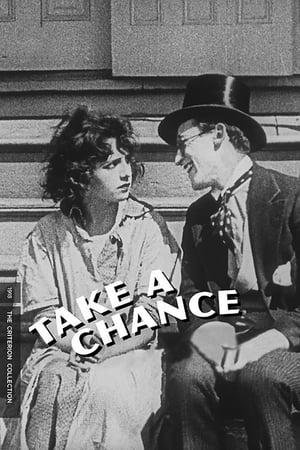
Henry and Marion have a lover's quarrel and part in anger. They do not reconcile, and ten years pass without contact. Marion becomes a society girl and spends her time at parties with her friends. Henry has become very ill and wishes to see Marion one more time. He writes asking her to visit. When she recieves the note, she laughs and tosses it on the floor, but, later, on a whim, decides to take all her drunken friends with her to visit him. When they arrive, Marion finds Henry dead, clutching her portrait in his hand. She sends her friends away and falls to her knees in remorse. Mary Pickford's debut!
Therese Roger, daughter of a West Indian planter, whose parents are murdered while she is a baby, becomes the adopted daughter of her aunt, Madame Roger, keeper of a haberdashery shop in one of the smaller villages in southern France. She grows up with Camille, Madame Roger's son, a sickly, sexless creature, whom she ultimately marries in deference to her aunt's wishes.
A tramp cares for a boy after he's abandoned as a newborn by his mother. Later the mother has a change of heart and aches to be reunited with her son.
Robin Hood is a 1912 film made by Eclair Studios when it and many other early film studios in America's first motion picture industry were based in Fort Lee, New Jersey at the beginning of the 20th century. The movie's costumes feature enormous versions of the familiar hats of Robin and his merry men, and uses the unusual effect of momentarily superimposing images different animals over each character to emphasize their good or evil qualities. The film was directed by Étienne Arnaud and Herbert Blaché, and written by Eustace Hale Ball. A restored copy of the 30-minute film exists and was exhibited in 2006 at the Museum of Modern Art in New York City.
A British engineer in India takes a simple native girl as his bride, an act which defies social strictures and leads to tragedy.
The dashing but arrogant Prince Michael Fedor Lubimoff has to flee Tsarist Russia after falling into disgrace and settles in Monte Carlo, where he resumes his life of debauchery while World War I ravages the fields of Europe… (Partially lost film; reels 3 and 9 of a total of 11 are missing.)
A British army officer refuses to avenge the death of a general who was murdered years earlier. He is awarded three feathers by his officers. When his fiancée fails to defend his stance, he plucks a feather from her fan. He proves his courage by rescuing his comrades in dangerous and life-threatening situations. Later he returns each feather as proof of his redemption and courage.
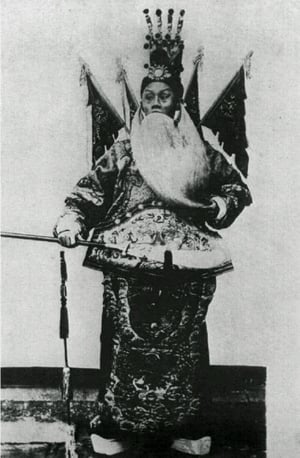
The film tells the story of a man and woman who don't know each other. After being matched by a matchmaker, after going through a series of red tape, they were sent to the bridal chamber and began a difficult life as a couple. Despite the primitive shooting methods and lack of training of the actors, the film has a very important place in the history of Chinese film.
On a South Seas island, "three white derelicts drink away memories of the past. After many adventures during which a girl enters the picture, the three are rehabilitated and everything turns out happily."
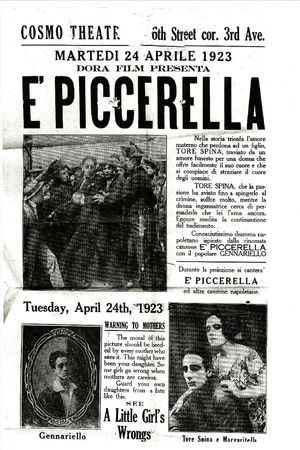
Gennaro, the son of Lucretia Borgia, lives unaware of the identity of his mother, who has married the Duke of Ferrara. After Lucretia's brother is killed by five conspirators, the fathers of Gennaro's dearest friends, Lucretia tortures the old men to death. Later, Gennaro and his companions journey to Lucretia's domain, and she sees her son for the first time. The Duke, who believes him to be her lover, poisons him, but Lucretia administers the antidote in time and saves his life. Then she schemes to poison her sons' five friends for their fathers' mistake.
Against the backdrop of New York City of the early 1850s, a young woman -- naively seeking to win the love she reads about in the romance novels she devours -- finds one prospect in an earnest denizen of the Bowery, and another in an elegant young aristocrat. Focusing on the bygone era's fashions, the novelty of the bicycle-built-for-two, and an inventor's quest for the horseless carriage, the film gently stirs the audiences' nostalgia for simpler times.
It's a classic boy-meets-girl story, boy-loses-girl, boy gets mistaken for an escaped convict and ruthlessly chased by armies of cops across the countryside in a thrill-packed stunt-addled climax.
Silent film from 1915 which draws on the story of Carmen
Henry, a struggling Greenwhich Villiage artist, accidentally finds an invitation to Louise Gordon's coming out party. He goes to the party, falls in love with the pretty socialite, but soon decides to leave as he realizes his financial situation is not up to standards. An old friend recognizes him and encourages Henry into lying that he is a successful businessman.
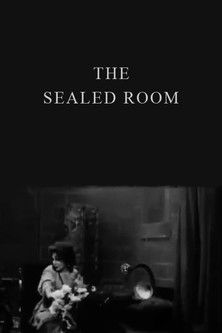
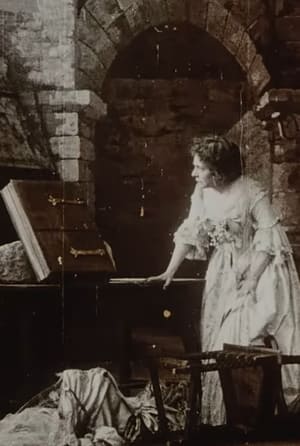
The Count sets out to make a private room for him and his Countess, built in such a way no one can see, hear, and most importantly, disturb them. But unbeknownst to the Count, his wife has set her eyes on the court minstrel. Based on Edgar Allan Poe's “The Cask of Amontillado” and Honoré de Balzac's “La Grande Breteche”.
A fisherman and a rising lawyer who grew up together as brothers fall in love with the same woman.