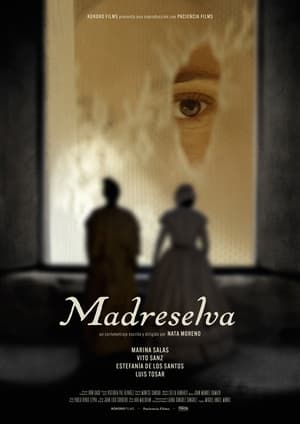
Madreselva
"Barriers" is a documentary in which three women over 60 and a group of young women participate in a game that exposes the prejudices surrounding sexuality in later life. Through these letters, the young women ask the older women about their intimate lives. This creates a space that sheds light on both the taboos and the discomfort that persist around the topic. A space open to silence and deep conversations. At the same time, we discover the stories that characterize these social figures.
The Sahrawi women relate their exil, the tortures, their memories and the difficulties of life as refugees. They are beautiful, touching... Educated by the Polisario Front and attached to the values of islam, they are widows, divorcede or married to fighting men. Owing to the force of circumstances, they have built a society of independant muslim women...
Frustrated Emma is circling the drain of forty, and life isn’t quite how she imagined it would be. Something needs to change, but if you’re doing your best and nobody appreciates you, what more can you do?
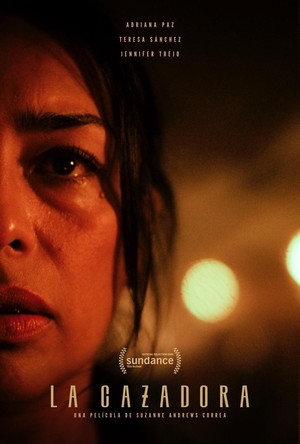
A teenager plans her own kidnapping with the help of her boyfriend and her best friend. They dream of going to live in the United States to have the baby they are expecting; however, the situation gets out of control and she becomes a victim of her own game.
Through innovative 3D animation, this film follows an elderly woman’s journey through her memories as Alzheimer’s reshapes her sense of time and experience. Visual artistry brings her inner world to life, offering a profound exploration of memory, consciousness, and human connection.
Feisty, fiercely independent and firmly rooted in place, 90 year-old Mabel Robinson broke barriers back in the 40s when she became the first woman in Hubbards, Nova Scotia, to launch her own business—a hairdressing salon where she still provides shampoo-n-sets over 70 years later. Weaving animation and archival imagery with intimate and laugh out loud moments in the salon, the film celebrates the power of friendship, doing what you love and staying active. With no desire to retire anytime soon, Mabel gives voice to a generation who are not front and center of cinema or the pop hairstyles of the day, and subtly shifts the lens on our perception of beauty and the elderly.
An experimental musical period drama about the witchhunts in 1595 in the south of the Netherlands. The film depicts the last days of the life of the young woman Heylken.
When one thinks of the American Deep South, the image of veiled Muslim students strolling the University of Alabama campus is the last thing that comes to mind. VOICES OF MUSLIM WOMEN FROM THE US SOUTH is a documentary that explores the Muslim culture through the lens of five University of Alabama Muslim students. The film tackles how Muslim women carve a space for self-expression in the Deep South and how they negotiate their identities in a predominantly Christian society that often has unflattering views about Islam and Muslims. Through interviews with students and faculty at Alabama, this film examines representations and issues of agency by asking: How do Muslim female students carve a space in a culture that thinks of Muslims as terrorists and Muslim women as backward?
Chetia, a single mother of an unwanted child, is forced to make a rough living in Torrevieja running balconing bets.
A woman experiences psychic disintegration and ends up in a psychiatric hospital.
American-born teen, Rima the Lost One, unites with her great-grandmother, also named Rima, on a time-travel journey to 1930s Palestine. After clashing with her modern-ish Mom on vacation, Rima the Lost One finds herself warped through a portal that takes her to the present of her ancestors. Rima the Lost One must navigate her ancestral homeland, a place she’s never known. She desperately looks for a way home, aka the present, the place she originally desired to escape from.
Pacific Mother journeys from Japan, to Hawaii, Tahiti, Rarotonga and Aotearoa to share interwoven stories of formidable women who live at one with the Pacific Ocean – freediving, spearfishing and paddling waka through its depths and playing with their children in its shallows – a stark contrast to fast-paced lifestyles of larger towns or cities. These women are all mothers who experienced diverse births in hospital, at home and by the sea, with and without medical assistance. Fukumoto also meets Māori and Japanese midwives who share indigenous traditions and rituals around birth that have been lost over recent generations, and are now gradually being reclaimed. Their stories demonstrate just how disconnected the global default maternity system is from the instinctive and cultural needs of mothers and families. They inspire a call to action on birthing rights, as well as a call for parents’ reconnection with their role as nurturers and protectors of their natural environment.
Five women trapped in an elevator confess their bitter life experiences caused by evil men and society.
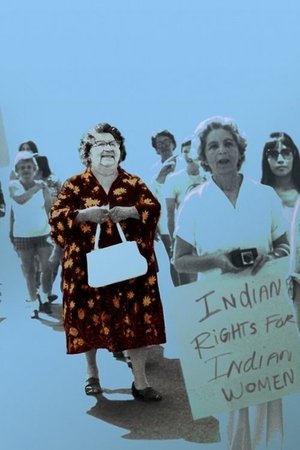
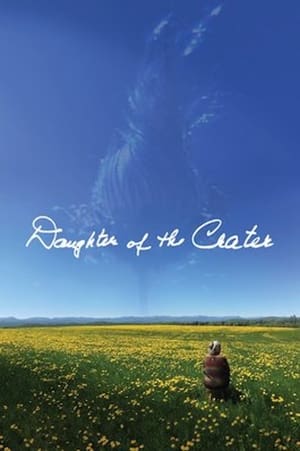
This short documentary is the portrait of an 88-year-old woman who lives alone in a log cabin without running water or electricity in the Williams Lake area of British Columbia. The daughter of a Shuswap chief, Augusta lost her Indian status as the result of a marriage to a white man. She recalls past times, but lives very much in the present. Self-sufficient, dedicated to her people, she spreads warmth wherever she moves, with her songs and her harmonica.
In order to wait for her lover Fan Chun-tak to finish his study in Australia, Tang Sau-man works as a governess in Chui Shek-wah's house. Chui is Fan's brother-in-law. Chui spoils his wife Fan Kam-ping. She becomes lazy and dependent on Tang. Fan finishes his study and returns. He decides to transform his elder sister. He asks her best friend, Pang Shui-ha, to persuade her. Pang has a crush on Fan. Pang uses this opportunity to get intimate with Fan. Tang originally thinks that after Fan comes back, she no longer has to live in somebody's shelter. But Fan spends all his time with Pang. Tang is unhappy and drinks to vent her unhappiness. Tang gets drunk and Chui takes care of her. However, Ping thinks that they have dubious relationship and throws Tang out. Tang falls down a slope and loses one leg. Fan is angry with himself and decides to marry Tang. Ping also realises that she is wrong. She decides to change her lazy character and takes care of the disabled Tang.
Three episodes. In the first, Aurora lives in a luxurious apartment. Among some workers called to her house, she recognizes an old lover, who returns to courting her, but then empties her house. In the second, a boy released from reform school discovers that his mother is actually his father: a transvestite. In the third, a newsagent, suspecting her husband, who constantly pretends to be ill, is cheating on her, places a video camera in her room. She records his sexual encounters on a videotape that she sells at newsstands. In his directorial debut, Corsicato demonstrates a sharp and poetic talent (he was Almodovar's assistant) in creating three portraits of women that are also portraits of his city, Naples.
The story of a friend lost in hell.
Amid endless rain, environmental chaos and a society ruled by violence, a mother must protect her daughter from the external dangers of their dystopian world and the perilous threat within their own home.
Whether famous or anonymous, stars or prisoners, models or sex workers, women have always been at the center of Bettina Rheims' photographic work since her debut in 1978. Both subversive and glamorous, trashy and sophisticated, her photographs mark and bear witness to the upheavals of the era, which this leading photographer both anticipated and accompanied.