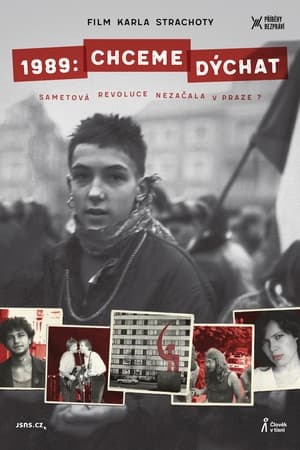
During the so-called normalization period, Teplice, once a beautiful spa town nicknamed "Little Paris," is devastated, much like the entire northwestern industrial border region. It is often shrouded in dense smog, making visibility limited to just a few meters. Teplice is also a stronghold of a specific punk subculture and a city of exceptional alternative culture. The story of Pavel and Renata primarily unfolds in Teplice. They aspire to live freely, in accordance with their ideals. However, their lives are consistently disrupted by the repressive communist regime.
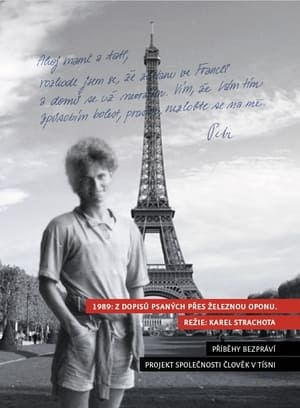
An original film testimony about the time 30 years ago. Peter Kořínek is 21 years old, hailing from Pardubice. He listens to underground bands, reads samizdat books, and faces school troubles due to his long hair. He dreams of emigration. It is the beginning of 1989, and there is no indication that he will experience freedom in communist Czechoslovakia.
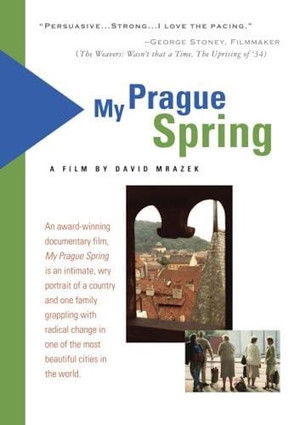
In its "velvet revolution" of 1989, the people of Czechoslovakia toppled its communist dictatorship and embraced democracy and capitalism. By January 1993, the country had peacefully split in two. In the early 1990s, thousands of American college graduates began flocking to Prague, where they could postpone entering the "real world," and live cheaply in a beautiful undiscovered European city. Throughout that decade more and more tourists crossed the statue-lined Charles Bridge in search of old world beauty previously hidden by communist isolation. But what of the people who cross the Charles Bridge on their way to work every morning? Who are the Czechs? What is their history? What is their future? My Prague Spring is an award-winning film that vividly humanizes a resilient people who have survived a tumultuous history. In the spring of 1990, a Czech-American filmmaker spent four months living with his Czech relatives, and opened an intimate window into an uncertain world.
Polojasno
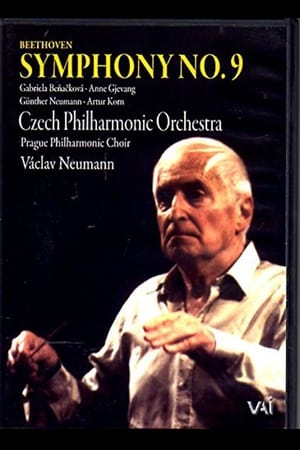
Václav Neumann leads the Czech Philharmonic Orchestra and Prague Philharmonic Choir, with soloists Gabriela Be?a?ková, Anne Gjevang, Günther Neumann, and Arthur Korn. This historic concert of December 14, 1989, given in support of the “Velvet Revolution” in Czechoslovakia, was attended by many prominent personalities, including Václav Havel, just weeks before he became the President of Czechoslovakia (later, the Czech Republic).
After Professor Jay, a quantum physicist teaching at a university, accidentally meets the scientist Doctor Zweistein, they decide to build a time machine. This quickly leads them to the ancient Rome, where they must face the terrible Caesar and find their way back to their time machine.
An intimate portrait of a unique sportswoman in extreme life roles. Mother of three adopted children, world and European champion in fitness and record holder on long distances throughout Slovakia. Soňa Kopčoková is a former professional fitness athlete with the titles of World and European Champion. After the end of her elite sporting career, she devoted herself fully to her family until she discovered that she loves long-distance running in the mountains. And so today she fulfils her dreams in the hills, running often only by herself... On June 16, 2021, she reached Devín after 11 days, 15 hours and 30 minutes in a new Slovak women's record on the SNP Heroes' Route route. From Dukla to Bratislava, she ran alone, without support and with only a single backpack where she carried everything, she needed to survive...
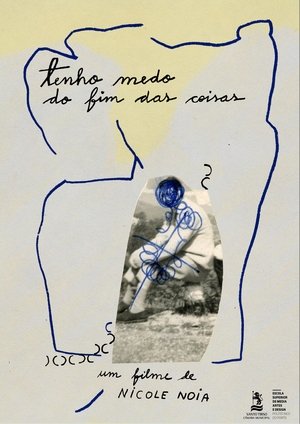
A documentary exploring two student artists and their unfinished projects, discussing why certain projects are abandoned and the personal connections that the creator may have to them.
Glittering illusions of vectorized providence struggle to guide the viewer toward a path of re-enchantment.
MMA on Point takes a deep dive into the weight cutting issue that plagues athletes. Through this investigation, multiple discoveries are made that may shock the mixed martial arts world.
In 1972, a plane carrying an Uruguayan rugby team disappeared into the Argentinean Andes. Now, 50 years after one of the greatest ordeals of survival in recorded human history, the full story is finally comprehensively told through the words of each of those who lived it.
The drama depicts the exploits of the “Ichigeki Hishikkitai”, a special combat unit formed by farmers to deal with the "Imperial Robbers" and the "Imperial Thieves" of the Satsuma Clan who were causing a stir in Edo at the end of the Edo period.
One day in a kindergarten classroom at Van Horne Public School in Montreal. The teacher encourages children to turn their curiosity into questions and organizes group activities and play periods.
Aquí estamos
In 1986, for the first time in 75 years, the "Chironnup Kamuy Iomante (the sending off of the spirit of the fox)" was held at Bihoro Pass, in Hokkaido. According to the Ainu's traditional beliefs, animals are "gods" called "Kamuy" who live in the "land of gods" ("Kamuimosiri"), but sometimes they come to the "land of humans" ("Ainumosiri"), to offer their meat and furs as gifts. The Ainu take care of them, and they eventually hold an "Iomante (spirit sending)". In this ceremony, people offer prayers, sing songs, and dance, and send the animal back to the "land of the gods" with food and souvenirs.
The camera stands in a house, the lens pointing through the window, outdoors, where the occupants of the home are standing. They respond patiently to the camera operator’s directions: a small step to the left, a little bit forward, no, back just a bit, yes, that’s perfect. Dozens of people pose in this way for a full minute. There’s a man who lives alone, a large family, an older woman on a trampoline. Some are entirely at ease, others more self-conscious. Rabbits, dogs, and cats are allowed to join these portraits, too. All of them are captured within the natural frame of the windows, along with the lace or floral curtains.
Beautiful Jocelyn Lane goes sightseeing in Portugal accompanied by bandleader George Melachrino and his orchestra. Featuring Portugal's top singing star Amália Rodrigues and the world-famous Tagide Club Dancers of Lisbon.
A documentary on the making of Tchao Pantin (1983), featuring interviews with writer-director Claude Berri, novelist Alain Page, stars Richard Anconina, Mahmoud Zemmouri, Agnès Soral, cinematographer Bruno Nuytten and others.
“Gjama” is a rarely practiced mourning ritual that was performed by Albanian men throughout the centuries. By shouting specific phrases and acting out a strict choreography, it is a way of paying respect to the deceased but also overcoming grief and pain over the loss of a loved one. Through the documentation of the re-enactment of the ritual, Zgjim Elshani seeks to recover fragments of the practice in the communities where this form of collective grieving is still a way of overcoming loss. By doing so, the project intends to rethink collective grieving and what it means to publicly display emotions in a male-headed society.