Recent studies show that insects are in decline across the globe and there may be a direct connection between the current climate crisis and these declining populations. DESYNCHRONIZED focuses on Pope Canyon Queens, a beekeeping and queen breeding company in Northern California. Pope Canyon Queens is currently trying to rebuild after the 2020 LNU Lightning Complex fires destroyed their farm, shop, and half of their hives. Their crucial work to breed honey bee queens with stronger genes fortifies beekeepers' hives across the country while they face the effects of climate change and unregulated industries. Dr. Nicholas Teets, PhD Entomology, explains how shifts in phenology are predicted to cause bigger issues. Howard Goldstein, Senior Forest Ecologist at the Prospect Park Alliance explores how community gardens and green spaces in large metropolitan areas may help insect populations recover from loss of habitat and food scarcity.
Packed with a potent neurotoxic venom, one family of snakes kill more people than any other on earth. Scientists around the world race to uncover how.
David Attenborough and scientist Johan Rockström examine Earth's biodiversity collapse and how this crisis can still be averted.
Squeeze: African Python
A scientist explains how the savagery and efficiency of the insect world could result in their taking over the world.
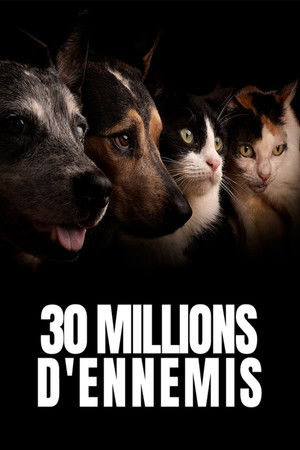
Do we need animals to fill the void that should really be filled by people? To what extent do we project our own deprivation and longing on these sweet pets? All the protagonists in this documentary are indirectly afraid of being rejected and find safety and unconditional love in their animal(s). We observe these relationships and follow them in their steps to overcome their anxieties and insecurities and step into the world of humans more.
Thousands of ducks, one farmer, and an ultimate goal to produce chemical-free rice. Against all odds, a determined farmer in Thailand trained ducks to be ‘rice protectors.’ Together, they joined hands (and wings) in the pursuit of sustainable farming. Amusing, adorable, yet informative, viewers will fall in love watching man and ducks, teacher and students, work together to keep our food safe from harmful chemicals.
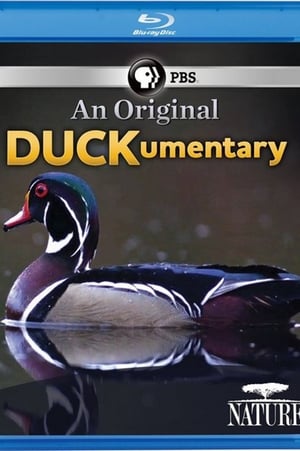
Ducks are true originals. There are more than 120 different species of ducks in all, a fantastical group of complex characters. Ducks have a talent for survival, and life stories filled with personality and charm. Each bird is more fun than the last, and will leave you wanting more.
A look at the life of pine processionary moths.
Snakes - Vorsicht: Schlangen
South Florida is under siege from a new invasive species. This time, they're man-eaters, African Rock Pythons. These lethal giant constrictors are one of nature's most aggressive snakes.
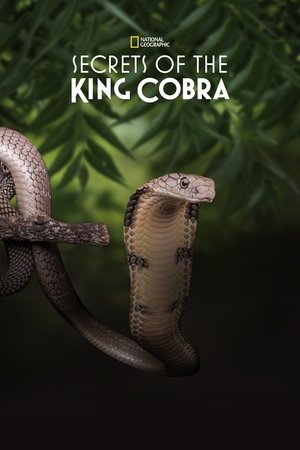
A new scientific expedition follows the King Cobra into the wild for the first time.
Gorgona, a remote Colombian island, has a dark secret. It’s a natural fortress, surrounded by shark-infested seas, blanketed in impenetrable jungle and teaming with deadly snakes. For that reason it was chosen by the Colombian government as the site of a high security prison, Colombia’s own Alcatraz.
In the most rural and forgotten stretches of the Southeastern United States lies an ecosystem that once spanned across 90 million acres. The Longleaf Pine Savannah... this ecosystem holds biodiversity that can be found nowhere else in the world. One of the species being the Eastern Indigo Snake (Drymarchon couperi). In this documentary, the Caveman Wildlife Crew will take you into the world of Longleaf Pine Savannas and Eastern Indigo Snakes along with the Orianne Society and the Orianne Center for Indigo Snake Conservation. These two organizations are doing incredible conservation work to save Longleaf Pine Savannah Ecosystems and Eastern Indigo Snakes. You'll get to meet some amazing people working at these organizations and the work they do for conservation.
Discovery Channel documentary about snakes.
This film delves into the life cycles of various insects, highlighting their survival and adaptive strategies through the seasons. It showcases insects like dragonflies and preying mantises in their summer activities of feeding and reproducing, and then shifts focus to their unique winter survival tactics. The film particularly emphasizes the praying mantis's method of laying eggs in a protective case to ensure species continuity. Other species' adaptations are explored, such as aphids laying eggs on tree bark and swallowtail caterpillars forming chrysalises. It also touches on different hibernation methods and the renewal of life cycles in spring, with a new generation of insects emerging to continue the cycle of life. The documentary underscores the diverse and fascinating ways insects adapt to their environments throughout the year.
A documentary of insect life in meadows and ponds, using incredible close-ups, slow motion, and time-lapse photography. It includes bees collecting nectar, ladybugs eating mites, snails mating, spiders wrapping their catch, a scarab beetle relentlessly pushing its ball of dung uphill, endless lines of caterpillars, an underwater spider creating an air bubble to live in, and a mosquito hatching.
Poisonous snakes are among the most deadly feared, yet fascinating creatures on earth. They strike their prey with pin-point precision, injecting lethal doses of poison. Now, for the first time on video, you can take an inside look at the exciting world of these intriguing reptiles. Witness lightening quick strikes and live capture scenes of America's most deadly snakes, the Rattler, Water Moccasin and the Coral Snakes. Join host and expert snake handler Bob Popplewell as he separates myth from reality!
Snake expert Austin Stevens presents this nature documentary about the most feared snake of all - the King Cobra. Travelling to the jungles of south west India, Stevens reveals that despite its reputation, the King Cobra is in fact a reclusive creature, shy of human contact.
You don't have to travel to faraway countries to observe wildlife, because the fauna of the big city also provides surprises every day. Contrary to expectations, many bird, mammal and insect species have adapted to the concrete jungle. They have become experts of the urban space. “My Wild Neighbors” takes a poetic look at the lives of animals in the city.