This film, three years in the making, The remote forests of Kalkalpen National Park in Austria, the largest area of wilderness in the European Alps, have been left untouched by humans for nearly a quarter of a century in order to return to their natural, primeval state. The landscape regenerates itself in dramatic cycles of growth and decay, and this bold hands-off method of conservation yields salient results: the lynx, absent from the area for 115 years, has returned.
Discover the evolutionary secrets of some of the world’s most majestic creatures. From voracious crocodiles and acrobatic birds to stupendous whales and majestic elephants, this documentary follows top scientists on a global adventure as they follow clues from the fossil record and change what we thought we knew about the evolution of iconic beasts.
Charlotte Uhlenbroek travels to Madagascar to follow the story of three mother ring-tailed lemurs struggling to survive one of the driest and hottest seasons in decades. One lemur has already lost her baby, the other two have a fight on their hands if their infants are to stand a chance, and matters are made even worse when neighbouring lemur tribes invade the mothers' territories.
Africa the Serengeti takes you on an extraordinary journey to view a spectacle few humans have ever witnessed: The Great Migration. Journey with more than two million wildebeests, zebras and antelopes as in their annual 500 mile trek across the Serengeti plains.
Alaska... Here, in this vast and spectacularly beautiful land teeming with abundant wildlife, discover the "Spirit of the Wild." Experience it in the explosive calving of glaciers, the celestial fires of the Aurora Borealis. Witness it in the thundering stampede of caribou, the beauty of the polar bear and the stealthful, deadly hunt of the wolf pack.
Explore the mysterious Amazon through the amazing IMAX experience. Amazon celebrates the beauty, vitality and wonder of the rapidly disappearing rain forest.
A documentary about Caroll Spinney who has been Sesame Street's Big Bird and Oscar the Grouch since 1969. At 78-years-old, he has no intention of stopping.
Follow ocean legend Sylvia Earle, renowned underwater National Geographic photographer Brian Skerry, writer Max Kennedy and their crew of teenage aquanauts on a year-long quest to deploy science and photography to inspire President Obama to establish new Blue Parks to protect essential habitats across an unseen American Wilderness.
In a dystopian 2054, three young rebels go on a journey to find traces of the long lost beauty of nature, hoping to discover what happened to their planet.
This planet of ours is Two Worlds: one of land and one of the ocean. This fascinating program explores a pair of marine animals, the manatee and the lion fish, and documents their interactions with each other, as well as with their habitat. We journey to an alien environment where man goes, at his peril, to meet the creatures which make this planet one. This is a feature length documentary edited together from episodes of the inspiring documentary series for physical release.
This is the story of a vegetable garden, from the first seeds to the harvest. But this garden is different, because here the gardener has decided to banish pesticides and other chemicals, and to be helped only by discreet workers, the insects. As we dive into the heart of this plant kingdom, we discover thousands of tiny lives that organize themselves as in a micro-society: decomposing insects, recyclers, pollinators, the workers of the garden work to maintain a fragile balance within the vegetable garden. As the plants grow and begin to produce their first vegetables, the incredible interactions between insects and plants help protect the future harvest. But it is also their personal stories that punctuate the life of the garden. Between parades, mutual aid and attempted putsch, the story of the vegetable garden thus takes the form of a true nature tale.
Kina & Yuk are two Arctic foxes, ready to start a family. But the climate is warmer, and the food is more and more rare. Kina & Yuk are obliged to venture far and far away.
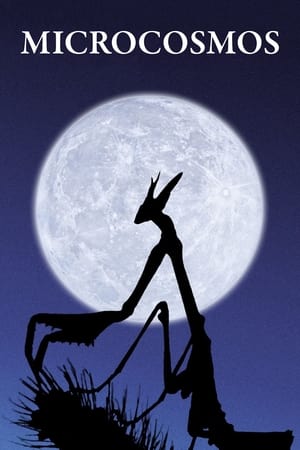
A documentary of insect life in meadows and ponds, using incredible close-ups, slow motion, and time-lapse photography. It includes bees collecting nectar, ladybugs eating mites, snails mating, spiders wrapping their catch, a scarab beetle relentlessly pushing its ball of dung uphill, endless lines of caterpillars, an underwater spider creating an air bubble to live in, and a mosquito hatching.
Xu Xin’s film “Dao Lu” (China 2012) offers an exclusive “in camera” encounter with Zheng Yan, an 83 year-old veteran of the Chinese Red Army, who calmly relates how he has navigated his country’s turbulent history over three-quarters of a century.Born to a wealthy family in a foreign concession, Yan joined the Chinese Communist Party (CCP) in 1941 because he sincerely believed in the socialist project, and in its immediate capacity to free China from the Japanese yoke and eradicate deep-rooted corruption.
Ocean Voyagers explores the familiar themes of motherhood and parenting in a world as unfamiliar as it is breathtaking. Featuring a precocious newborn humpback calf and his enormous 40 ton mother, we are taken on a journey of discovery into their world.
The documentary Merikotkan paluu (Return of the white-tailed eagle), tells the tale of the past and the present of the white-tailed eagle. The second protagonist of the film is the human - the animal that can be blamed for the eagles’ distress but also credited for its rescue.
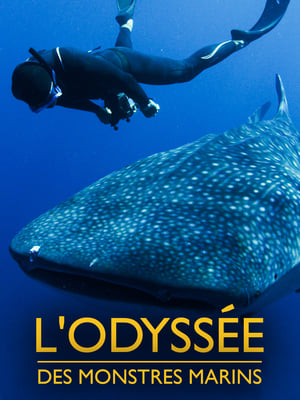
Follow a three-month-old baby whale on a magical journey down one of the Earth’s great ocean highways to discover the incredible world of ocean currents. She will never know it, but as she swims with the flow of the current, her story becomes inexorably connected to our own. Ocean currents are hidden marine rivers that flow around the Earth. They are responsible for the fish we eat, the rain that feeds our crops, the snow that covers our mountains - even the air we breathe, and they have been helping to keep the temperature of our planet just right for life for millions of years. As our young whale goes with the flow of the current on a great migration from the warm tropics to the frozen ice floes of Antarctica, she meets the curious creatures that call the current home.
Bacteria, viruses, but also fungi, algae, pollen, and even insects: micro-organisms thrive and circulate constantly in our sky. How can so many living beings find their way into the air and circulate? How do they survive? And what influence do they have on our lives and the living world? Biodiversity, health, climate: it is only recently that scientists have begun to understand how this discreet aerial "plankton" affects our lives and our ecosystem. But despite their many virtues, some of these micro-organisms are now threatened by human activities. With the help of experts and 3D models, this scientific investigation plunges us into the heart of a still mysterious world, and reveals the diversity and fragility of the air we breathe.
For two-thirds of the year, the Little Rann is a desert. Suddenly, in August, monsoon winds whip up the Arabian Sea and carry it 100 km inland. The desert and these mounds soon become islands and homes to high concentrations of rarely-seen, endangered and spectacular wildlife.
Takes us to locations all around the US and shows us the heavy toll that modern technology is having on humans and the earth. The visual tone poem contains neither dialogue nor a vocalized narration: its tone is set by the juxtaposition of images and the exceptional music by Philip Glass.