Documentary on the film noir Side Street with director Oliver Stone and critic Richard Schickel.
Documentary on the film noir Decoy, with Dick Cavett and Molly Haskell.
Richard Schickel and Oliver Stone are among the experts who talk about the film noir Crime Wave.
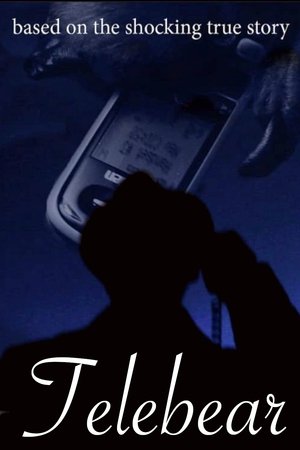
When a new murderer in town travels through the phone, Detective Rick finds that all signs point to the culprit being a bear. But bears can't use phones. Can they?
After emerging victorious from the horrors of World War II, the U.S. eagerly pushed into a new era of optimism, hope, and success. But the shadowy and cigarette-stained B-side to the bright, shiny America emerged: the film noir. Made for cheap, these dark tales scratched at a different society, filled with twisted psyches and sinister motives. Filmmaker Tom Thurman teams up with film critic and narrator David Thomson to weave together a hypnotic collage of a dark world that influences our national identity to this day.
Film Noir burrows into the mind; it's disorienting, intriguing and enthralling. Noir brings us into a gritty underworld of lush morbidity, providing intimate peeks at its tough, scheming dames, mischievous misfits and flawed men - all caught in the wicked web of a twisted fate.
A single ordinary day in a big city. The heroine of the film is never fully revealed we see only her feet, her steps, the rhythm of her movement. Through this movement, we travel with her across the city, discovering fragments of her day. In the morning, she leaves her home and merges with the urban flow. She walks through the streets, passing dusty construction sites where the city’s constant transformation blends with everyday life. She goes to work, then stops at a small café, where the usual chaos continues. Traffic builds, people wait at bus stops, cars stand still, and the noise of construction fills the air. Within this environment, her steps move forward, becoming part of the city’s rhythm. By the end of the day, she meets her lover. Once again, we see only feet, small gestures, subtle movements. The film becomes a collage of urban moments a mixture of staged and documentary observation where the invisible presence of one woman connects the scattered pieces of the city’s life.
Film noir, which enjoyed particular success in the 1930s and 1940s, is probably the most profound genre of classic Hollywood cinema. Eckhart Schmidt tries to show the background and developments and speaks, among others, with directors such as Richard Fleischer and Robert Wise as well as with "femme fatale" actresses. Filmmakers of the following generations explain how the style and themes of noir continue to shape cinema today.
Journalistic chronicle made by Ocelote from the Colima zoo “Ecoparc” that reconstructs the mysterious case of a pair of animals on display, a red deer and a mouflon sheep, killed with a firearm by a mysterious criminal.
Spain. 1978. Year of the first democratic elections following the dictatorship, and of the birth cine quinqui (delinquent movies): films that rapidly became a big commercial success, showing things that were banned by the censorship not too long before.
Von Scerscen.- Diario di un'indagine
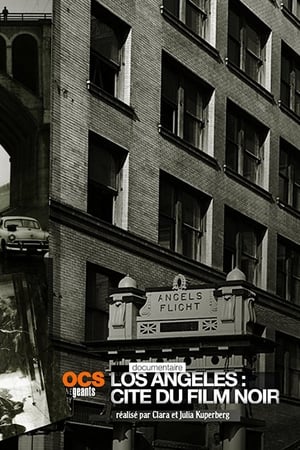
A documentary about film noir films made in Los Angeles.
A 1956 Belgian film, Low Light and Blue Smoke, showcases the music of American blues guitarist Big Bill Broonzy, capturing his performance at the Chapel of Les Brigittines in Brussels during his 1956 European tour.
Film critics, actors, film historians and other personalities share their experiences and curious stories on the acclaimed Billy Wilder's masterpiece "Sunset Blvd."; its cultural importance by being one of the most iconic and revolutionary films ever made and a picture that still stands the test of time.
Jump into the world of Film Noir and look at how the technology and economic factors gave birth to a genre that still deeply influences the way filmmakers work today. Take a look at 4 Film Noirs spanning the beginning and end of the classic film noir era: "The Stranger on the Third Floor", "Double Indemnity", "The Big Combo" and "Touch of Evil".
A jazz bandleader, falsely accused of murdering his girlfriend, tries to stay one step ahead of the police as he dives into Tokyo's sin-city in search of the real killer.
Private Detective H. Gibson loses a case-file for the first time in his decade-spanning career. He decides to try to solve the mystery, of what it is he is supposed to be investigating.
A un paso de la soledad
On a tense set of a film noir, two background actors quietly form a connection take after take
An unexpected bond develops between a fugitive killer and a runaway orphan on an odyssey across England.