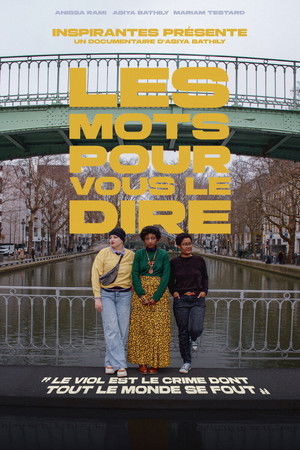
Mariam, Asiya, and Anissa were 11, 7, and 5 years old when they were raped. The attackers were their paternal uncle, a neighborhood youth, and the nanny's son. They have no memory of the event. To protect them, their bodies developed traumatic amnesia. Years later, the memories returned, and they decided to file a complaint.
Two children accused parents and teachers of leading a paedophilic satanic cult, supposedly headquartered in secret rooms on the school premises. The story was not true. But once the fire was lit, it was hard to put out. Emily Turner’s film considers the real-world impact of an outrageous online conspiracy theory, exploring the importance of truth and the cost of lies.
Two young women join the director. The three of them become one to break the silence and tell a story about incest. Between reality and traumatic flashbacks, the narrative transcends genre barriers to explore pain and resilience.
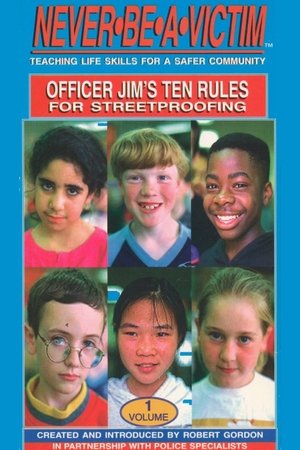
POLICE OFFICER JIM BYRNE, Canada's most honoured Safety Education Specialist brings you his famous TEN RULES, with which he has personally tested more than 25,000 students. Learn key strategies now taught in many schools and used by police working with the full NEVER BE A VICTIM Institutional Study Program. Develop your own personal streetproofing skills so you can train and test your family. Robert Gordon, who created this remarkable program in partnership with Metropolitan Police introduces this family video library against a backdrop of today's troubled society. TEACHING LIFE SKILLS FOR A SAFER COMMUNITY OFFICER JIM'S TEN RULES FOR STREETPROOFING • STRANGER MYTHS • ABDUCTION • BEING FOLLOWED • DANGEROUS PLACES • AVOIDING CARS AND VANS • GOOD TOUCHING-BAD TOUCHING
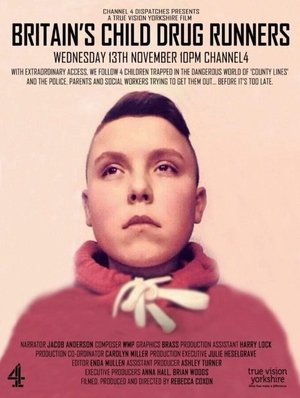
Children as young as seven are being groomed to sell drugs for 'county lines' drugs gangs in towns and villages all over the UK. This film follows four young people trapped in this world.
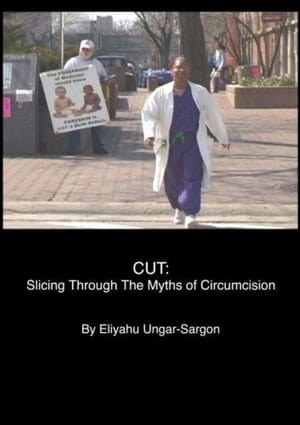
"Cut" is a documentary film by Eliyahu Ungar-Sargon which examines the subject of male circumcision from a religious, scientific and ethical perspective. Using cutting-edge research, in addition to interview footage of rabbis, philosophers, and scientists, Cut challenges the viewer to confront their biases by asking difficult questions about this long-standing practice.
There are children. There are those who abuse them. And there are those who know, but never tell.
The four adult heroes and heroines of the film, who were selected in a casting call posted on TV, speak candidly on camera from the very beginning of their memories. Through individual stories, they describe their childhoods, family backgrounds, life at school, and how they spent their free time. The stories complement each other and are intertwined; we see emotions and hear things that reveal the horrific DNA of domestic violence. The documentary addresses the issue of abuse with an emphasis on the entire social environment of the victims and the societal underpinnings. Typical of domestic violence is that victims often hide it within themselves; they do not talk about it, and sometimes they do not even admit it. But in the documentary, they were determined to speak out.
British documentarian Nick Broomfield creates a follow-up piece to his 1992 documentary of the serial killer Aileen Wuornos, a highway prostitute who was convicted of killing six men in Florida between 1989 and 1990. Interviewing an increasingly mentally unstable Wuornos, Broomfield captures the distorted mind of a murderer whom the state of Florida deems of sound mind -- and therefore fit to execute. Throughout the film, Broomfield includes footage of his testimony at Wuornos' trial.
Suffering child abuse marks you, conditions you and limits you. But what's next? 7:11 Cuarzo is a documentary short film that delves into the consequences and shows us various ways of experiencing grief after suffering it: the aftermath, the path after breaking the silence and destroying the stigma. It talks about the treatment and care of wounds with testimonials from those who have suffered abuse and aggression. Learning to live again when the most precious thing, innocence, is taken from you.
Every year in Quebec, 25,000 reports of children being beaten, sexually abused or abandoned are retained by the Directorate of Youth Protection. And nearly 40% of babies who die in the province to die because of the violence of their parents. This explains the fact that nearly 30,000 children are supported by the DPJ until the age of 18. But this government agency is in a position to meet the needs of young people? Journalist and documentary filmmaker Paul Arcand presents the testimonies of children and adult victims of abuse of all kinds, and interviews politicians, social workers and members of the judiciary on their perception of the problem. In addition, Arcand denounces the carelessness of a bureaucratic system that does not always seem to be concerned about the well-being of those for whom they are responsible.
On Fanø, Denmark, three young families have their lives brutally turned upside down when the municipality suspects them of having abused their children. The suspicion is unfounded, but the damage is done, and the families are now dragged through a process involving child interviews, police interrogations, and more. Is the law on protecting children from abuse too far-reaching, or is it simply the price some must pay to prevent serious cases of mistreatment and neglect?
The movie recalls children who suffered mental and physical harm both during the last century, particularly in religious orphanages, and during the time of early modernperiod witch-hunts. It shows that the mindsets and behavioural patterns of both time periods are more alike than one might think.
A poignant all-Indigenous English and Cree-English collaborative documentary that breaks long-held silences imposed upon indigenous children who were interned at the notoriously violent St. Anne’s Residential School in Fort Albany First Nation, Ontario. Use of a homemade electric chair at St. Anne's and the incorporation of testimony about student-on-student abuse makes this documentary stand apart from other films about Canadian residential school experiences. This film will serve as an Indigenous historical document wholly authored by Indigenous bodies and voices, those of the Survivors themselves.
Um Crime Entre Nós
As a child, Michael Stock was sexually abused - by his own father. 25 years later he is still looking for inner peace. In conversations with his family and friends and his own reflections, he paints an ever clearer, if contradictory picture of what happened and of the consequences for each of the family members. Old family films seem to show a happy family - excerpts from Michael's first feature film hint at his extreme adult life, overshadowed by his lifelong trauma. Yet in spite of the intense drama, the film doesn't have an atmosphere of anger and hatred but rather a surprising air of hope and love of life. Michael's aim is not to accuse the "perpetrator" but to understand. In the end, he takes his video "Postcard" to his father. With the camera running, he confronts him with his past.
Since the beginning of her career, Sinéad O’Connor has used her powerful voice to challenge the narratives she was surrounded by while growing up in predominantly Roman Catholic Ireland. Despite her agency, depth and perspective, O’Connor’s unflinching refusal to conform means that she has often been patronized and unfairly dismissed as an attention-seeking pop star.
Melissa Lucio was the first Hispanic woman sentenced to death in Texas. For ten years she has been awaiting her fate, and now faces her last appeal.
An altar boy and a gardener decide to break a long and painful silence by denouncing the Catholic priest who abused them as minors. This unprecedented incident in Costa Rica causes the priest to flee, becoming a fugitive from the law and Interpol. The young people unite to find him. Will justice be served this time?
A group of aging former classmates begin a quest for justice when they learn from one another just how many of them had been abused as schoolboys.