Journey alongside a young tigress raising her cubs in the fabled forests of India.
By drawing a parallel between the Indian Durga Puja festival and other forms of celebrating the divine feminine, Santa Shakti reveals the Sacred Power beyond languages and religions.
After the Indian Ocean Tsunami of 2004, widowed women struggled to receive aid due to their social status. Following the story of Mrs. Manjula along with many other women from Tamil Nadu, the challenges faced by millions of widows across the country are illuminated. From being ostracized to denied basic rights and economic opportunities, widows in India endure a cycle of discrimination and marginalization. “Kalangarai” meaning "lighthouse" in Tamil, is an organization dedicated to empowering women through initiatives such as self-help groups and educational programs. Throughout the film, "Lighthouse" illustrates the emotional journeys and resilience of these women, as well as the active change that Kalangarai strives to achieve. This documentary urges global awareness and support for widowed women’s rights, as the women’s struggles depict the intersectionality of gender, poverty, and social injustice.
Since the rise to power of Hindu nationalists in 2014, India has been gradually moving away from democracy towards a regime where ethnic identity prevails. This transition is driven by Hindutva, a Hindu supremacist ideology embodied by Narendra Modi. For the past 10 years, Prime Minister Modi has relentlessly pursued his fascist policy based on Hindu supremacy. This ideology of hatred towards other religions in the country, particularly Islam, has also spread globally. Those who follow this belief want India to be only for Hindus, treating people of other religions, like Muslims or Sikhs as second-class citizens. Attacks against Christians have surged by 400% since Modi's election, accompanied by discriminatory laws targeting Muslims and widespread lynching incidents. Hindutva's influence permeates all levels of Indian society. This documentary thus unveils a darker side of India, far from its portrayal as the world's largest democracy and Gandhi's dream of peace among communities.
One night in December 1995, 4 tons of weapons fall from the sky over India. A few days later a Danish man returns to Denmark with a grave secret. Only when an English arms dealer is arrested in India and faces death sentence, does the Dane appear in the large-scale international investigation of the case. With reconstructions and scenes resembling a feature film, the docu-thriller The Arms Drop tells the nerve-racking story of two men who gamble their lives on a joint mission with each their secret agenda, and the political, personal and diplomatic consequences 20 years later.
Meena is a documentary film about sex trafficking in India based on a true story.
The inspiring story of a young Indian Muslim woman who trades her burka for dreams of playing on the Mumbai Senior Women's Cricket Team and how the harsh realities for women in her country creates an unexpected outcome for her own family, ultimately shattering and fueling aspirations.
Wheel of Time is Werner Herzog's photographed look at the largest Buddhist ritual in Bodh Gaya, India.
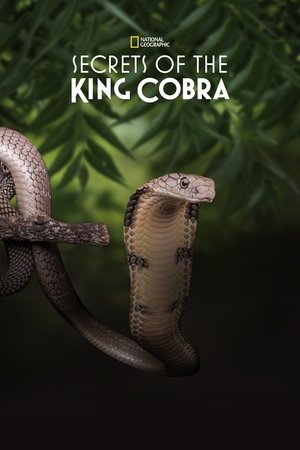
It delivers enough venom in one bite to kill a hundred people, yet it solely preys on other snakes. Through rare footage follow the King Cobra on its journey throughout the rainforests of India seeking food and a mate.
Meru is the electrifying story of three elite American climbers—Conrad Anker, Jimmy Chin, and Renan Ozturk—bent on achieving the impossible.
Journey across India, a breath taking land shaped by a myriad of cultures, customs and traditions. Come face to face with the Bengal Tiger and explore the work of this majestic creature with stunning clarity. Soar over blue-hazed Himalayan peaks and sweep down towards the thundering Indian Ocean as we celebrate the power and beauty of India's greatest ambassador - the mighty Bengal Tiger.
In the 70s, Barsham Faire on August Bank Holiday became a tradition for many to celebrate things 'medieval' and raise funds for local arts events. It put Barsham on the map.
Hundreds of thousands of Indian men and women – indigenous inhabitants and landless farmers – demand their right to existence by making a 400 kilometre protest march from Gwalior to Delhi. How can one fight for one’s rights without using violence? With such an important contemporary question, the film spreads far beyond the borders of India. It shows the multiple facets of this imposing protest march and focuses as well on the daily realities of these proud people.
An exploration of the 'respectable' and 'immoral' stereotypes of women in Indian society told from the point of view of two striptease dancers in a Bombay cabaret.
The story of the short life, and brutal gang rape and murder in Delhi in December 2012 of an exceptional and inspiring young woman. The rape of the 23 year old medical student by 6 men on a moving bus, and her death, sparked unprecedented protests and riots throughout India and led to the first glimmers of a change of mindset. Interwoven into the story line are the lives, values and mindsets of the rapists whom the film makers have had exclusive and unprecedented access to interview before they hang. The film examines the society and values which spawn such violent acts, and makes an optimistic and impassioned plea for change.
American Christian missionary John Chau was murdered when he tried to illegally contact and convert some of the world’s last uncontacted indigenous people. Through exclusive interviews and archival footage of John’s journey, THE MISSION explores themes that strike deep at the heart of religion, colonialism, and anthropology, questioning where we draw the line between faith and fanaticism, exploration and exploitation, imagination and destruction.
The Run is a feature length documentary film which follows Australian Pat Farmer’s test of human spirit and behind the scenes drama as he runs the length of India – 80 kilometres a day for 64 days with the backdrop of colourful, enchanting, challenging, organized chaos of India, which will saturate your senses.
Jag Mandir is a quiet and often overlooked film in the vast oeuvre of Werner Herzog. Apparently, 20 hours of footage was shot that covered the whole fest and the film hardly presents us a twentieth of that. A native walking into the film in between may well fail to immediately realize that it is his country that is being shown and these are figures from the mythology of various sections of his nation. The bulk of the film consists of footage of an elaborate theatrical performance for the Maharana Arvind Singh Mewar at the City Palace of Udaipur, Rajasthan staged by André Heller.
Ayurveda is a science of life and a healing art, where body, mind and spirit are given equal importance. This voyage of thousands of miles across India and abroad takes you on a unique poetic journey, where we encounter remarkable men of medicine or simply a villager who lives in harmony with nature. "Hope is nature's way of enabling us to survive so that we can discover nature itself."
An intimate journey into the twilight world of the devadasi, Hindus who are married to god in childhood and at puberty sold for sex. The girls of Karnataka, southern India who are forced to live in this ancient tradition despite it having been declared illegal for more than 60 years.