Four people recount different versions of the story of a man's murder and the rape of his wife.
Shakespeare's King Lear is reimagined as a singular historical epic set in sixteenth-century Japan where an aging warlord divides his kingdom between his three sons.
When an artist dies, the official cause of death is judged to be a stroke, but his daughter suspects foul play. She recruits the services of an assassin, who by chance encounters an old friend...
One samurai is ordered to kill another by their master in punishment.
Follows the final days of the shogunate and Shinsengumi's Vice-Comander Hijikata Toshizo along with his fellow anti-imperialist group.
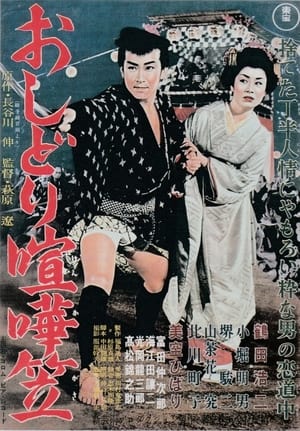
In this film, Hibari plays a dual role as brother and sister. The story involves a journey to Hanagasa for an incognito Lord (Kotaro Satomi) to overthrow an attempted usurpation of his domain, while being harassed by vassals of the usurper (Kensaku Hara). There's also a mysterious ronin played by Jushiro Konoe. The songs are seamlessly woven into the narrative and don't overwhelm the action. While the plot is derivative it is good example of its type and quite enjoyable. Note that there are some flashback sequences in black and white.
Japan, 1785. Jūzaburō, a famous thief who refuses to kill innocent people, is betrayed, ambushed, and left for dead.
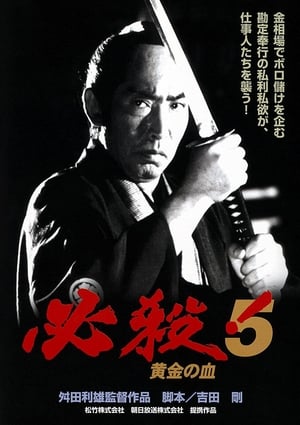
The government in Edo era is suffering from a financial crisis. It hires "Kage" to provoke the collapse of small hans (prefectures). "Kagekari" are people who were hired by Daimyos (mayors of local governments) to resist kage. The young mayor of Suwa Takashiwa, Tadamaru was assaulted by a kage on his way to Edo. Zyubei and Gennnosuke, the Kagekaris, try to carry injured Tadamaru to Edo.
Naosuke, a servant of Okajima Yasoemon, devoted himself to his master. One day, his master Okajima Yasoemon, lost his face in front of people. It was a revenge by Oono, a karo (minister) who lost his chance to earn money by selling a fake antique to the lord. Okajima told the lord it was fake. Okajima endured Oono's humiliation. But, his servant Naosuke, could not. But what could he do? Oono is superior of his master. Naosuke would not hesitate to lay down his life for his master. But killing Oono would ruin his master. He wanted to clear his master's disgrace. What to do?
In a poor district of Edo lives a young samurai named Soza. He has been sent by his clan to avenge the death of his father. He isn't an accomplished swordsman however, and he prefers sharing the life of the residents, teaching the kids how to write etc. When he finally finds the man he is looking for, he will have to decide whether he follows the way of the samurai or chooses peace and reconciliation.
A look at the relationship between a young blind samurai and his wife, who will make a sacrifice in order to defend her husband's honor.
In the Edo period, a nameless ronin accepts an assignment to go to a mountain pass and wait. Near the pass he stops at an inn where a collection of characters gather, including a gang set on stealing shogunate gold that's soon to come over the pass. When the Ronin's assignment becomes clear, to help the gang, he's ordered to kill the inn's residents, including a woman he's rescued from an abusive husband. He's reluctant to murder innocent people; then he learns that the gold shipment is a trap and he's part of a double cross. How he sorts through these divided loyalties tests of his samurai honor, and perhaps of his love for a woman.
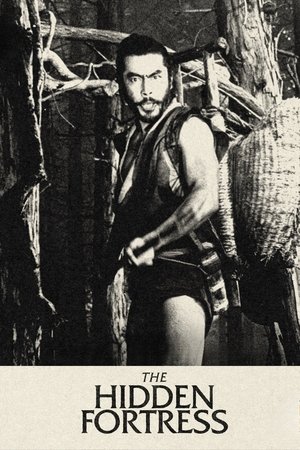
In feudal Japan, during a bloody war between clans, two cowardly and greedy peasants, soldiers of a defeated army, stumble upon a mysterious man who guides them to a fortress hidden in the mountains.
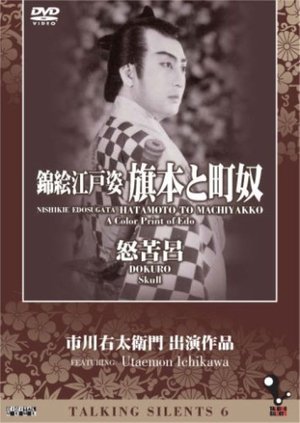
The Color Print of Edo is a 1939 black and white Japanese silent film with benshi accompaniment directed by Kazuo Mori. It is a cheerful period drama, sprinkled with comical scenes and tells the story of a loyal and handsome Edo period servant who fights to help his older brother marry the woman he loves. The star of this film, Utaemon Ichikawa, gained enormous popularity for his portrayal of a cheerful and chivalrous man.
Blind traveler Zatoichi is a master swordsman and a masseur with a fondness for gambling on dice games. When he arrives in a village torn apart by warring gangs, he sets out to protect the townspeople.
The first part of an entertaining historical drama depicting the eventful story of the revenge of an actor with a strange fate, with a variety of characters and exciting developments.
Having put down his sword and given up the will to fight, the masterless samurai Iemon lives in solitude while being haunted by his violent enigmatic past...
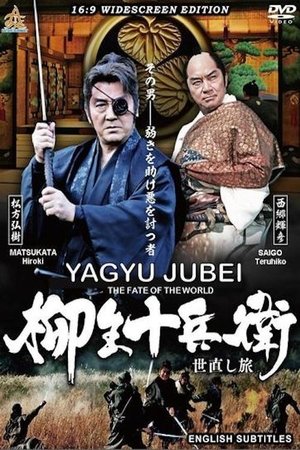
The fate of Tokugawa’s world hangs in the balance as Yagyu Jubei is sent on a mission to discover what happened to 10 of the shogun’s spies that never returned. Matsukata Hiroki, one of the last surviving members of the Golden Age of Japanese Cinema proves that he has not lost a step as he portrays an older and wiser Yagyu Jubei in a movie that brings the best of samurai filmmaking into the 21st century. Summoned from semi-retirement by Shogun Iemitsu, Jubei is asked to take to the road and investigate a clan rumored to be preparing explosives for a rebellion. With help from a beautiful female ninja they head into the Shirakawa domain where the fighting skills of both are tested time and again as they strive to destroy a conspiracy that could bring a new Warring States Era. In the 1960's Yagyu Jubei was the signature role of the great Konoe Jushiro, father of Matsukata Hiroki. This brings the character full circle.
During the Edo period, a gifted swordsman was exiled from his clan when he questioned the misconduct of his leader. Years after, his dying wife wish was for him to go back to his clan.
Seibei Iguchi leads a difficult life as a low ranking samurai at the turn of the nineteenth century. A widower with a meager income, Seibei struggles to take care of his two daughters and senile mother. New prospects seem to open up when the beautiful Tomoe, a childhood friend, comes back into he and his daughters' life, but as the Japanese feudal system unravels, Seibei is still bound by the code of honor of the samurai and by his own sense of social precedence. How can he find a way to do what is best for those he loves?