Many geneticists and archaeologists have long surmised that human life began in Africa. Dr. Spencer Wells, one of a group of scientists studying the origin of human life, offers evidence and theories to support such a thesis in this PBS special. He claims that Africa was populated by only a few thousand people that some deserted their homeland in a conquest that has resulted in global domination.
In Paul Brandt’s filming debut, he joins friend Paul Norris and legendary fly-fishing guide, Naoto Aoki, on a journey that is both a look into his consuming passion for fly fishing and an ode to his hometown of Calgary, which he dubs as the World’s Largest Fly Fishing Lodge.
A New Yorker journeys to the jungle in the Darien Gap of Panama to reconnect with an indigenous tribe he met and photographed 20 years ago. Their reunion highlights the profound power of photos and the human connection that transcends cultural barriers.
Echoes from the Tian Shan
Joseph Vallot, geographer, naturalist and mountaineer born in 1854 in Lodève, was a visionary man, full of humor and whose curiosity was insatiable. He had spent some forty years of his life studying the Mont Blanc massif, sacrificing a good part of his fortune to this multifaceted passion. He was notably the first to demonstrate that one could sleep, work and even do science at an altitude of over 4000 meters, at a time when ascents to the summit of Western Europe were still adventurous expeditions. This documentary tribute follows in his footsteps, via the route taken at the time, on foot from Chamonix via the Grands Mulets refuge to the summit of Mont Blanc to the Joseph Vallot observatory nestled at an altitude of 4400m, with a team of guides, journalists and scientists.
The one-off documentary tells the story of two women travelling by bike across the United States, from Canada to Mexico along the Great Divide. A unique adventure through the most remote areas of the Rocky Mountains, between pristine nature and wild animals. An epic journey that led them to travel 4,000 km and climb 60,000 meters and that, day after day, forced them to face their own limits, their strength and fragilities, and tested their relationship. Because every journey is always a love story.
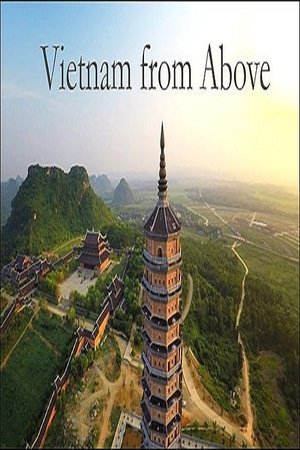
Země jihu – Vietnam
Masters of stone I is a documentary about rock climbing that takes place in City Of Rocks and American Fork Canyon. It was directed by Eric Perlman in 1991 and produced by Perlman Productions. It is a part of the series Masters of stone (1/6). It features Ron Kauk, Tony Yaniro, Dan Osman, John Bachar, Todd Skinner, Boone Speed and others.
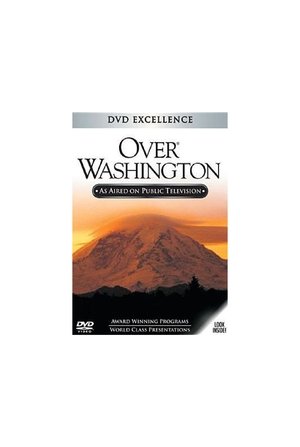
Take to the sky and come face-to-face with Washington states majestic mountains, including one of the Pacific Northwests most well-known symbols: Mount Rainier. Celebrate the diversity of the states landscapes in Over Washington, from the glittering Puget Sound in the west to the rolling Palouse in the east. Stunning aerial cinematography and original music bring these spectacular images to life.
A beautifully filmed documentary about the life and work of Ski Patrol at several Montana Ski Resorts and the Search and Rescue teams that respond to winter emergencies in the backcountry.
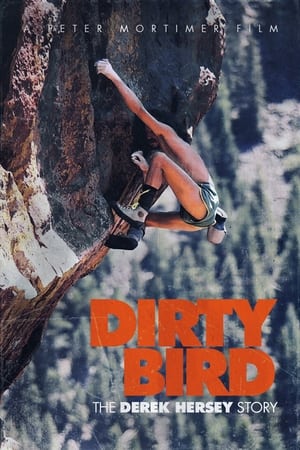
Dirty Bird, The Derek Hersey Story
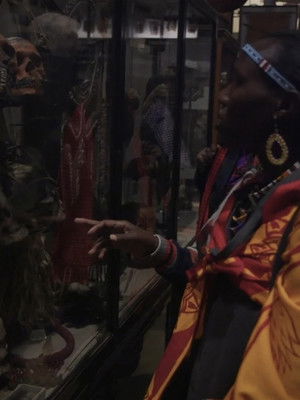
Decolonising the Curatorial Process is a forty-minute documentary which explores decolonial strategies in an academic and curatorial context. The film features academics, activists and practitioners, and contains case studies of institutions that are deploying critical, self-reflective forms of curatorial practice. The Museum of London Docklands exhibition on slavery and the sugar industry is examined as an example of how an institution can decolonise the curatorial process, utilise the work of artists in a museum context, and critically examine East London's imperial history. The Pitt Rivers museum in Oxford, who are working with Maasai activists from Kenya and Tanzania on a project centred on repatriating the museum's collection of sacred Maasai artefacts, also features in the film.
The River of Life and Death captures the slow time in the well-known Indian pilgrimage place of Benares, the act of purification by water, the burning funeral pyres, and the dandling snakeheads under the temple stairs.
A celebration of the eccentric climbers of Colorado's Front Range. Includes bouldering with Urban Ape Timmy O'Neill, trad climbing with Heidi Wertz, Matt Samet, Topher Donahue, adventures with Biscuit the infamous climbing dog, a tribute to the late solo guru Derek Hersey, and more.
Minnesota: A History of the Land vividly brings to life the epic story of the people and landscapes of Minnesota. From the retreat of the last ice sheets to the growth of today’s suburbs – the series seeks to entertain as it enriches our understanding of Minnesota’s past, present, and future. A visually stunning and groundbreaking 4-part documentary series featuring nature videography from across the state, never before seen historic images, state-of-the-art animations and historic recreations. Original soundtrack by award-winning composer, Peter Ostroushko.
For the first time, and through the eyes of two special mountain lion families, the true nature of North America's big cat can finally be revealed. Set in Wyoming's spectacular Rocky Mountains, the dramatic story of two mothers struggling to raise their kittens is helping scientists rewrite our understanding of these elusive predators. This is mountain lions up-close, in-depth and more intimate than ever before.
This 1950s' film looks at the measures to preserve water flow from the Rocky Mountains. With the steady falling of the water table, the exploitation of timber stands and the recession of glaciers, water conservation was an urgent concern of the Alberta and federal governments.
How would natural habitats develop without human interference? In this documentary we follow an international team of scientists and explorers on an extraordinary mission in Mozambique to reach a forest that no human has set foot in. The team aims to collect data from the forest to help our understanding of how climate change is affecting our planet. But the forest sits atop a mountain, and to reach it, the team must first climb a sheer 100m wall of rock.
In 2013, the world's media reported on a shocking mountain-high brawl as European climbers fled a mob of angry Sherpas. Director Jennifer Peedom and her team set out to uncover the cause of this altercation, intending to film the 2014 climbing season from the Sherpa's point-of-view. Instead, they captured Everest's greatest tragedy, when a huge block of ice crashed down onto the climbing route...
The interview, held on January 4, 2001, was the last given by Professor Milton Santos, who died from cancer on June 24 of the same year. The geographer is gone, but his thoughts remains. Its political and cultural ideals inspire the debate on Brazilian society and the construction of a new world. His statement is a true testimony, a lesson that the world can be better. Based on geography, Milton Santos performs a reading of the contemporary world that reveals the different faces of the phenomenon of globalization. It is in the evidence of contradictions and paradoxes that constitute everyday life that Milton Santos sees the possibilities of building another reality. He innovates when, instead of standing against globalization, proposes and points out ways for another globalization.