Why do people vent such toxic opinions online? Filmmaker Kyrre Lien spent three years travelling the world to find out who these anonymous ‘internet warriors’ are and why they do it.
After delivery of a parcel, on leaving a restaurant, hotel or train, or following an exchange with the customer service department of your telephone operator, the same request: to rate. On a scale from 0 to 10, embellished with colors, or by awarding pretty, playful little stars. A simple, mechanical and painless action for the rater. But behind this harmless gesture lies a brutal management system, operated directly by the customer, without their knowledge. Even more worrying: without knowing it, we are all being rated, to feed the algorithms of opaque companies that claim to be able to predict the future. The film questions this invasion of rating systems, and the consequences of this practice for our individual realities and collective freedoms.
Lekcja 41
What if we changed viewpoints? "Bullying, our lives after" highlights the suffering of adults who were once bullied pupils. Ten, twenty or thirty years later, trauma is still present. Following Nathalie, Laurine and Samuel, this movie shows the long-term implications of bullying, pointing out a real failure of the educational institution and a major public health issue.
Ivory Coast, the Democratic Republic of Congo, and Senegal – when it comes to love and sex, these African countries are caught between tradition and modernity.
The 1905 law proclaiming the separation of church and state is 120 years old. This law affirms freedom of conscience and religious freedom. It is considered the founding text of secularism. Secularism is the subject of endless controversy and debate.
Lego : Les 30 constructions les plus incroyables
Hannah, Laure, Adrien, and Halima are students at the Regional Institute of Social Work in Paris. Four students among the fifty in the first year of training to become educational support workers. They chose this profession out of commitment and vocation. Between the classroom and their field placements, they will confront their dreams and ideals with the realities on the ground, discover new sides of themselves, and begin to shape the contours of the profession they will practice—each in their own way.
About Stefan Stricker, who calls himself Juwelia and has been running a gallery on Sanderstraße in Berlin Neukölln for many years. Every weekend he invites guests to shamelessly recount from his life and to sing poetic songs written with his friend from Hollywood Jose Promis. Juwelia has been poor and sexy all her life, has always struggled for recognition, but only partially.
A short film following Anthony, a young child from the small, rural town of San Antonio de los Baños, Cuba. We see him in different moments of his daily life as he interacts with different forms of environmental, familial, and social influences. While Anthony displays contradictory traits of creativity, destruction, rigidity, and tenderness as he interacts with his external and internal worlds, we see a story built from the the multidimensionality of Anthony's layered personality as a young man.
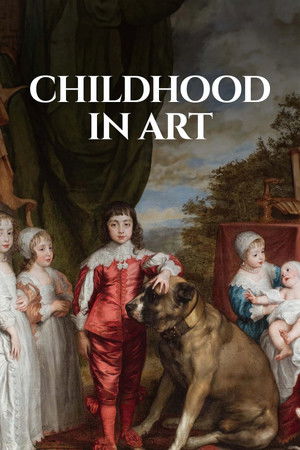
How have the changing views on children been reflected in their representation in art? From Baby Jesus to the first photographic portraits, an exploration of six centuries of art history through the prism of childhood.
Méthane, rêve ou cauchemar ?
Bhutan - Königreich der Glücklichen
Arbeiten bis ins Grab?
Pouvoir Oublier is a political documentary first constructed from the words of the speakers whose lives changed on the tragic day of May 10, 1972 in Sept-Îles. Their word will be juxtaposed with archival material from the events, some of which are unpublished, which will reflect the collective euphoria in which Sept-Îles and all of Quebec were then bathed.
In the narrow streets of Marikina City, where the sound of hammers once echoed endlessly, Soles of Marikina unfolds as a cinematic portrait of craft, struggle, and survival. The film follows aging shoemakers and young apprentices as they work by hand—cutting leather, shaping soles, stitching stories into every pair—while fighting to keep an industry alive in a rapidly changing world.
Tant qu'il y aura de la poussière
"Africa Light" - as white local citizens call Namibia. The name suggests romance, the beauty of nature and promises a life without any problems in a country where the difference between rich and poor could hardly be greater. Namibia does not give that impression of it. If you look at its surface it seems like Africa in its most innocent and civilized form. It is a country that is so inviting to dream by its spectacular landscape, stunning scenery and fascinating wildlife. It has a very strong tourism structure and the government gets a lot of money with its magical attraction. But despite its grandiose splendor it is an endless gray zone as well. It oscillates between tradition and modernity, between the cattle in the country and the slums in the city. It shuttles from colonial times, land property reform to minimum wage for everyone. It fluctuates between socialism and cold calculated market economy.
What does it mean to be Black in America in the 21st century? The recently formed Black American film group TNEG™ has set out to elucidate this very question. Hearing from the likes of fine artist Kara Walker and musical artist Flying Lotus, the film is based on a deceptively simple approach -- asking a refined list of black 'specialists' as well as 'uncommon folks' questions about what they think, and more importantly as lead director Arthur Jafa states, 'What they KNOW' -- the film is an unprecedented 'stream of the black consciousness' and a strikingly original and rarefied look at black intellectual and emotional life. What's so unorthodox about this simple approach is that the interviews were recorded separately from the images in the film. What results is a breathtaking, kaleidoscopic look of American black life from the dawn of three original filmmakers.
Macadam Cowboy