The Kush Empire was an ancient superpower that dominated the Nile Valley and rivaled the Egyptians, and now, a new, cutting-edge investigation at a mysterious tomb could reveal the secrets of this formidable lost kingdom.
Romantic art was a response to the social upheavals of the 19th century, as shown by works by its emblematic painters Friedrich, Venetsianov and Delacroix.
Pearl Harbor, l’histoire vraie d’une attaque surprise
Rare archive footage reveals what Singapore was like dating back to 1900, showing coolies sharing lunch, rickshaw pullers, a grand Peranakan funeral, and more.
Petro-Melancholie
Mains basses sur les savants d'Hitler, le plan secret français
Five times, Earth has faced apocalyptic events that swept nearly all life from the face of the planet. What did these prehistoric creatures look like? What catastrophes caused their disappearance? And how did our distant ancestors survive and give rise to the world we know today?
Aux origines, l'esclavage
A documentary examining what the Tyrannosaurus Rex was really like - both appearance and behaviour - using the recent palaeontological and zoological research.
A pathetic police chief, humiliated by everyone around him, suddenly wants a clean slate in life, and resorts to drastic means to achieve it.
The last sovereign Zulu King, a female British missionary, an ambitious colonial official and a young Welshman are all voiced by actors to make AMASHINGA a beautiful and epic explanation of the British invasion of the Zulu Kingdom in 1879.
From 1945 to 1989, after the capitulation of Nazi Germany, two rival ideologies, communism and capitalism, faced each other in a merciless battle. On one side of the Iron Curtain and on the other, throughout the Cold War, the USSR and the United States sought to shape children’s imaginations through their magazines and films. Never in the history of mankind have so many comic books been published and so many cartoons produced for young people. In November 1989, communism collapsed with the Berlin Wall; capitalism was left to decide the future of the world. What if this victory had been prepared for a long time, and our thinking conditioned, from our early childhood, to ensure this absolute triumph?
Using original footage and interviews, this documentary tells the nail-biting story of Apollo 13 and the struggle to bring its astronauts safely home.
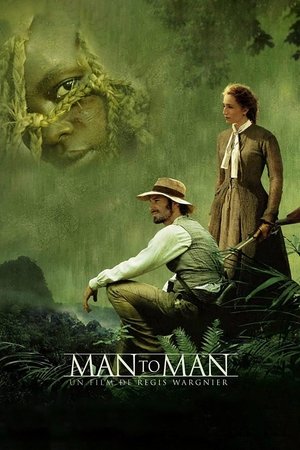
The year is 1950 and an English couple, Louise and Michael, have arrived in French-occupied Indochina to cover a story on a French-owned rubber plantation. They are to be the guests of the enigmatic plantation overseer, Daniel, and his beautiful yet difficult daughter Viola, at their elegant, decaying villa amid a tropical jungle. Michael and Louise hope that some time spent working in an exotic location will help reignite the passion in their floundering marriage. Instead they become unwittingly involved in the personal, sexual and political tensions of their hosts. Daniel is desperate to hold onto a way of life no longer possible in a country struggling for independence, bringing him into conflict with not only his daughter but also with his adopted country.
In 150 years, twice marked by total destruction —a terrible earthquake in 1923 and incendiary bombings in 1945— followed by a spectacular rebirth, Tokyo, the old city of Edo, has become the largest and most futuristic capital in the world in a transformation process fueled by the exceptional resilience of its inhabitants, and nourished by a unique phenomenon of cultural hybridization.
In the first decades of the 20th century, when life was being transformed by scientific innovations, researchers made a thrilling new claim: they could tell whether someone was lying by using a machine. Popularly known as the “lie detector,” the device transformed police work, seized headlines and was extolled in movies, TV and comics as an infallible crime-fighting tool. Husbands and wives tested each other’s fidelity. Corporations routinely tested employees’ honesty and government workers were tested for loyalty and “morals.” But the promise of the polygraph turned dark, and the lie detector too often became an apparatus of fear and intimidation. Written and directed by Rob Rapley and executive produced by Cameo George, The Lie Detector is a tale of good intentions, twisted morals and unintended consequences.
Cao Bang, les soldats sacrifiés d'Indochine
Thanks to new excavations in Mauritius and Madagascar, as well as archival and museum research in France, Spain, England and Canada, a group of international scholars paint a new portrait of the world of piracy in the Indian Ocean.
Edgar Morin, chronique d'un regard
In 1963, Rosans, a village in the Hautes-Alpes region depopulated by the rural exodus, welcomed Harkis (military soldiers) forced to leave Algeria for supporting France during the Algerian War. Around thirty families settled in a camp below Rosans. Nearly half a century after their arrival, first- and second-generation Harkis and native Rosanais recount their experiences of this culture clash, often painful, sometimes happy. Language barriers, religious differences, living in barracks for 14 years, and unemployment were all obstacles to overcome in order to be accepted and then achieve mutual enrichment. Enriched with archive footage to explain the historical context of the time, the film seeks above all to express feelings and unspoken words.