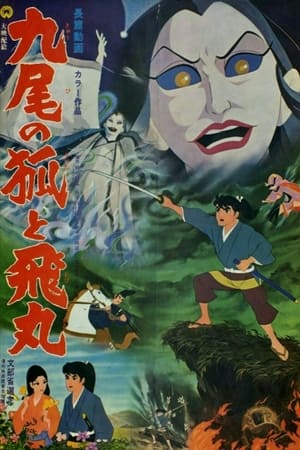
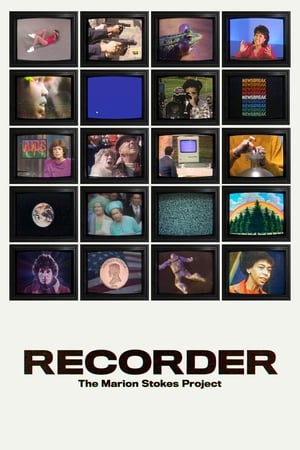
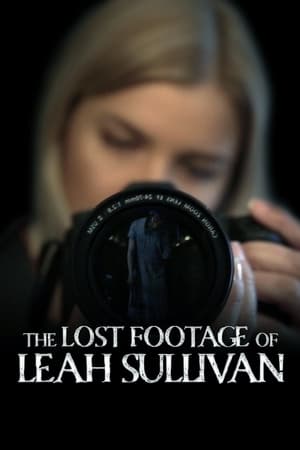
Tobimaru is the young emperor of Japan. He meets a mysterious woman named Tomamo. After successfully seducing Tobimaru, she brings great misfortune onto the land. Tobimaru soon discovers that Tomamo is actually a kitsune, and now has the task to unmask and kill her to save his land.
"A theatrical anime comedy short based directly on the hit mobile game. Released alongside major theatrical events in Japan, it features an entire army of bizarre, surreal "Nyankos" executing chaotic plans for world dominance on the big screen." A lost media movie, created by PONOS Cooperation. This was a highly exclusive, limited-time interactive attraction, screened only inside physical event venues in Japan. PONOS Cooperation had never released it on DVD, Blu-ray, or any streaming platforms.
A variety-style show designed around Frankie Howerd, featuring musical guests, comedic monologues, and his characteristic interaction with the audience, promising a "star-studded" feel despite his ironic complaints about the lineup.
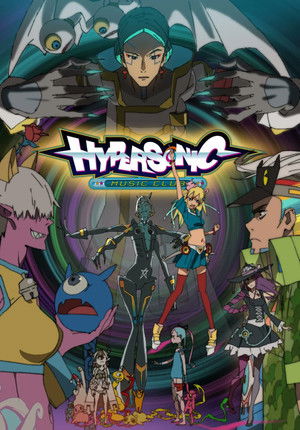
In 2017, a short anime film called Hypersonic Music Club was produced in Japan. It was directed and written by Osamu Kobayashi, a veteran of the industry who passed away in April 2021. For various reasons, this short anime was never released. It was made public on August 1, 2023.
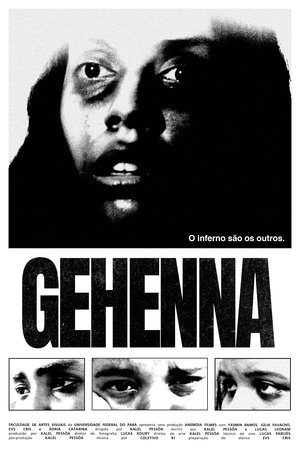
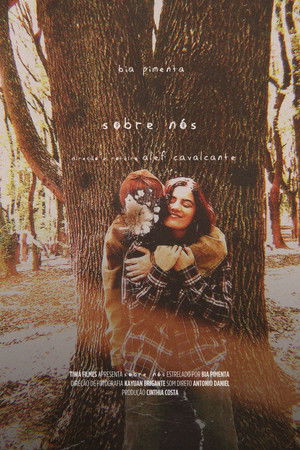
During a lonely night, Julia recites a poem about loss, reunion and overcoming.
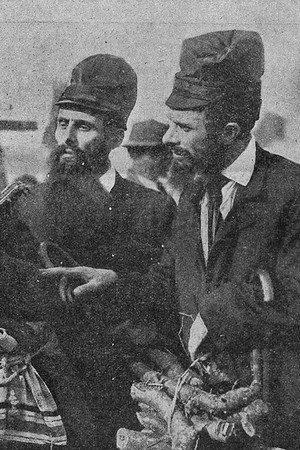
The action takes place during the January Uprising. A Russian commander imposed a tribute on a town inhabited by Jews; the money was appropriated by an adjutant, and eleven hostages faced court martial for allegedly failing to pay tribute and forging the commander's signature. A legend is woven into the plot: the sacred number 36 indicates thirty-six righteous. Nameless, unknown to anyone, they live as paupers or simpletons, carrying the burden of the world's sins on their shoulders. A good deed or a miracle that averts misfortune betrays them; however, the perpetrator of the miracle must die. The film has not survived to this day.
After purchasing a Barney doll, friends Kyle and Derek uncover a piece of Barney lost media that ensnares them in the schemes of a mysterious and dangerous superfan. Friends Are Forever unfolds as a grounded, psychological analog-horror told through found-media fragments, ARG breadcrumbs, and 2010s digital ephemera to explore how fandom, nostalgia, and exploitation collide in the internet age. Praised as “insanely well executed and thought out,” viewers highlight its “high production quality for a first-timer to the horror genre.”
Photographer Peter Christiansen, University of Miami student, does a picture story at an LSD party on the beach.
Lost Media
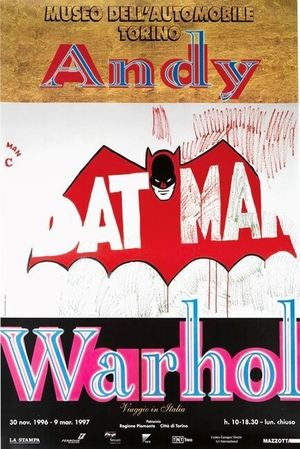
15 Thousand Drawings
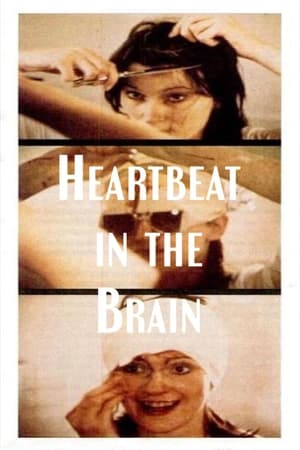
In this recently found and restored banned underground classic from 1984, four girls go into a bathroom to hide in the middle of a war and, after an impulsive act by one of them, they find themselves trapped there. As panic gives way to despair, tragedy approaches.
A Latinoamericano experimental film. The first version of this 1957 film, a single copy drawn and painted directly onto blank 35mm film, was sent to and lost during the Rio de Janeiro International Film Festival in 1968 and remade 1989 Desenho Abstrato n° 2!
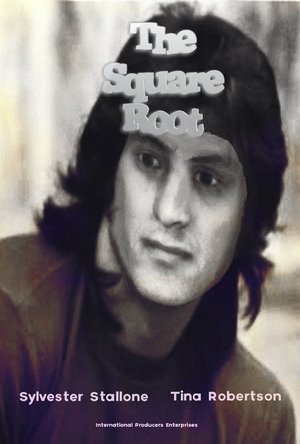
A lost student film made at Columbia University, plot is unknown.
Lost Todd Sheets short about a killer using a blender.
A documentary produced and directed by Amanda Feilding, an advocate of trepanation. In the film, Feilding, a 27-year-old student at the time, drills a hole in her forehead with a dentist's drill. In the documentary, surgical scenes alternate with motion studies of Feilding's pet pigeon Birdie.
A youth waits for his brother to return home from a bloody war. He encounters something very nasty and evil in the basement of his house, claiming his older brother has in fact died.
In the 20th century they called it avant-garde cinema, expanded cinema, kitsch cinema, structural cinema, psychotronic cinema, underground cinema, experimental cinema, kinoeye, cult cinema, lysergic cinema, bizarre cinema, Ahora lo llaman cine de DDLM´S.
Based on the novel by Helena Mniszek entitled "The Leper". The film has not survived to this day.
Another film, along with BLANC ET NOIR, from the series of pseudo-psychological dramas by Kinofilm. The film has not survived to this day, all copies burned during World War II.
Film shot in Berlin, edited and supplemented in Warsaw. W. Jewsiewicki believes that the copy produced by the German studio contained numerous distortions of the writer's ideas, which is why director Juliusz Zagrodzki entrusted Eugeniusz Modzelewski with rewrites and reshoots featuring the two main characters. Assuming the film's program was faithful, the screen version of "The Beauty of Life" unfolded as follows: Piotr Rozłucki, the son and grandson of an insurgent, was raised in the Mikhailovsky Corps, far from his homeland and all memories. Promoted to officer status, thanks to his family's efforts, he was assigned to a regiment stationed in Poland, and there, at the home of his superior, General Polenov, he met his daughter, Tatiana. Simultaneously, he became close to a circle of patriotic youth. A struggle rages within the young officer: on the one hand, a passionate and mutual love for a charming Russian woman, and on the other, conscience, homeland, and duty.