Every year, approximately 800 Sahrawi boys and girls leave the refugee camps to study in Cuba, Algeria and Libya… 15 years later, they return biologists, doctors, engineers… but when they get back to the refugee camps all they have is the desert…
Those who do not know the Sahara think there is only sand in the desert. But in the desert there are children who play and draw and make movies, and who would like to not have to think about the war. In the desert there's a European colony, an occupied country called Western Sahara, where there are thousands of Sahrawi refugees living a hard life in exile. "Little Sahara" tells their story, the story of a supportive, resilient people who try to thrive and grow in the Hamada, where everything has a hard time growing.
Known for her intimate films, director Kim O’Bomsawin (Call Me Human) invites viewers into the lives of Indigenous youth in this absorbing new documentary. Shot over six years, the film brings us the moving stories, dreams, and experiences of three groups of children and teens from different Indigenous nations: Atikamekw, Eeyou Cree, and Innu. In following these young people through the formative years of their childhood and right through their high school years, we witness their daily lives, their ideas, and aspirations for themselves and their communities, as well as some of the challenges they face.
How would you claim your identity in a hostile land? How could you live under harassment and repression? How would you make your voice break through the walls of silence? Sahrawi young people living at the Occupied Territories (O.T) are required to study at the occupying country. But a river resonates all over the desert...
Smara is the city of dust, kingdom of sirocco, a surviving ruin of a suffocating region… Thousands of Sahrawis who fled Western Sahara after the war against Morocco (36 years ago) live in this refugee camp, located in the Sahara’s inhospitable north, in the middle of the Algerian hamada. They live here, under poor human conditions, thanks to international help. A small film cooperative fights, with barely any means, to elevate the voices of young Saharawis. It is one of the many Nollywoods (Hollywood of emptiness) found in Africa.
The Quays' interest in esoteric illusions finds its perfect realization in this fascinating animated lecture on the art of anamorphosis. This artistic technique, often used in the 16th- and 17th centuries, utilizes a method of visual distortion with which paintings, when viewed from different angles, mischievously revealed hidden symbols.
Jasmin is joy, living in the moment. A 15-year-old boy described as "non-verbal autistic." He communicates through his eyes. He makes sounds, says a word. He constantly sings the rhythm of a song whose lyrics only he knows. A bubble of sweetness and love.
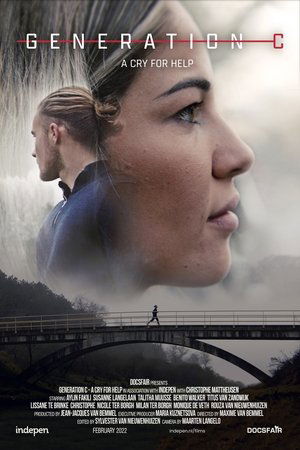
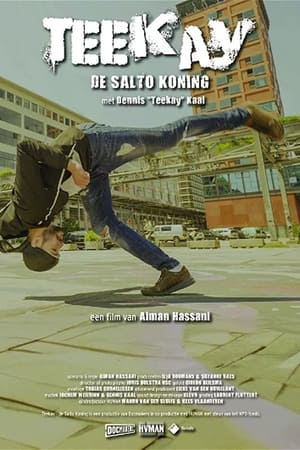
Rapper and breakdancer Teekay from Eindhoven is known for his somersaults and vlogs that are causing a stir. During the corona riots in 2021, he not only gained national fame as a vlog reporter, but also ended up briefly in jail. After his junior year, Teekay wants to change course and, above all, be an example for other young people. In the film he takes us into his life and talks about his childhood in foster homes, the mistakes he made and about his dreams. What is Teekay looking for?
This film, with an autobiographical flavor, was shot in part on the very premises where Father Proulx grew up and highlights the importance of agriculture and the very special attention given to rural youth in the from the Government of Quebec. The farm and its little world are presented during the four seasons: the introduction of children to agricultural work, the holidays, the return to school. From November to the end of April, the older ones take courses in the various agricultural schools scattered across Quebec. In addition to studying the methods of cultivation and breeding, they receive notions of carpentry, blacksmithing and other lessons likely to be useful in their future work as farmers. In the spring, the young girls go to secondary schools of agriculture to learn domestic art, beekeeping, weaving, sewing, etc.
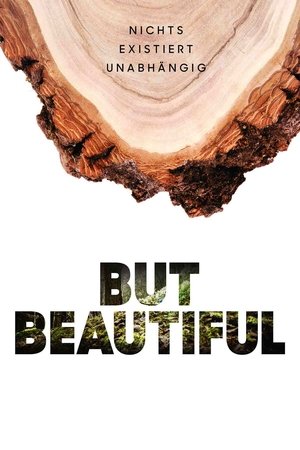
In his new film, Erwin Wagenhofer is looking for the good and beautiful in this world.
Young Masters is an original series commissioned by NOWNESS China focusing on traditional Chinese cultures, and how they continue to be defined by a new generation of the country's youth. High above the clouds in a village in Mao County in Sichuan Prefecture, a post-90’s generation of young cultural guardians work to uphold the values and traditions of ancient Qiang culture. These cultural guardians, known as a ‘Shibi’, remain especially vital for a culture whose knowledge and language exist merely through practice and in sound, and without script. The role of a Shibi involves that of a priest, alongside folk rap, singing, and dance performances, amongst others. As a result, Qiang people have endowed them with a sacred status, believing that they possess a psychic power.
A group of young architects, confined to a forest in Barcelona during the COVID crisis, explore the problems generated by the ambition of wanting to be completely self-sufficient.
Director Philip Haas and artist David Hockney invite you to join them on a magical journey through China via a marvelous 72-foot long 17th-century Chinese scroll entitled The Kangxi Emperor's Southern Inspection Tour (1691-1698), scroll seven . As Hockney unrolls the beautiful and minutely detailed work of art, he traces the Emperor Kangxi’s second tour of his southern empire in 1689.
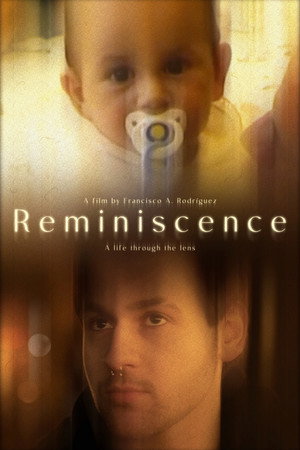
A visual essay on the stimuli that draw a bridge to past memories of my life; a real documentary about where I was and where I am, what I did and what I do; a reflection of the person I was and continue to be.
Over a dozen students at this school in Quebec were radicalised. To tackle the issue, a pilot project was launched to heal divides within the student body. It's a hybrid cultural model, made up of the many cultures of its students.
Maël is a passionate gardener and an environmental activist. Away from big cities, sharing is time between his agricultural college, his contract of apprenticeship, and his beloved vegetable garden, Maël grows up with deep-rooted alter-globalist beliefs.
On the 14th of November 2020 the Polisario Front considered breaking the ceasefire calling on the United Nations to intervene and declare a 'state of war' throughout the territory in response to an attack commited by Moroccan forces the day before. On the early morning of thursday to friday the 13th of November, at the border crossing of Guerguerat, Moroccan forces took action to expel a group of around 50 Sahrawi civilians who were, since the 21st of October, blocking the connectiong road with Mauritania in order to demand that the United Nations hold a referendum of autoindependence as was promised in 1991. In this short documentary the situation of the Sahrawi people after the events of the 13th of November is explained.
The history of Western Sahara was cut short more than 40 years ago. One, two and almost three generations have seen their life expectations and those of their children frustrated, powerless in the face of the impunity with which Morocco continues to occupy their territory. Through the life of Hask, a Sahrawi who has been living in Spain since he was 12 years old, the story of people who live in a borrowed desert far from their home is told.
This short film denounces the standards of beauty which Sahrawi women are subjected to, who use whitening products to lighten their skin, ignoring the risks that they may later incur.
On June 12, 2019, the Committee to Investigate Violence in Youth Care presented its final report. The conclusions were startling. Kim Feenstra set out to find out what progress has been made within the Youth Care system since then and ended up in a circle of grief and pain dominated by money, power and powerlessness. In her search, Kim Feenstra spoke to many people involved. The stories can be described as downright shocking. In many cases Youth Care appears to act as a revenue model that is exploiting parents and children. The complex system has only one entrance, but the exit is obstructed by all stakeholders who want to maintain their revenue model. The people who really matter, the parents and children, encounter a power block of inhuman proportions. A system dominated by money, power and powerlessness.