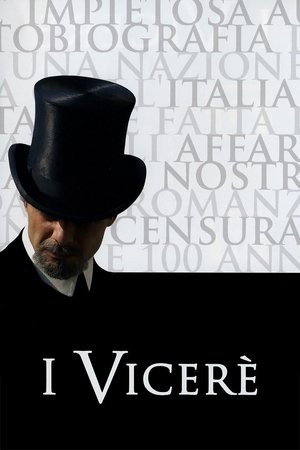
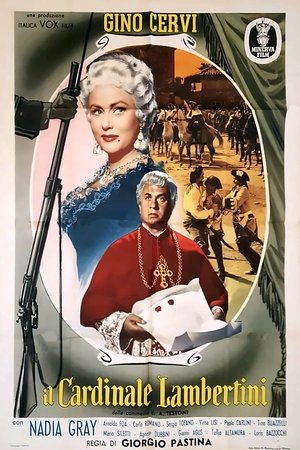
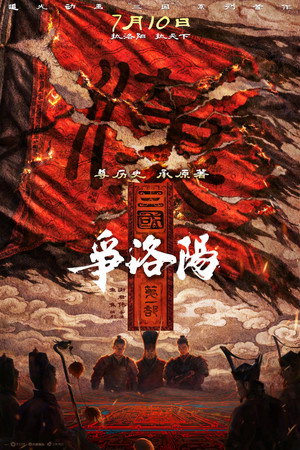
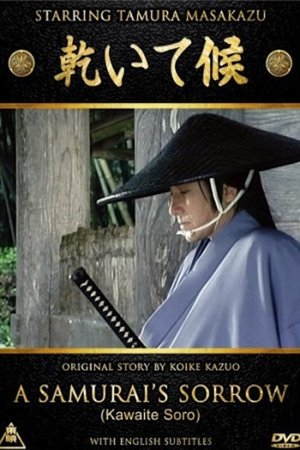
In late 19th-century Sicily, the noble Uzeda family—whose lineage dates back to the ancient viceroys that ruled those lands—fights to preserve its waning power in the face of the newly unified Italian regime.
1848, Tuscan countryside. Edo and Lupo are two peasants running away after having robbed their boss. Chased by mercenaries, they'll meet bandits, damsels in distress, eccentric nobles, and revolutionaries along the way.
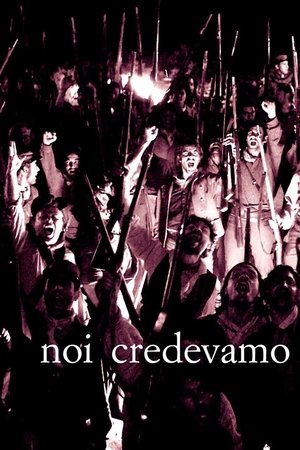
1828. After witnessing the brutal repression of revolutions in monarchist South, three young friends join Giuseppe Mazzini's patriotic cause, seeking to finally unify Italy under a republican government. Their idealism will clash with the inevitable disillusionment as they grow apart over the following decades.
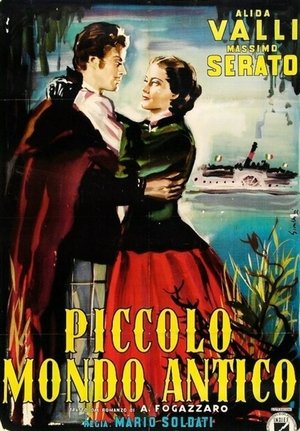
Franco, a young man of noble descent, marries Luisa, daughter of a humble clerk, against his grandmother's will.
During the Battle of Custoza (1848), a platoon of Piedmontese soldiers has barricaded itself in a secluded house, surrounded by the Austrian enemies. The captain commits his destiny and the one of his soldiers to the young tambourinist, a Sardinian child animated by an overwhelming patriotic spirit.
After John Wilkes Booth assassinated President Abraham Lincoln, he escaped to Maryland and was discovered hiding in a barn. After he refused to surrender, the barn was set afire and Booth died in the blaze. However, in 1903 a Mr. David E. George, while on his deathbed in Enid, Oklahoma, claimed to be John Wilkes Booth. This MGM An Historical Mystery series short presents evidence of the possibility that Mr. George's claim was true.
Jan and Maria become a couple in 1930s Kraków. Jan tries to get a job as an architect but fails. They struggle with poverty and extreme humiliation. Their attempt to survive leads to a desperate crime.
This short explores the possibility that Louis XVII, son of King Louis XVI and Marie Antoinette, escaped death during the French Revolution and was raised by Indians in America.
The plot begins in the Soviet Union showing first efforts to establish the Czechoslovak legion in 1942. The film also shows the assassination of Heydrich and the subsequent annihilation of Lidice. The main topis of the film is battles with German troops for Sokolovo.
Brazil has a long tradition of coup d'états. These coups would have not been viable without the support of the big media, particularly TV Globo. Two Brazilian journalists in the UK reveal the manipulative tactics of these organisations.
The leader gumiho, who has lived for more than 1,000 years, is captivated by a human woman, Gu Ho, who met Jeong Yeon, who has been reborn in the present. The 500-year-old Mi Ho, who is good at transforming herself into a different creature, advises Gu Ho not to love people after experiencing heartbreaking love in the Joseon Dynasty. Su Ho, a 25-year-old boy, falls in love with people, gets hurt, and is filled with hatred for humans. The Love Story of Gumiho, which connects Japanese colonial era and Joseon Dynasty in the present.
In the time of the Tang Dynasty, Yu Xiufeng, a porcelain maker from Mount Meicen, makes a ceramic statue of the Bodhisattva Avalokitesvara to consecrate at Mount Wutai to protect the princeling Li Yi.
In August 1966, the Cultural Revolution in full swing, 13-year-old Tian Ben is arrested for playing a pop record; he's sent to a remote mountain camp in Niu-Peng. There he's called "Four Eyes" and, with about 16 other older boys and men, he's made to carry muck up a mountainside, make bricks, saw logs, and sing daily to Chairman Mao of his faults. There's camaraderie among the five youths, especially with a young pickpocket named Baimao, and Tian is also drawn to a silent monk who cares for him when he falls ill and the others expect him to die. The camp is remote, so there are no fences or walls. Tian longs to escape.
Ophelia comes of age as lady-in-waiting for Queen Gertrude, and her singular spirit captures Hamlet's affections. As lust and betrayal threaten the kingdom, Ophelia finds herself trapped between true love and controlling her own destiny.
The film portrays the Swedish playwright, novelist, poet, essayist and painter August Strindberg's life 1849-1912. Through his extensive correspondence and literary production, from the supposed first work, the drama "The Free Thinker" (1869), to the posthumously published "The Occult Diary" (published 1977 ). But also his three wives, Siri von Essen, Frida Uhl and Harriet Bosse, and the children Karin, Greta and Hans are given space in the film. The unpublished first drama "The Free Thinker", depicts a young man forced to break with family and tradition to follow his conscience and ideals, becomes a prophecy about the author's own life.
Computer-generated imagery and other visualization techniques reveal how it would look if all the water was removed from RMS Titanic's final resting place.
In the spring of 1913, Parisian businessman Gabriel Astruc opens a new theater on the Champs Elysées. The first performance is the premiere of Igor Stravinsky's 'The Rite of Spring', danced by the Ballet Russes. The rehearsal process is extremely fraught: the orchestra dislike Stravinsky's harsh, atonal music; the dancers dislike the 'ugly' choreography of Vaslav Nijinsky. The volatile, bisexual Nijinsky is in a strained relationship with the much older Sergei Diaghilev, the Ballet Russes' charismatic but manipulative impresario. Public expectation is extremely high after Nijinsky's success in 'L'apres-midi d'un faune'. Finally, 'The Rite of Spring' premieres to a gossip-loving, febrile, fashion-conscious Parisian audience sharply divided as to its merits.
Based on the autobiographical work of New Zealand writer Janet Frame, this production depicts the author at various stage of her life. Afflicted with mental and emotional issues, Frame grows up in an impoverished family and experiences numerous tragedies while still in her youth, including the deaths of two of her siblings. Portrayed as an adult by Kerry Fox, Frame finds acclaim for her writing while still in a mental institution, and her success helps her move on with her life.
Grace Dalrymple Elliot is a British aristocrat trapped in Paris during the French Revolution. Determined to maintain her stiff upper lip and pampered life despite the upheaval, Grace continues her friendship with the Duke of Orléans while risking her life and liberty to protect a fugitive.
Different factions in WWII-era Holland race to find a stash of Nazi gold.