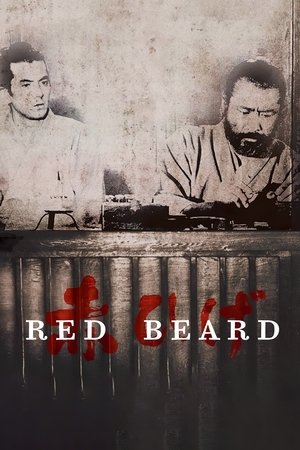
A poor peasant, after years of scraping, becomes a rich and powerful Osaka merchant. Mizoguchi Kenji's final project; he died before completing it and directing duties turned over to Yoshimura Kozaburo.
A nameless ronin, or samurai with no master, enters a small village in feudal Japan where two rival businessmen are struggling for control of the local gambling trade. Taking the name Sanjuro Kuwabatake, the ronin convinces both silk merchant Tazaemon and sake merchant Tokuemon to hire him as a personal bodyguard, then artfully sets in motion a full-scale gang war between the two ambitious and unscrupulous men.
In this companion piece and sequel to "Yojimbo," jaded samurai Sanjuro helps an idealistic group of young warriors weed out their clan's evil influences, and in the process turns their image of a proper samurai on its ear.
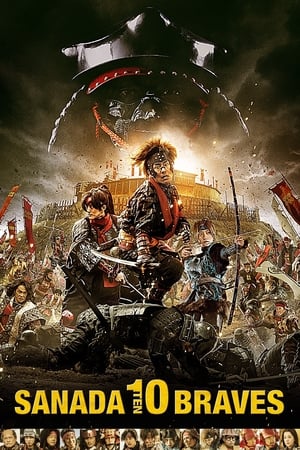
Masaatsu Naito successfully completes Sankin-kotai (required ritual to visit the shogun). On his way home, he hears that an insurrection by peasants has taken place in his hometown of Yunagaya. Masaatsu Naito knows that it is a counterattack by Matsudaira. He returns to Yunagaya, but finds that his castle is gone.
Akira Kurosawa's lauded feudal epic presents the tale of a petty thief who is recruited to impersonate Shingen, an aging warlord, in order to avoid attacks by competing clans. When Shingen dies, his generals reluctantly agree to have the impostor take over as the powerful ruler. He soon begins to appreciate life as Shingen, but his commitment to the role is tested when he must lead his troops into battle against the forces of a rival warlord.
The hairpin murdered a young girl. Detective Zenigata Heiji begin to investigate. Suddenly a murder case turns into a case of smuggling.
Bakumatsu seishun graffiti: Ronin Sakamoto Ryoma
Shakespeare's King Lear is reimagined as a singular historical epic set in sixteenth-century Japan where an aging warlord divides his kingdom between his three sons.
The classic tale retold. This is one of Japan’s most popular stories in a brand new version starring the great Matsukata Hiroki following in the footsteps of Yorozuya Kinnosuke as Yagyu Tajima, the grandmaster swordsman whose plot to maintain the succession of Iemitsu as shogun encounters obstacles on all sides. Loaded with action and featuring many of Japan’s new up and coming sword stars this exciting movie brings back the feelings of the golden age of motion pictures. Stunning cinematography brings 17th Century Japan to life in this exciting tale of loyalty and betrayal, leading up to an ending that won’t be found in any history book.
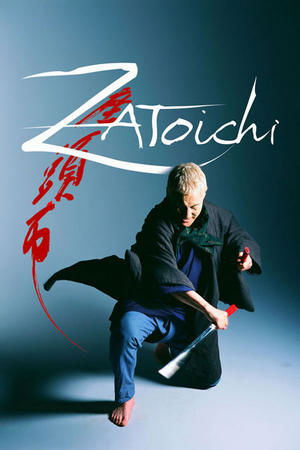
The Tattooed Magistrate: Fallen Flowers Showdown Volume
Even though Gennosuke and Oboro are from rival ninja villages, they are secretly in love. At an annual conference with the Lord, it is dictated that a competition--a fight to the death--will take place between the five best shinobi from each village. Gennosuke and Oboro's love is made even more impossible when they each got picked as the leader of the five to represent their respective villages.
さぶ
Floating Vessel (源氏物語 浮舟 , Ukifune) is a 1957 color Japanese film directed by Teinosuke Kinugasa. Drawn from parts of the famous Genji monogatari by Lady Murasaki.
A wave of terror is threatening to unseat Shogun Yoshimune. Police stations are erupting into flames, convicts escaping from prison, houses robbed and vandalized, streets teeming with panicked citizens. Is Ijyuin Tanomo, highly-placed official of Owari clan, secretly using deadly ninja to foment riot and rebellion? Narumiya Shinbei, a lone samurai spy adept at ninjutsu must uncover the hidden hand orchestrating these shocking crimes. Shinbei enlists a small band of dedicated ninja to lay siege to the enemy’s stronghold, where his own sister works as an undercover agent. Now, ninja must fight ninja in a last desperate battle to save the shogunate.
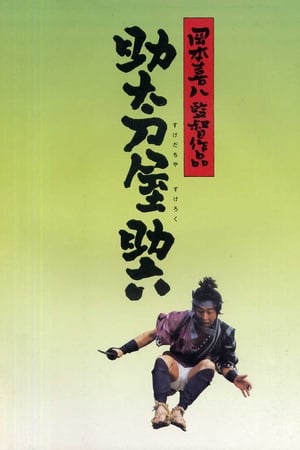
In a world where vendettas are officially sanctioned, the people sometimes needed help in carrying out their vengeance. Sanada Hiroyuki stars as Sukeroku the Helper, a ‘cool and rambling yakuza’ that has made a business out of helping victims carry out their revenge. When he returns to his hometown to pay a visit to his mother’s grave he meets a deadly ronin who carries a secret which eventually leads him into a vendetta of his own.
Sen no Rikyu (Ebizo Ichikawa) is the son of a fish shop owner. Sen no Rikyu then studies tea and eventually becomes one of the primary influences upon the Japanese tea ceremony. With his elegant esthetics, Sen no Rikyu is favored by the most powerful man in Japan Toyotomi Hideyoshi (Nao Omori) and becomes one of his closest advisors. Due to conflicts, Toyotomi Hideyoshi then orders Sen no Rikyu to commit seppuku (suicide). Director Mitsutoshi Tanaka's adaptation of Kenichi Yamamoto's award-winning novel of the same name received the Best Artistic Contribution Award at the 37th Montréal World Film Festival, the Best Director Award at the 2014 Osaka Cinema Festival, the 30th Fumiko Yamaji Cultural Award and the 37th Japan Academy Film Prize in nine categories, including Best Art Direction, Excellent Film and Excellent Actor.
Feudal lord Takuminokami Asano has been led to kill himself due to a scheme by Kozukenosuke Kira. Having no time to mourn his death, samurai Kuranosuke Oishi decides to take revenge on Kira, planning an attack with the help of accountant Chosuke Yato… but they don't have enough in their budget.
Miyamoto Musashi is challenged by a series of opponents in this follow up to Miyamoto Musashi's Kongoin Ketto (1942, also called Nitoryu Kaigen) also directed by Ito Daisuke.
A young boy named Chomatsu (Misora Hibari) lives with an old man Denbei near the grounds of Asakusa temple as bell ringers. In their house is an Echigo lion mask, a memento of Chomatsu's deceased father. After several incidents of Echigo lion masks being destroyed in the area, a local kingpin Saheiji shows up at Denbei's demanded he hand over the mask, a request Denbei rejects out of pity for Chomatsu. However, after it is accidentally revealed that the mask contains an important map, Saheiji plots to steal the mask. Chomatsu gets involved after his mother makes a sudden reappearance that sends the boy on a roundabout journey that will reveal the truth about his family.
Writer Jippensha Ikku hears Tsutaya Juzaburo, a wholesaler of picture books, mutter on his deathbed, "Where has Sharaku gone?" He begins to figure out the true identity of Sharaku, who disappeared after about 150 portraits of actors he created came out.