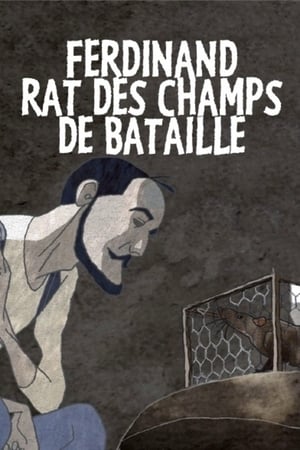
During WW2 a boy tries to save himself and his baby sister from a German soldier.
Chris Marker and François Reichenbach document the massive anti–Vietnam War protest held in Washington, D.C., on October 21, 1967, where more than 100,000 demonstrators gathered at the Lincoln Memorial before marching on the Pentagon. Filmed amid the crowd, the short captures the tension, idealism, and growing radicalism of the American peace movement.
Exploring the art of Armenian portraitist Hakob Hovnatanyan, Parajanov revives the culture of Tbilisi of the 19th century.
The Kabul National Museum, once known as the "face of Afghanistan," was destroyed in 1993. We filmed the most important cultural treasures of the still-intact museum in 1988: ancient Greco-Roman art and antiquitied of Hellenistic civilization, as well as Buddhist sculpture that was said to have mythology--the art of Gandhara, Bamiyan, and Shotorak among them. After the fall of the Democratic Republic of Afghanistan in 1992, some seventy percent of the contents of the museum was destroyed, stolen, or smuggled overseas to Japan and other countries. The movement to return these items is also touched upon. The footage in this video represents that only film documentation of the Kabul Museum ever made.
Landscapes, things, men, women and children taken by an "evil eye" more than a century ago haunt the present in this jagged reverie. A persona voicelessly narrates, via captions, going through colonial photographs, digresses to eating fruit and entering a cave on a tropical vacation island.
In 1945, beneath the oppressive shadow of the Francoist dictatorship, Juan, a university teacher assistant, meets Manuel during a chance encounter at night in a park. With their initial reservations, a complex love story unfolds between them, shaped by the turbulent political climate and the misunderstanding of those around them.
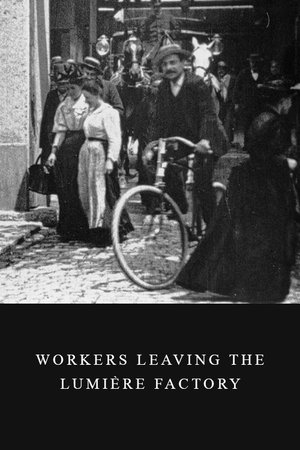
Working men and women leave through the main gate of the Lumière factory in Lyon, France. Filmed on 22 March 1895, it is often referred to as the first real motion picture ever made, although Louis Le Prince's 1888 Roundhay Garden Scene pre-dated it by seven years. Three separate versions of this film exist, which differ from one another in numerous ways. The first version features a carriage drawn by one horse, while in the second version the carriage is drawn by two horses, and there is no carriage at all in the third version. The clothing style is also different between the three versions, demonstrating the different seasons in which each was filmed. This film was made in the 35 mm format with an aspect ratio of 1.33:1, and at a speed of 16 frames per second. At that rate, the 17 meters of film length provided a duration of 46 seconds, holding a total of 800 frames.
The 1939 dramatic short "Angel of Mercy," about Red Cross founder Clara Barton, is reedited to relate the story to America's involvement in World War II. Edited from Angel of Mercy (1939)
In the farmhouse Gaikoborda, located in the north of Navarre, a mournful family lives; dad, mom, and their four children: Jon, the paraplegic Aintzane and the twins Saioa and Anartz. One of these monotonous days, the mother recieves a visit: the doctor.
Photo poetry of Bunchanawingʉmʉ Jesús Camilo Niño Izquierdo' piece of lost feelings in the Arhuaco Indigenous Reservation, northern Colombia.
As Cathy Linton nears death, she finds herself in a loop of memories while coming to terms with the truth of the world she’s lived and loved in.
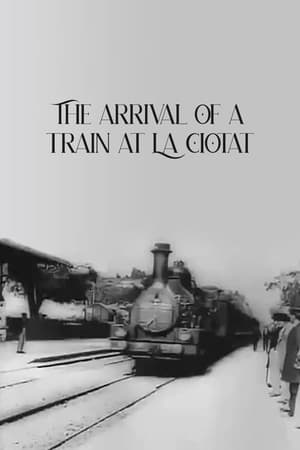
A group of people are standing along the platform of a railway station in La Ciotat, waiting for a train. One is seen coming, at some distance, and eventually stops at the platform. Doors of the railway-cars open and attendants help passengers off and on. Popular legend has it that, when this film was shown, the first-night audience fled the café in terror, fearing being run over by the "approaching" train. This legend has since been identified as promotional embellishment, though there is evidence to suggest that people were astounded at the capabilities of the Lumières' cinématographe.
Le jour sera comme la nuit
In the year 1930, novice archaeologist Cleopatra Pryce embarks on a quest to find a legendary Ancient Egyptian mirror, and will not only encounter a dangerous rival, but also make a discovery that changes her fate forever.
Eusebio José Fernández López Reboredo Bergamín is a teenager in the 1960s whose dream is to be a movie director, but General Francisco Franco prohibited in 1964 all types of art. A coincidental encounter with another artist, named Antonio Mínguez, will change his life.
The story of Samuel de Champlain's futile search for a passage to China in North America and his later founding of Quebec.
New York, May 16, 1888. Visionary Serbian inventor Nikola Tesla is about to introduce an innovative AC asynchronous motor. Before the demonstration, wealthy businessman George Westinghouse meets Tesla privately to get him to sell him his patent and go into business with him. Tesla declines the offer but during the demonstration something happens that will change the world forever.
Spain, 1953. Pedro Zaragoza, mayor of the city of Benidorm, in the province of Alicante, by the Mediterranean Sea, visits the Palacio del Pardo, General Franco's residence in Madrid, to ask him for help, in the hope of solving a very delicate problem.
Encruza Braziliensis
Montage of still photos with lighting effects.