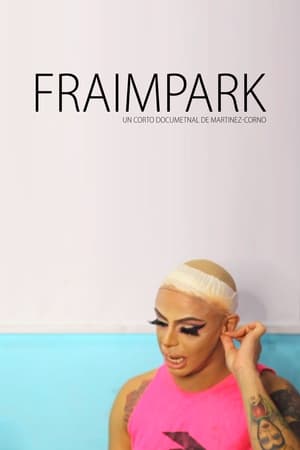
Chayna Moor is the stage name of Edgardo Inguance, a man who lives in a state of austerity and makes a living working in drag. Despite all kinds of circumstances, he tries to be resilient and happy with what he does. The documentary is about the transition from a fly to a fox.
Four older gay couples discuss their relationships, civil partnerships and their views on multiple topics such as spirituality, religion, love, gay rights, etc.
THE FANDOM dives headfirst in the imaginative world of “furries,” the often-misunderstood internet subculture of fans of the anthropomorphic arts. Using a bountiful collection of archival tapes and images, this documentary traces the evolution of the furry fandom from its roots in the 1970s to the expansive, international community it has become today. Join a host of charming characters (including the grandparents of the fandom itself) on this heart-warming journey through the decades; witness the many triumphs and challenges that shaped “furry” into the most unique fandom of all time.
Nic, Leo, Andrea and Raff determine their own gender identities. Each of their gender biographies is different, but the societal barriers to their social, physical and legal changes are the same. Together they are strong.
This is an intimate and fragmented portrait of what it means to fall in love in the 21st century. Where desire, breadcrumbing, and vulnerability intertwine in a process of falling, self-creation, and pure frenzy.
Ballroom voguing has fiercely swept across the world becoming a global phenomenon. Against the backdrop of Spain's contemporary ballroom scene, Jayce and a growing group of Black trans folks have emerged to reclaim the space.
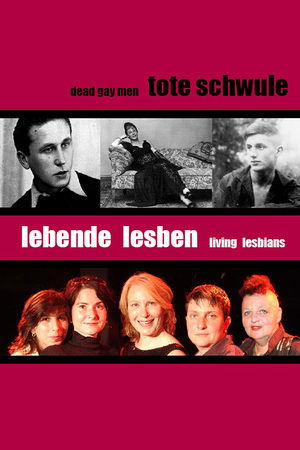
A documentary about lesbians preserving their history, with a focus on the work of the Lesbian Herstory Archives. Includes interviews with Joan Nestle, Jewelle Gomez, and Mariana Romo-Carmona, among others. Profiled are Mabel Hampton, Marge McDonald, theater group 5 Lesbian Brothers, and Asian Lesbians of the East Coast.
Boys On Film comes of age with uplifting and powerful tales recounting the lives of everyday heroes striving for their own identities and fighting for the right for us all to be ourselves. Volume 18: Heroes includes ten complete films: Dean Loxton's "Dániel" starring Csémy Balázs, Hilda Péter, and Henry Garrett… Niels Bourgonje's "Buddy" starring Daniel Cornelissen and Tobias Nierop… Tamara Shogaolu's animated "Half A Life"… Victor Lindgren's "Undress Me" starring Jana Bringlöv Ekspong and Björn Elgerd… Sam Ashby's "The Colour Of His Hair" starring Sean Hart and Josh O'Connor… Hope Dickson Leach's "Silly Girl" starring Ciara Baxendale, Mollie Lambert, and Jason Barker… Søren Green's "An Evening" starring Jacob Ottensten and Ulrik Windfeldt-Schmidt… Alejandro Medina's documentary "AIDS: Doctors And Nurses Tell Their Stories"… Kai Stänicke's "It's Consuming Me" with Volkmar Leif Gilbert… and Mikael Bundsen's "Mother Knows Best" starring Alexander Gustavsson and Hanna Ullerstam.
In partnership with filmmaker Lauren Tabak and writer/consulting producer Barry Walters, we dive into the music career of Sylvester, starting from church choir in South Central LA to his early years in San Francisco. It follows his ascent to stardom through his evergreen, international hits "Dance (Disco Heat)" and "You Make Me Feel (Mighty Real)". Through his groundbreaking career, Sylvester blew open the doors for queer visibility and gender fluidity in mainstream music, leaving a legacy that continues to influence today's pop music.
The high society court case that scandalised the mores of the day, electrified the nation and changed the course of British history.
Through a montage of compelling videos posted on the Internet by young gays, bis, lesbians or transsexuals, «Out» makes us experience from within the groundbreaking moment of their coming out – after which their intimate and social life shall be forever changed.
A short documentary about the First National March on Washington for Lesbian and Gay Rights, which took place on Sunday, October 14th 1979.
Majur is a native and gay spokesperson from the village of Pobore, on the countryside of Mato Grosso. His main activity is to be the main common link between the village people and the big town where they fight for their culture and claim for their rights.
An in depth look at Rochester, New York's LGBTQIA+ history. The documentary condenses over 375 hours of interviews and more than 100 participants into a 90 minute film to bring you through the journey of these men and women. It covers the first efforts at organizing in the 1970s, political funding battles and the contributions gay Rochesterians made at the outset of the AIDS crisis.
In 1995, Kelli Peterson started a gay and straight club at her Salt Lake City high school. The story of her ensuing battle with school authorities in interspersed with looks back at the diary of Michael Wigglesworth, a 17th-century Puritan cleric, at the 30-year love affair of Sarah Orne Jewett and Annie Adams Fields, at Henry Gerber's attempt after World War I to establish a gay-rights organization, at Bayard Rustin's role in the civil rights movement, and at Barbara Gittings' taking on of the American Psychiatric Association's position that homosexuality is illness. One person comments, "To create a place for ourselves in the present, we have to find ourselves in the past."
Pickup's Tricks is a beat documentary of Hibiscus and the Cockettes, who were pioneers of San Francisco’s underground queer theater in the early '70s. It is a multifarious blend of sexual anarchy; a raucous and unscripted mix of liberation and elation as rough and spirited as the lifestyle that created it. The film profiles Hibiscus, founding member of the Cockettes, the psychedelic drag queens that performed midnight musicals at the Palace Theater in San Francisco. The film includes a rare screen appearance of Allen Ginsberg, clean-shaven and costumed in "acute drag" as a Yiddishe Mama with a painted-on third eye. (pickupstricks.com)
In this film, outspokenly homosexual filmmaker Rosa von Praunheim has documented his encounters with friends in the New York "underground" arts movement, the better-known of whom are William Burroughs (who says nothing for the camera), Andy Warhol (seen in the distance) and Fernando Arrabal (who is interviewed in Spanish). The emigrants named in the title are notable Germans who left the country before World War II, such as Greta Keller and Grete Mosheim. Reviewers at the time of the film's release considered it to have been a sort of paid vacation for the filmmaker rather than a serious effort. (Clarke Fountain, Rovi)
From the accounts of lesbian artists and militants, frequenters of Ferro's Bar, we are led to an episode central to the formation of the Brazilian lesbian movement in the early 1980s, the "uprising of Ferro's Bar". The film shows how lesbians are no longer a figure found only at night, inside apartments, and become a political subject that rises up against censorship of one of the lesbian periodicals with the largest circulation in the 1980s, "ChanacomChana". Ferro's Bar represents a space for the political-affective memory of its frequenters and a way of updating this collective and political history that is still pulsating.
Dangling from a high window, a young non-binary person is on the cusp of life and death. Flashes of film, literature, art (paintings) and cultural history pass them by, as if to tell a message. A postmodern treatise on connection to culture and the past.
An intimate look at pioneering artist George Platt Lynes, who took radically explicit photographs of the male nude. The documentary reveals Lynes’ gifted eye for the male form, his long-term friendships with Gertrude Stein and Alfred Kinsey, and his lasting influence as one of the first openly gay American artists.