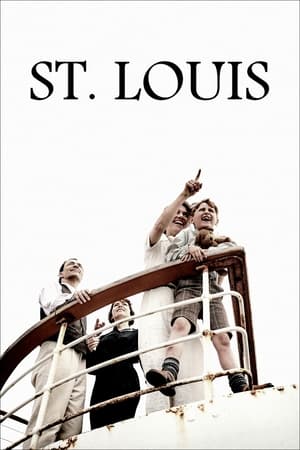
Hamburg, Germany, 1939. Getting a passage aboard the passenger liner St. Louis seems to be the last hope of salvation for more than nine hundred German Jews who, desperate to escape the atrocious persecution to which they are subjected by the Nazi regime, intend to emigrate to Cuba.
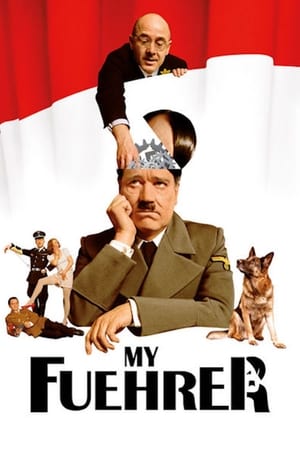
Hitler no longer believes in himself, and can barely see himself as an equal to even his sheep dog. But to seize the helm of the war he would have to create one of his famous fiery speeches to mobilize the masses. Goebbels therefore brings a Jewish acting teacher Grünbaum and his family from the camps in order to train the leader in rhetoric. Grünbaum is torn, but starts Hitler in his therapy ...
Not all stand-up comedy is spot-cleaned and pre-packaged for the masses. Like the legends who were born out of smokey, booze-soaked nightclubs of decades past, Doug Stanhope spews his own brand of moral outrage in an unmatched style that borders on self-destruction. Nothing is sacred, no subject off-limits and most importantly nothing is contrived. From critically acclaimed appearances at the Ed
The writer and comedian looks at antisemitism and the progressive left. From theatre to football, Baddiel explores a political blindspot with Stephen Fry, Miriam Margolyes and Neil Gaiman.
The spoiled daughter of a Georgia plantation owner conducts a tumultuous romance with a cynical profiteer during the American Civil War and Reconstruction Era.
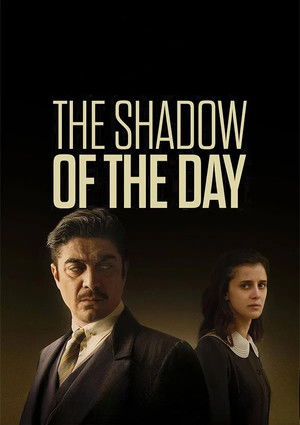
In 1938 Italy, after Jews are banned from public life, fascist-abiding restaurateur Luciano nonetheless believes he can still live by his own rules. Everything changes when Anna, a girl with a dangerous secret, begins working at his business.
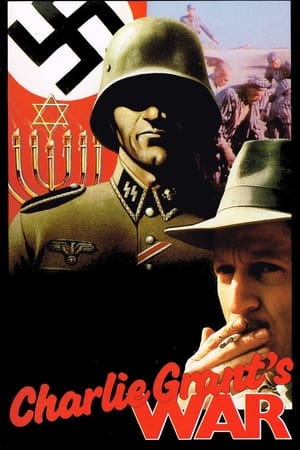
A Canadian artist turned diamond merchant in Vienna, Austria risks his life to smuggle Jews out of the Third Reich.
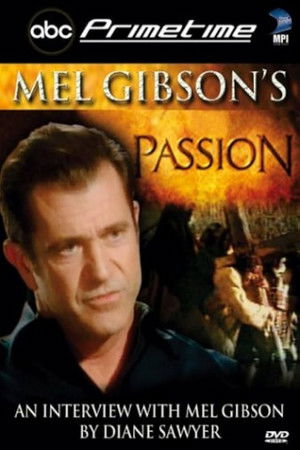
In this special edition of Primetime, ABC News' Diane Sawyer interviews filmmaker Mel Gibson about his highly controversial movie, ""The Passion of the Christ."" He responds to charges that the movie's portrayal of the Jewish role in the death of Christ will encourage anti-Semitism. He also elaborates on comments he's made about the Holocaust. In addition, Gibson tells why he felt it necessary to exhibit such a graphic depiction of Christ's crucifixion on film and discusses his decision to tell the story in Aramaic and Latin.
In Iasi, Romania, from June 28 to July 6, 1941, nearly 15 000 Jews were murdered in the course of a horrifying pogrom. At the time, the programmed extermination of European Jews had not yet began. After the war, the successive communist governments did all they could to ensure the Iasi pogrom would be forgotten. It was not until November of 2004 that Romania recognized for the first time its direct responsibility in the pogrom. All that remains of this massacre are about a hundred photographs taken as souvenirs by german and romanian soldiers, and a few remaining survivors.
Cass Brown is about to marry for the second time. His first marriage, to Isabel, was annulled. But when he discovers that Isabel has just had their baby, Cass kidnaps the infant to keep her from being adopted. Isabel's parents hunt for the child and discover that Cass and Isabel are still hopelessly in love.
Dan's getting married for the second time to Liz - and it's her first. It's a casual affair. On a beach. Just a few friends and family. Perfect.
Mel and Jane Mermelstein are a true-life California couple, thrown into the spotlight of judicial history in the 1980s. Mel is a Hungarian-born Jew, sole-survivor of his family's extermination at Auschwitz, and Jane, a Southern Baptist from Tennessee. Their four children are good kids, typical Americans, with just enough orneriness to irritate each other, but enough love and class to pull together when it counts.
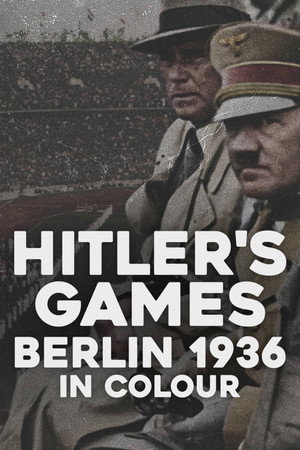
In 1931, Germany was awarded the Olympic Games in the hope this would draw them into the international community and world peace would be promoted through sport. For two weeks in August 1936 cameras captured the world’s greatest sporting spectacle, including the Gold Medal triumphs of record-breaking sprinter Jesse Owens. The Berlin Olympics were groundbreaking – many innovations introduced in 1936 such as television coverage and the torch relay became part of every subsequent Games. Hitler’s Games in Colour tells the story of the remarkable amateurs who excelled, but also how Hitler used the Games as propaganda for his brutal regime, to show the Nazis as benign and their military ambitions as modest. Using black and white archive, transformed by cutting-edge restoration and colourisation, this is the story of 16 days that fooled the world…
A family is on summer vacation. Their adolescent son is a mixture of bored and horny. A yellow jacket wasp joins them in their car and then at their vacation campsite. A sultry young woman is doing laundry outdoors just as a brief, torrential downpour occurs and the wasp allows her to reveal, much to the young man's delight, her special knowledge of how to deal with insect bites.
Paris, 1940. German occupation forces create a new film production company, Continental, and put Alfred Greven – producer, cinephile, and opportunistic businessman – in charge. During the occupation, under Joseph Goebbels’s orders, Greven hires the best artists and technicians of French cinema to produce successful, highly entertaining films, which are also strategically devoid of propaganda. Simultaneously, he takes advantage of the confiscation of Jewish property to purchase film theaters, studios and laboratories, in order to control the whole production line. His goal: to create a European Hollywood. Among the thirty feature films thus produced under the auspices of Continental, several are, to this day, considered classics of French cinema.
Since the outbreak of the global corona pandemic, the number of anti-Semitic content on the Internet and social media has also been increasing. Researchers see a connection between online radicalization and anti-Semitic violence – and also attacks. "Jud Süß 2.0" documents the visual roots of this new anti-Semitism.
When twin brothers find a mysterious wind-up monkey, a series of outrageous deaths tear their family apart. Twenty-five years later, the monkey begins a new killing spree forcing the estranged brothers to confront the cursed toy.
A middle-aged woman is driven to take drastic action when she learns that her husband plans to take a second, younger wife.
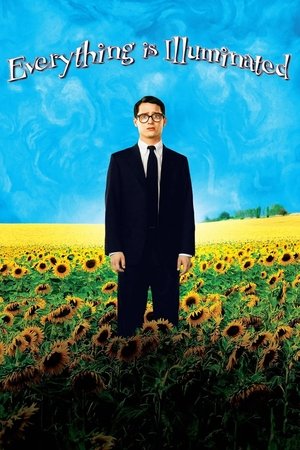
A young Jewish American man endeavors—with the help of eccentric, distant relatives—to find the woman who saved his grandfather during World War II—in a Ukrainian village which was ultimately razed by the Nazis.
Kazakh journalist Borat Sagdiyev travels to America to make a documentary. As he zigzags across the nation, Borat meets real people in real situations with hysterical consequences. His backwards behavior generates strong reactions around him exposing prejudices and hypocrisies in American culture.