The history of the Yakuza Eiga at the TOEI studio is roughly outlined. Real Yakuza and also their connections to the movie business are discussed, and many important actors and directors of the genres are interviewed. Former real yakuza boss turned actor Noboru Ando, Takashi Miike, Sonny Chiba and many more get a chance to speak.
A journey through the work of Spanish filmmaker Juan Piquer Simón (1935-2011).
Documentary on Les Charlots, known as The Crazy Boys in the English-speaking world, a group of French musicians, singers, comedians and film actors who were popular in the 1960s, 1970s, and early 1980s.
The history of Frankenstein's journey from novel to stage to screen to icon.
A portrait of the famous French actress Fanny Ardant, who has worked with great figures of cinema such as Agnès Varda, Alain Resnais, Michelangelo Antonioni, Sydney Pollack and, above all, François Truffaut (1932-84), with whom she had a sentimental relationship and whose death marked the rest of her life.
A documentary covering Firefly's birth, death and rebirth from the perspective of both the fans and the cast and crew of both productions.
“Don’t end up alone like I did.” This plea expressed by her grandmother before passing, haunts Tatiana, a single, 40-year-old documentary filmmaker. Filled with questions about what it means to “not end up alone,” Tatiana explores her grandma Teresa’s life: an imposing woman who owned an iconic movie theater, divorced three times and challenged the Dominican social norms of her era. The filmmaker embarks on a journey through family archives, old films and hundreds of letters, constructing —or trying to deconstruct— a story about love, expectations and solitude.
World-renowned director Martin Scorsese narrates this journey through his favorites in Italian cinema.
An investigation of how Hollywood's fabled stories have deeply influenced how Americans feel about transgender people, and how transgender people have been taught to feel about themselves.
The greatness, fall and renaissance of Hammer, the flagship company of British popular cinema, mainly from 1955 to 1968. Tortured women and sadistic monsters populated oppressive scenarios in provocative productions that shocked censorship and disgusted critics but fascinated the public. Movies in which horror was shown in offensive colors: dreadful stories, told without prejudices, that offered fear, blood, sex and stunning performances.
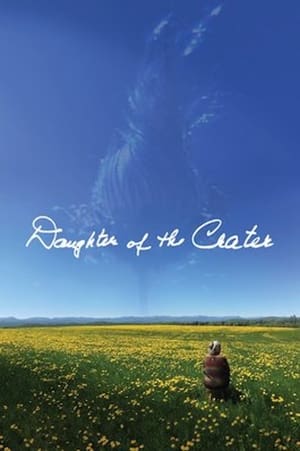
A woman with a deep love of the land, Yolande Simard Perrault sees her life as having been shaped by a planetary upheaval in Charlevoix, Quebec, millions of years ago. As enduring as the Canadian Shield, she’s a woman of strength and spirit, a child of the crater left by the meteor’s impact. This documentary portrays a determined woman who’s the reflection of a land created on an immense scale. She was the creative and life partner of filmmaker Pierre Perrault, who gave up everything to be by her side. The film charts the influence of her unquenchable dreams and her contribution to the building of a people’s collective memory. In a stream of images and words, Simard Perrault recounts the splendours of the landscape and the people who shaped it. Generous and boundless, she embarks on a quest for identity that nurtures and perpetuates the oeuvre of the man who breathed new life into Quebec cinema.
The Death of 'Superman Lives': What Happened? feature film documents the process of development of the ill fated "Superman Lives" movie, that was to be directed by Tim Burton and star Nicolas Cage as the man of steel himself, Superman. The project went through years of development before the plug was pulled, and this documentary interviews the major filmmakers: Kevin Smith, Tim Burton, Jon Peters, Dan Gilroy, Colleen Atwood, Lorenzo di Bonaventura and many many more.
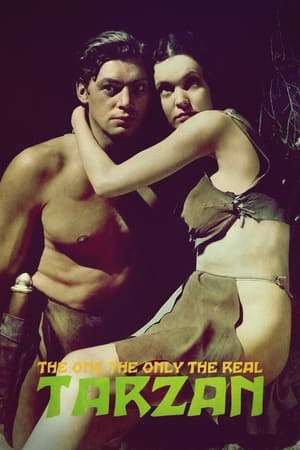
The glorious and tragic story of American athlete and actor Johnny Weissmuller (1904-84), Olympic swimmer, water polo player and the only true Tarzan, an archetypal character and myth of cinema, that of the original Hollywood blockbusters (1932-48).
Documentary about Barrandov studios.
In 1964, Henri-Georges Clouzot's production of L'Enfer came to a halt. Despite huge expectations, major studio backing and an unlimited budget, after three weeks the production collapsed. This documentary presents Inferno's incredible expressionistic original rushes, screen tests, and on-location footage, whilst also reconstructing Clouzot's original vision, and shedding light on the ill-fated endeavor through interviews, dramatizations of unfilmed scenes, and Clouzot's own notes.
The story of how Norma Jeane Mortenson became Marilyn Monroe (1926-62), a lucid path of self-discovery, from anonymity to stardom: the painful birth of a myth.
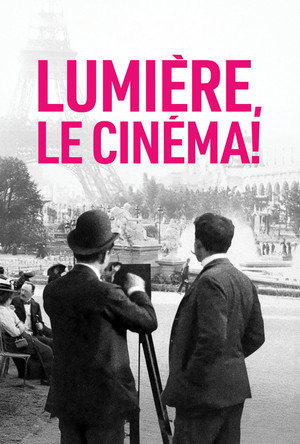
In one of those wonderful coincidences of history, lumière, the French word for “light,” was also the last name of brothers Auguste and Louis, whose brilliant invention, the cinematograph, helped to inaugurate the most beloved art form of the last 130 years. Institute Lumière director Thierry Frémaux uses Lumière, Le Cinema! to guide the viewer through over a hundred shorts—some famous, some forgotten, some never before seen—directed by Lumière and company. In the process, Frémaux illuminates how the brothers employed the camera as a creative instrument as they (and their operators) mastered framing, staging, and subject selection for quotidian and exotic microdocumentaries as well as the first ever fictional motion pictures. The result is not only a glorious re(telling) of the genesis of cinema but a profound meditation on the beautiful world captured—and the mysterious world imagined—by the Lumières.
Writer Adam Rockoff provides a basic overview of the slasher movie genre.
A look at the making of the film Troll 2 (1990) and its journey from being crowned the "worst film of all time" to a cherished cult classic.
Cinecitta is today known as the center of the Italian film industry. But there is a dark past. The film city was solemnly inaugurated in 1937 by Mussolini. Here, propaganda films would be produced to strengthen the dictator's position.