Cio-Cio-San, the young Japanese bride of American naval officer Lieutenant Pinkerton, finds her romantic idyll shattered when he deserts her shortly after their marriage. She lives in hope that one day he will return.
Franco Zeffirelli directs these two legendary La Scala productions telling tragic tales of jealousy. Mascagni's Cavalleria Rusticana features performances by Elena Obraztsova, Plácido Domingo, and Renato Bruson. Leoncavallo's I Pagliacci stars Teresa Stratas, Plácido Domingo, and Juan Pons. Both are conducted by George Pretre. This production of Pagliacci earned director Franco Zeffirelli the coveted Emmy as Best Director in the category of Classical Music Programming.
Alone in the woods, a young man is pursued by a horrifying specter and by visions of his deceased sisters. A meditation on the precarious uncertainty of the American Dream and the role that uncontrollable forces play in our lives, The West is a Land of Infinite Beginnings is inspired by a harrowing scene from the opera Proving Up, by composer Missy Mazzoli and librettist Royce Vavrek.
Praised by critics as “magnificent”, “breathtakingly theatrical” and full of “zestful imagination”, Melly Still’s “spine-tingling” Rusalka is a Glyndebourne classic – a magical contemporary reimagining of a much-loved fairy tale. Light and darkness, beauty and danger come together in this passionate tale of love against the odds. At once evocative and unsettling, this production collides two contrasting worlds in Rae Smith’s elegant designs made of “brilliant stage-pictures”. Rusalka’s forest home is a dappled space of sunshine and shadows, full of strange woodland creatures, while the Prince’s court is a world of sleek modernity and sophistication – a world of man.
This is Laurent Pelly’s Théâtre des Champs-Élysées staging of Rossini’s Il barbiere di Siviglia, with a cast featuring Florian Sempey as Figaro, Catherine Trottmann as Rosina, and Michele Angelini as Il Conte Almaviva. Jérémie Rhorer conducts Le Cercle de l-Harmonie.
This first film of Cyprus' first director, Giorgios Filis, depicts music and dance customs in the form and style of a folk opera, with traditional Cypriot dances and songs. The film consists of a folkloric inventory based on the folk culture of Cyprus, as well as on similar ritual happenings. The narration and dialogue are entirely in the Cypriot dialect and are characterized by a rhetorical and poetic mood.
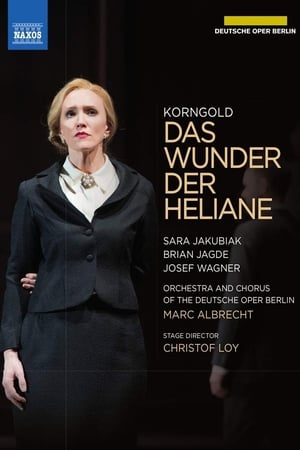
This 2021 Deutsche Oper Berlin performance is directed by Christof Loy and stars soprano Sara Jakubiak in the title role. Riccardo Zandonai’s Francesca da Rimini is a four-act opera set during the Renaissance period. The plot concerns an arranged marriage between Francesca and Giovanni, also known as Gianciotto, who is impersonated by his handsome brother Paolo, and with whom Francesca falls passionately in love.
This production was originally staged for the Pepsico Summerfare Festival, The International Performing Arts Festival of the State University of New York at Purchase. Leaving the lyrics in their original Italian, acclaimed American director Peter Sellars transports Wolfgang Amadeus Mozart's "Don Giovanni" to a modern-day metropolis, nestling the opera's beloved characters among the brownstones of New York City's Harlem. Sellars's contemporary retelling of a classic musical tale is one of three performances in a Mozart series that also includes "Le Nozze di Figaro" and "'Così Fan Tutte."
This hard-edged postmodern production of Giuseppe Verdi's haunting masterpiece brings the story of Shakespeare's bloody tragedy to vivid life, characterized by spine-tingling atmospherics and a triumphant debut by American baritone Thomas Hampson in the title role. This Zurich Opera House production also features a mesmerizing turn by Paoletta Marrocu as the beautiful, power-hungry Lady Macbeth, while striking sets and costumes further enhance the duality of the main character whose rise and fall mirror the darkest impulses of man. Replete with supernatural mystery, sexual tension, and violent power plays, this timeless story remains gripping and chilling for today's audiences and boasts some of the most astonishing music of Verdi's legendary body of work.
With their “musical comedy” in the spirit of Mozart, Richard Strauss and his brilliant librettist Hugo von Hofmannsthal created the most popular of all their works and one of the most frequently performed operas of all time. Disguised as a refined comedy, light as a feather and extremely entertaining, “Der Rosenkavalier” tackles universal themes such as love, sexuality, marital fidelity, and the changes that human relationships undergo over time. All set to music of the most sumptuous kind. With its prestigious cast under the inspired direction of Harry Kupfer, the 2014 Salzburg Festival production of *Der Rosenkavalier* was one of the most internationally acclaimed interpretations of the work since the start of the new millennium.
Claude D'Anna's film of Verdi's Macbeth is a gloomy affair, stressing the descent into madness of the principal villains. It's acted by the singers of the Decca recording of the opera (with two substitutions of actors standing in for singers) and the lip-synching is generally unobtrusive. The musical performance is superb, conducted by Riccardo Chailly with admirable fire, and sung by some of the leading lights of the opera stages of the 1980s. Shirley Verrett virtually owned the role of Lady Macbeth at the time, and she delivers a terrific performance, the voice equal to the role's wide register leaps and it's suffused with emotion, whether urging her husband on to murder or maddened by guilt in the Sleepwalking Scene. Leo Nucci's resonant Macbeth may lack the ultimate in vocal color and steadiness (his last notes of the great aria Pietà, rispetto, amore are wobbly) but he compensates with intensity in both singing and acting.
In February 1972, the American president Richard Nixon went to China to meet Mao Zedong. In the context of the war in Vietnam and the cold war, this encounter marked a turning point in Chinese‑American relations. John Adams, a major musical figure of the last forty years, made this event of contemporary history the subject of his first opera. Nixon in China tackles the political thaw instigated by ping-pong diplomacy, begun by the invitation of the American table tennis players by their Chinese counterparts, one year before the presidential visit. A mesmerising work in which the pulsations and repetitions typical of minimalism are combined with melodic lines of great lyricism. For its entry into the Paris Opera repertoire, this work has been entrusted to the director Valentina Carrasco, who underlines the importance and the mediating power of Chinese national sport in history.
The gorgeous and evocative Otto Schenk/Günther Schneider-Siemssen production continues with this second opera in Wagner’s Ring cycle. Hildegard Behrens brings deep empathy to Brünnhilde, the favorite daughter of the god Wotan (James Morris) who nevertheless defies him. Morris’s portrayal of Wotan is deservedly legendary, as is Christa Ludwig, as Fricka. Jessye Norman and Gary Lakes are Sieglinde and Siegmund, and Kurt Moll is the threatening Hunding. James Levine and the Met orchestra provide astonishing color and drama. (Performed April 8, 1989)
Siegfried is the third of the four operas that constitute Der Ring des Nibelungen (The Ring of the Nibelung), by Richard Wagner.
Rossini’s opera based on the fairy-tale Cinderella, filmed in real-life Italian locations in the ballrooms and gardens of some of Turin’s finest palaces. For this special production of the opera, the scenes were filmed at the same time of day as they occur in the story, with the famous ballroom scene filmed as the clock struck midnight
Based on Ruggero Leoncavallo's opera Pagliacci. The film recounts the tragedy of Canio, the lead clown (or pagliaccio in Italian) in a commedia dell'arte troupe, his wife Nedda, and her lover, Silvio. When Nedda spurns the advances of Tonio, another player in the troupe, he tells Canio about Nedda's betrayal. In a jealous rage Canio murders both Nedda and Silvio. The only actor in the cast who also sang his role was the celebrated Italian baritone, Tito Gobbi, but the film is largely very faithful to its source material, presenting the opera nearly complete.
When Sir John Falstaff decides that he wants to have a little fun he writes two letters to a pair of Window wives: Mistress Ford and Mistress Page. When they put their heads together and compare missives, they plan a practical joke or two to teach the knight a lesson. But Mistress Ford's husband is a very jealous man and is pumping Falstaff for information of the affair. Meanwhile the Pages' daughter Anne is besieged by suitors.
A production of Mozart's opera recorded live at Zurich Opera House in 2000. Cecilia Bartoli leads an all-star cast including Roberto Saccà, Liliana Nikiteanu, and Agnes Baltsa. The conductor is Nikolaus Harnoncourt. Filmed live at the Zurich Opera House in February 2000 on a set which visualises the subtitle "The School for Lovers", the plot revolves around two army officers arguing about the fidelity of their brides, then setting out to test their chastity. Despite the often playful humour, this is not only psychologically telling music-making, but reveals Mozart exploring the structure of opera, discarding convention to mix large ensemble sections with arias for as many different combinations of singers as possible. With Liliana Nikiteanu attractively contrasted with Bartoli, and thoroughly convincing performances by Roberto Sacca (Ferrando) and Oliver Widmer (Guilelmo), this Così has a freshness and flow which, coupled with the timeless romantic themes, feels very contemporary.
Franz Woyzeck, a lowly soldier stationed in a mid-nineteenth century provincial German town, is the father of an illegitimate child by his mistress Marie.
Passion, jealousy and betrayal take center stage at Londons Royal Opera House in a spectacular production of the worlds most popular opera. Bizets Carmen is packed with some of the best-loved and memorable music in all of opera. In this characteristically vivid and vibrant stage production by Francesca Zambello, beautifully filmed in 3D by Julian Napier, Seville is brought to life with ranks of soldiers, crowds of peasants, gypsies and bullfighters as well as a magnificent horse, a donkey and even some chickens! This spectacular RealD and Royal Opera House production features a supremely talented cast, gripping drama and Bizets energetic and passionate score. It is truly a musical event to remember!