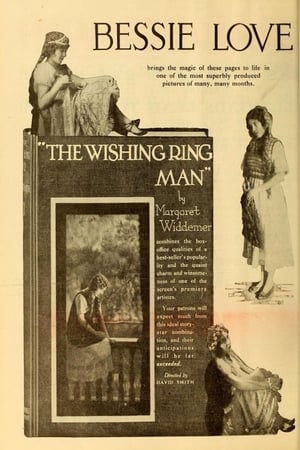
Glory Quayle, a natural-born mimic, leaves her country home, reaches London, goes on the stage, gains fame and affluence. John Storm, her country sweetheart, believing he has lost Glory forever, enters a monastery, tries to forget her, cannot kill his love, returns to the world, becomes a famous slum worker and friend of the poor.
The night of the grand reception and dance finds Belle Oakley in high glee as she leaves for the reception. She arrives at the reception and discovers that she is without her dancing shoes. She announces her loss and immediately all the young men volunteer to go in search of them. Harry Brown, who was not as quick as the others, is left behind and sits dejectedly on the curb while the others drive away.
Engineer Joe Dayton faces sabotage while constructing a railroad through the Canadian Northwest. Local bandit leader Jacques Durand attempts to stop the project, fearing it will bring law and order. Complicating matters, Dayton and Durand are look-alike doppelgangers.
Before he can avenge a crooked card game, Dan Carrington suffers heart failure and dies in his chair. John Tralee, the cheater, feels a pang of guilt when he discovers that he has taken all of Carrington's money and adopts the dead man's little girl, Lois. The girl grows up and the gambling hall becomes her second home.
A bored Lord saves a fishergirl's lover from drowning
Billie and Dollie are very much in love with each other, and they declare their love under the cherry trees. In later years Billie receives news of his appointment as a cadet at West Point: he promises to return to Dollie as soon as he graduates and claim her for his wife.
Just previous to his departure for South Africa and the Boer War, Gordon Frazier, a young officer in the English Army, bids an affectionate farewell to his fiancée, Gladys Mayford. In Africa, engaged in battle, Gordon is rescued from death by a young soldier, with whom he formed a slight acquaintance.
During Nick Austin's imprisonment, his wife passes away. Before she dies, she writes a note to her husband, asking him to put her little girl in the care of an orphan asylum. Mrs. Downes, while bringing some of her dead daughter's clothes to the asylum, takes a fancy to Nina Austin and adopts her.
Against the backdrop of New York City of the early 1850s, a young woman -- naively seeking to win the love she reads about in the romance novels she devours -- finds one prospect in an earnest denizen of the Bowery, and another in an elegant young aristocrat. Focusing on the bygone era's fashions, the novelty of the bicycle-built-for-two, and an inventor's quest for the horseless carriage, the film gently stirs the audiences' nostalgia for simpler times.
Mrs. Wentworth and her daughter Cecile are living at one of the fashionable hotels in the city. James Davidson, who is engaged to Cecile, has agreed to join a theater party with them. At the last minute he sends word that business will detain him and he will be unable to go. Cecile is inconsolable and refuses to go to the theater with the rest of the party. She is so upset over the disappointment she gets a severe headache and decides to retire. In her pink pajamas she is about to go to bed when she decides to write "Jamsie," giving him to understand she is not at all pleased with his conduct. She sneaks out into the hall, puts her letter in the drop and hastens back to her rooms, to find the door has sprung locked.
Emphatically opposed to Jack Moss, old Mr. McGillicuddy puts the ban on his marriage to his daughter Dolly. The old gentleman is adamant to the appeals of the young lovers and interposes his interference on every occasion, when they get together. McGillicuddy is seized with an attack of the gout, which handicaps him, and it is then Jack arranges with Dolly to elope.
Employed as secretary to Howard Abele, Marjorie Abbott attracts the attention of Sydney, her employer's son, who falls desperately in love with her. Mr. Abele is strenuously opposed to their marriage and he quarrels with his son. Marjorie has a half-brother, Dave, who is of an inventive turn of mind.
John Ashby and Allene Houston, two neighboring ranchers, are in love, but their parents' violent dispute over the route of the new X. Y. Z. Railroad eventually drives them apart. Colonel Houston and the elder Ashby are killed in a fight, leaving John and Allene to continue the feud, John accepting a job with the railroad company and Allene swearing never to cross their property.
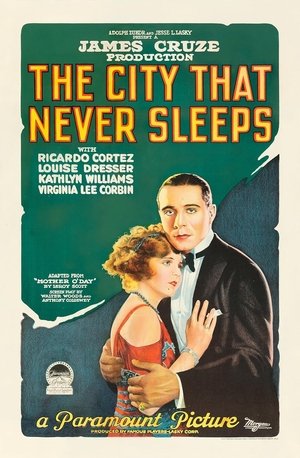
Adventerous engineer Robert Clay, goes to a South American country on an assignment by rich American Ted Langham to open an iron mine. While Robert is there, the unscrupulous General Mendoza tries to convince him to divide the mine's assets between them and President Alvarez. Mendoza starts a revolution against Alvarez when he and Clay will not go along with the plan, but he eventually is defeated after a long battle. Clay then is able to pursue his relationship with Hope, Langham's daughter, who has accompanied her father to South America.
Chaney plays two roles: mad scientist Arthur Lamb and Lamb's "experiment", known only as the Ape Man. This hideous creature was the result of Lamb's attempts to transplant animal glands into human beings. A lost film.
A banker, after a prophetic meeting with a Gypsy fortune teller, becomes delusional as he searches for a trunk which the seer has told him holds the key to either his happiness or his death. This film is considered lost.
John Hampstead gives up his career as an actor and his actress sweetheart, Marian Dounay, to become a minister in a western town. Marian appears, and failing to win him back she tries to ruin his reputation. Hampstead is accused of stealing some jewelry though actually he is protecting the scapegrace brother of his current sweetheart, Bessie.
On Wall Street a strong-willed and arrogant stockbroker, one of those successful men who feels no one else knows anything, exasperates his son, a broker as well. The son goes into business for himself successfully. When a panic comes, his father is brought to the verge of ruin by speculating against him driving a further wedge between them. In time a reconciliation is forged by the women in their lives.
Everybody's ordered out on a strike when Benjamin Cohen, proprietor of a sweat-shop, reduces the employees' wages ten per cent. Rebecca Barish, a young Jewess, and her father, reluctantly go out with the rest. Unable to find other work, their circumstances become so reduced that Rebecca is obliged to go to the pawnshop with some of their belongings, and while there, Jacob Stattler, the pawnbroker, takes a fancy to her, and offers her father, through a schatehen, five hundred dollars to give her to him in manage.
In the college play, Tom and his room-mate, "Bunch," take prominent and successful parts, Tom as the hero and "Bunch" as the heroine, in which he is an excellent female impersonator. The day after the performance, "Bunch" makes an engagement to take a real chorus girl to dinner. Unexpectedly his mother comes to college to visit him and he makes Tom take the girl.