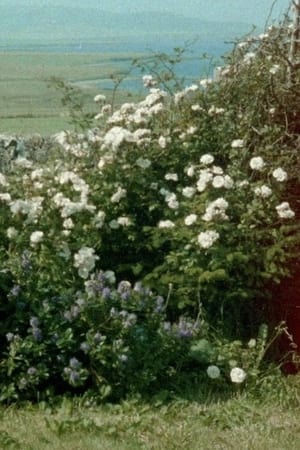
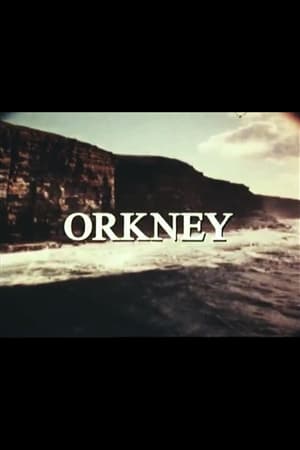
In Aurand’s signature diaristic form, roses in bloom, farm animals, Orkney landscapes, and scenes of the late filmmaker Margaret Tait having tea are rendered through expressive Bolex movements as well as the director’s active camera, and punctuated by abstract swaths of saturated and shifting colors. The film is an homage to Tait, whom Aurand visited in Orkney.
In 1994, a masked man shot a waiter in the only Indian restaurant in the Orkney Islands. The murder remained unsolved for years, until new evidence emerged. Delve into one of Scotland's most controversial cases, now with powerful new testimony.
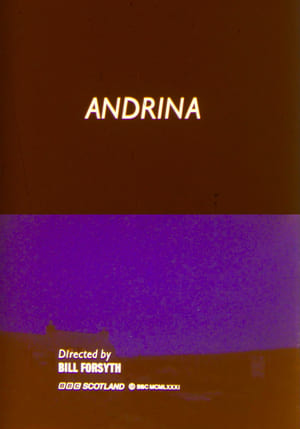
Captain Bill Torvald has retired to his quiet home in Orkney after fifty years at sea. When a young woman, Andrina, begins visiting him through the dark winter, he is grateful for her kindness and company. But as she starts to enquire about his past, he worries about the long-held secret he'll have to reveal to her.
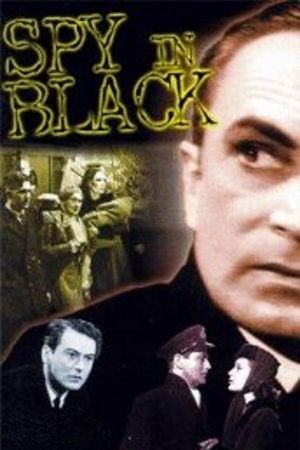
A German submarine is sent to the Orkney Isles in 1917 to sink the British fleet.
Three stories reflecting life in the Orkney Islands, two set in the past, and one in the present.
Scenes from the Handba' festival on New Year's Day in Kirkwall. Winner of the Scottish Prize, The Andrew Buchanan Cup at Scottish Amateur Film Festival, 1940. This was the last festival to be held until the end of the war.
Timo Novotny labels his new project an experimental music documentary film, in a remix of the celebrated film Megacities (1997), a visually refined essay on the hidden faces of several world "megacities" by leading Austrian documentarist Michael Glawogger. Novotny complements 30 % of material taken straight from the film (and re-edited) with 70 % as yet unseen footage in which he blends original shots unused by Glawogger with his own sequences (shot by Megacities cameraman Wolfgang Thaler) from Tokyo. Alongside the Japanese metropolis, Life in Loops takes us right into the atmosphere of Mexico City, New York, Moscow and Bombay. This electrifying combination of fascinating film images and an equally compelling soundtrack from Sofa Surfers sets us off on a stunning audiovisual adventure across the continents. The film also makes an original contribution to the discussion on new trends in documentary filmmaking.
Winter. A bus stop in a small village. People are waiting for a bus. They talk. Listening to their conversations, the viewer can imagine the world they live in. United by the movement of the camera, the place and the people blend together.
Horror movie compilation of Donna Michelle Productions.
An essay film on the editing of erotic movies.
Short drama-documentary showing the first day in England of a Hungarian refugee.
Collaborative documentary (credited to a committee rather than to individual filmmakers) detailing the CND march from London to Aldermaston at Easter 1958.
A description of the various activities of Gala Day held annually at Durham when the miners and their families come to town.
Impressions of a typical weekend in Blackburn in the early 1960s.
SETLIST: 1 There There -- 2 2 + 2 = 5 -- 3 Morning Bell -- 4 Lucky -- 5 Talk Show Host -- 6 Scatterbrain -- 7 The National Anthem -- 8 The Gloaming -- 9 Fake Plastic Trees --10 Sail to the Moon --11 My Iron Lung --12 Where I End and You Begin --13 Just --14 Paranoid Android --15 Idioteque --16 Everything in Its Right Place --17 Exit Music (for a Film) --18 Kid A --19 Karma Police
In this stunning film by Christopher Nupen, Segovia returns to the Granada of his youth, site of his personal and musical formation. The world-famous Alhambra—empty of tourists, between midnight and 4 AM—plays host to a deeply moving selection of Segovia’s signature pieces, many in his own arrangements, all imbued with the meditative, profoundly soulful qualities that lifted him to the pinnacle of artistry and helped him redefine what was considered possible for guitarists.
Collection of songs performed at the "Frank Sinatra Spectacular," a 1965 benefit by the various members of the Rat Pack.
The essence of surfing is an elusive ideal. Part sport, part state-of-mind; an avenue for self-expression, a metaphor for freedom; a ritual, a competitive event, a dangerous journey, a dance. Nature supplies the power, and with the proper balance of respect and resistance, we enjoy the ride. From the North Shore of Oahu, to the end of the road in Tahiti. From Australia to California, from Florida to France, the world's greatest surfers share their insights, and show us how - and why -- it's done. Their skill, and the thrill of the experience, are captured as never before in this documentary. What is the secret to surfing's global appeal? The answer is revealed by Florida's Kelly Slater, California's Rob Machado, Hawaii's Kalani Robb and Australia's Joel Parkinson, through their own voices, in DOWN THE BARREL. The sport of Surfing is displayed for what it is. WITHOUT SCRIPT. WITHOUT ANIMATION. WITHOUT HYPE.
This 51 minute documentary of the movie "Legend" can be found as an extra on the 2002 2-disc boxed-set 'Ultimate Edition' DVD release of "Legend". The first part of the documentary deals with the fruition of the idea and the making of the movie. It includes interviews with almost all the main participants of the feature, with the exception of actor Tom Cruise, who was a no show. The second half is much more fascinating and deals with what went wrong with the movie, and it's marketing failures.
"On the occasion of the premiere of Nel Regno di Napoli in Cannes in 1978, Werner Schroeter gave me an audio interview about this film and about his work in general. Our meeting took place on the terrace of the Hotel Majestic, in the midst of excitement of the Cannes festival life, a few days after the screening of Nel Regno di Napoli and in the presence of the photographer Jean-Claude Moireau. Vivre à Naples et mourir is the audio capture of that informal meeting that happened on 20 May 1978 and which is, as per director's wish, more like a casual conversation than an interview in the strict sense of the term (a set of questions and answers).