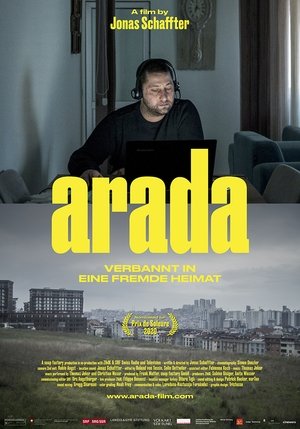
The story of three Turkish men. They all grew up in Switzerland and all got deported after various criminal offenses.
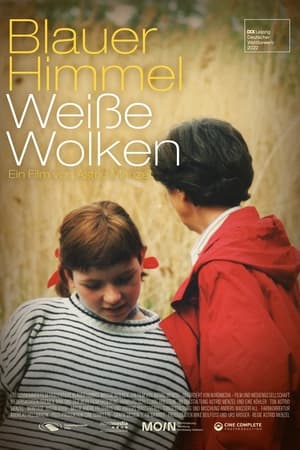
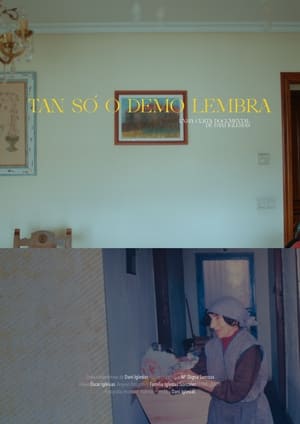
A house. A shelter. A man the last one left in the homeland. A woman returns to her community every year. The daughters and husband who have lost all traditions. A rapper who raps in the old language. In 1990 Susanna marries Udo. Their wedding is the last one celebrated between two Saxons in their village. After that the couple emigrated like half a million of Transylvanian Saxons. After 30 years in Germany the relationship between Susi and Udo has gone stale and they haven't taught their native language to their daughters that feel just German. Georg on the other hand is proud of his identity. He hopes with his rap to spread the young generations about the heritage to make them proud of being a Saxon. This is the choral story of a family who is learning to change in order not to disappear.
Made in Japan, Last Room is both fiction and documentary. The occupants of the love-hotels and capsule-hotels tell their own intimate, dreamlike stories, interspersed with journeys through the archipelago's landscapes. Soon, these personal stories resonate with a collective history: that of Gunkanjima, the abandoned ghost island of Nagasaki, and then that of Japan as a whole.
Little is known about the figure of Isabel Santaló, an old artist, today fallen into oblivion. But occasionally some visitors come to her flat. Through them and the voice of Antonio López (Dream of Light, Víctor Erice), the only painter who remembers her, we shape a multifaceted film. This is a cinematic portrait, which well into the film takes a surprising turn. A film that reflects on memory and oblivion, art and the creative process; posing the question of what it means to be an artist and a woman.
With depth, intimacy, and humor, FLOAT! captures filmmaker Azza Cohen's magnetic grandma’s life-affirming journey learning to swim at 82, inspiring audiences to defy societal expectations of aging and to boldly look forward at every stage.
Dos Islas is a poetic story about old age, family and the bond between a granddaughter and a grandmother. The woman, who just turned 102, tells stories about her past and childhood. In a literary and visual way she describes the most minute details. The film dazzles the viewer with love and optimism, the time passes slowly between the two islands, which might be real people, real places or the products of the main character’s imagination.
After the recent loss of his wife Angèle, grandpa René tries to stay positive, finding comfort in simple joys like his cacti and cat Musti—but the weight of impermanence lingers.
A year after Betti's passing, her children and grandchildren are still clearing out a house full of objects. Through them, they begin to remember and tell her story. This way, the family leaves behind the sad memory of a terminal illness and replaces it with the joyful person that Betti was and meant to them.
In Nepal, a venerable monk, Geshe Lama Konchog, dies and one of his disciples, a youthful monk named Tenzin Zopa, searches for his master's reincarnation. The film follows his search to the Tsum Valley where he finds a young boy of the right age who uncannily responds to Konchog's possessions. Is this the reincarnation of the master? After the boy passes several tests, Tenzin takes him to meet the Dali Lama. Will the parents agree to let the boy go to the monastery, and, if so, how will the child respond? Central to the film is the relationship the child develops with Tenzin.
A study of the alienated people who frequent the Ballhaus Barmbek dance hall, including an obese El groupie, an old man reciting poetry, two young women and a regular dance employee.
Reila
A Texan begins a cross-country journey in hope of finding the empty loft she keeps seeing in visions.
Twenty-five years after she moved away, Canadian filmmaker Kristina Wagenbauer (a participant in the 2019 Talent Lab) returns to her native Russia to visit her grandmother – her Babushka – with whom she spent part of her childhood, in this film brimming with tenderness and humour. The two women reflected in the mirror bear an undeniable resemblance, and each seeks to recognize herself in the other. Plumbing her memories, Wagenbauer hopes to re-establish a lost bond of intimacy and to confront the wounds of the past. Babushka has survived the Second World War, the break-up of the Soviet Union, the void that her daughter and granddaughter left behind when they moved abroad, and, more recently, the death of the love of her life. Despite all of this, she holds to life with a strong spirit of resilience.
In 2002, serial killer Patrice Alègre was sentenced to life imprisonment for five murders. Gendarme Roussel, the main investigator of this case, believes that he will make him confess to other unsolved crimes in Toulouse. Two ex-prostitutes give a series of names of presumed accomplices of the killer, among them Dominique Baudis, then president of the CSA. He decides to face the case alone. Around him, it is silence: not an official support of his political family. Almost twenty years later, we return to the Baudis affair to try to understand it, with the testimonies of Pierre and Benjamin Baudis, his sons, François Hollande, Camille Pascal and the main protagonists.
TWO OR THREE THINGS I KNOW ABOUT EDWARD HOPPER is an immersive experience in 3D, that takes its viewers on a journey into the world of Hopper, sharpening their senses for some aspects of his unique work.
After consolidating itself as a tourist destination in the mid-1960s, this small coastal village has become the dormitory town for the workers of a Nuclear Power Plant. With the liberal promise of prosperity and socioeconomic wellfare, many workers left their homes to move to the small city and started working at the new Nuclear Power Plant. The collective unrest and the silence, cut off by the great gusts of wind, articulate the landscape of the village that is now under the aid of the Nuclear Power Plant.
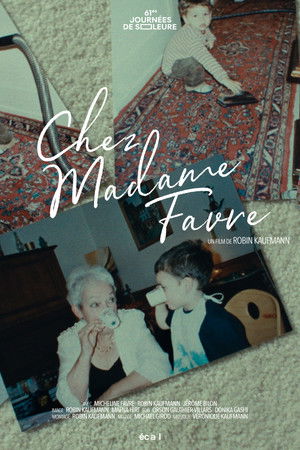
A multigenerational story celebrating director Sean Wang's two grandmothers, one on his father's side and the other on his mother's side.
When two siblings undertake an archaeological excavation of their late grandmother’s house, they embark on a magical-realist journey from her home in New Jersey to ancient Rome, from fashion to physics, in search of what life remains in the objects we leave behind.
In a decaying Soviet-era retirement home, a vibrant group of elders cling to life by staging Shakespeare. Yet loneliness lingers beyond the theater’s doors, until drama begins to blur with reality.
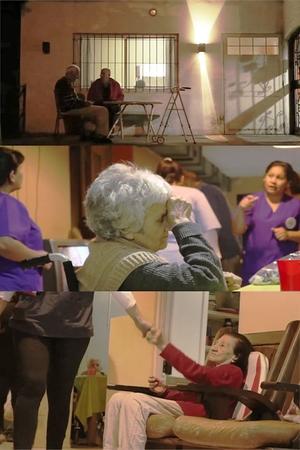
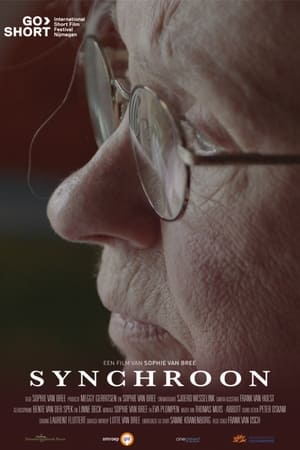
Five seniors, the eldest is 91 years old, train together in a gym in Rotterdam to keep fit. But the body falters and their environment is getting smaller and smaller. By doing sports, the seniors support each other: origin and social status disappear. The gym fraternizes and gives the elderly unprecedented pleasure. Despite the fanatical sports, the decline is unstoppable. This documentary also shows the seniors alone at home and the confrontational fight against the body that is becoming stiffer, with the realization that that battle is always lost in the long run.