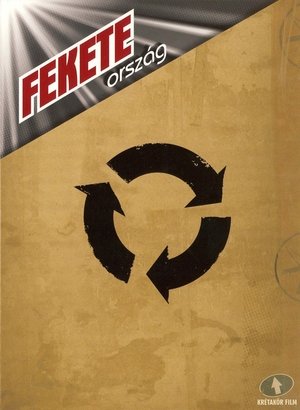
The film is a stage play hybrid showcasing dark and absurd sketches based on contemporary Hungarian news of the 2000's with campy, senseless musical interludes in-between. Highly experimental in nature that - like Marmite - will split its' crowd into ones that'll love it and others that'll loathe it. There's no middle grounds here. The topics included are: The Hungarian Olympians' doping scandal, political terrorism, the national elections... and more.
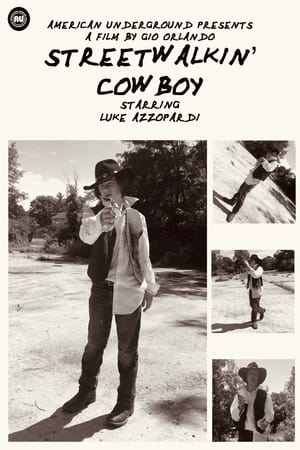
A delusional man in a modern day city dresses, acts like, and has the mindset of a cowboy.
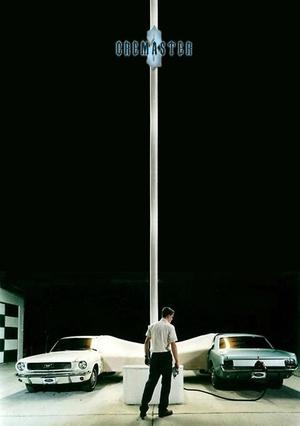
CREMASTER 2 is rendered as a gothic Western that introduces conflict into the system. On the biological level it corresponds to the phase of fetal development during which sexual division begins. In Matthew Barney's abstraction of this process, the system resists partition and tries to remain in the state of equilibrium imagined in Cremaster 1.
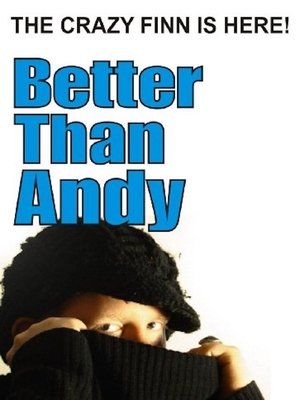
Mock -documentary about a Finnish contemporary artist who took the world by a storm.
Shot on 16mm celluloid across parts of New Zealand and Samoa, interdisciplinary artist Sam Hamilton’s ten-part experimental magnum opus makes thought-provoking connections between life on Earth and the cosmos, and, ultimately, art and science. Structured around the ten most significant celestial bodies of the Milky Way, Apple Pie’s inquiry begins with the furthest point in our solar system, Pluto, as a lens back towards our home planet and the ‘mechanisms by which certain aspects of scientific knowledge are digested, appropriated and subsequently manifest within the general human complex’. Christopher Francis Schiel’s dry, functional narration brings a network of ideas about our existence into focus, while Hamilton’s visual tableaux, as an extension of his multifaceted practice, veer imaginatively between psychedelic imagery and performance art.
Escorted by his valet Sganarelle, Dom Juan, a libertine gentleman, brave and hypocritical, seduces women, fights duels, denies his father's authority, and mocks Heaven. Carried away by his passion for women and gambling, he goes so far as to commit perjury. A classic revisited by Mesguich with a lot of visual effects: special effects, magic tricks, imposing sets. A playful staging for this tragi-comic play.
An enormous shroud of white cement covers a hillside in the remote of western Sicily. It is both land art and a memorial to the town of Gibellina that was devastated by an earthquake in January 1968. It’s a work by the Italian artist Alberto Burri. He covered the ruins of the town with white cement and fissures function as pathways that wind through an area of roughly 20 acres. Petra Noordkamp captures Il Grande Cretto di Gibellina by Alberto Burri as an experentiental work of art filled with a sense of place and history.
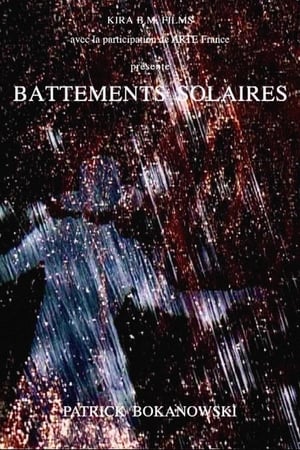
Walking towards the fire. In a ceaseless stream of light, people, landscapes and objects lead us to mysterious regions. French filmmaker Patrick Bokanowski’s work is hard to classify - and all the richer for it. Together with his wife Michèle, whose musique concrète compositions form the basis of the sound design, Bokanowski offers a prolonged, dense and visually visceral experience of the kind that is rare in cinema today. Difficult to define and locate, its strangeness is quite unique.
In 1988, art student Damien Hirst and a group of like-minded associates mounted an exhibition in a building in the East End of London. Entitled Freeze, it was a huge critical and commercial success, propelling Hirst and the group into the spotlight of the avant-garde. More than five years later, Hirst exhibits to international acclaim and is regularly derided in the tabloid press. This portrait of Hirst, which resumes the Omnibus season, is presented as a drug-induced nightmare after Hirst has been put to sleep by a sinister dentist, played by Donald Pleasence. In between interviews with fellow Freeze artists including Angus Fairhurst , Sarah Lucas and Tracey Emin , Hirst is seen preparing Mother and Child Divided, his work for last year's Venice Blennale. The piece consists of a cow and a calf, each sawn in half, pickled in formaldehyde and exhibited in four tanks.
Benutzt und gesteuert – Künstler im Netz der CIA
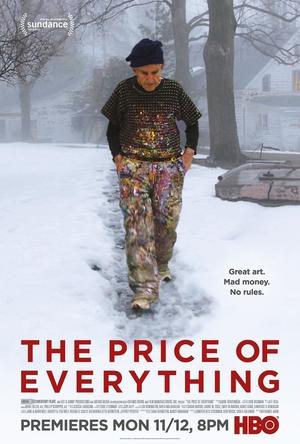
Featuring collectors, dealers, auctioneers and a rich range of artists, including market darlings George Condo, Jeff Koons, Gerhard Richter and Njideka Akunyili Crosby, this documentary examines the role of art and artistic passion in today’s money-driven, consumer-based society.
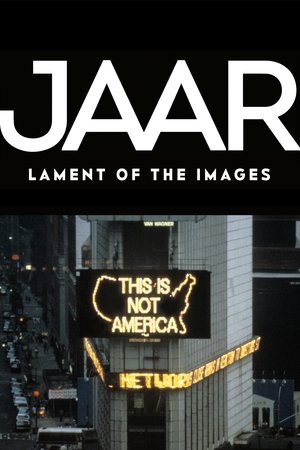
Follows Chilean artist Alfredo Jaar as he finds his artistic voice and develops the socially critical perspective of his work.
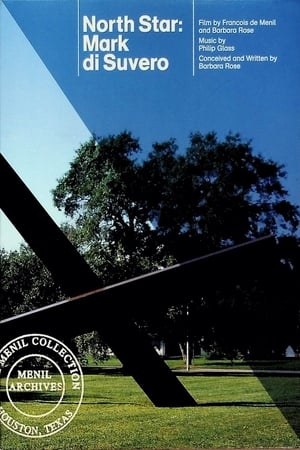
North Star: Mark di Suvero is a 1977 documentary film about Mark di Suvero that was produced by François de Menil and Barbara Rose. Born in 1933, di Suvero has become one of the most recognized sculptors of the late 20th and early 21st centuries. From about 1975 to 1977, fairly early in di Suvero's long career, filmmaker de Menil and art historian Rose produced this film, which was characterized at the time as "a tribute to the extraordinary work and life of the innovative American sculptor of monumental but delicate constructions." The film shows di Suvero making and installing several of his very large sculptures, and incorporates informal interviews of di Suvero, his mother, and others involved in his career and life at that time. From 1971 to 1975 di Suvero, an American, lived in a self-imposed exile in France in protest of US involvement in war in Vietnam and Southeast Asia, and the filming spans the end of his exile and his return to New York.
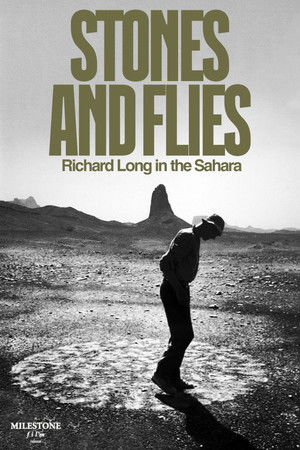
In the fall of 1987, Philippe Haas accompanied the sculptor Richard Long to the Algerian Sahara and filmed him tracing with his feet, or constructing with desert stones, simple geometric figures (straight lines, circles, spirals). In counterpoint to the images, Richard Long explains his approach. Since 1967, Richard Long (1945, Bristol), who belongs to the land art movement, has traveled the world on foot and installed, in places often inaccessible to the public, stones, sticks and driftwood found in situ. His ephemeral works are reproduced through photography. He thus made walking an art, and land art an aspiration of modern man for solitude in nature.
Lifting the lid on the fascinating last decade of Andy Warhol's life and the legacy he left for future artists, through never-before-seen footage and interviews with insiders.
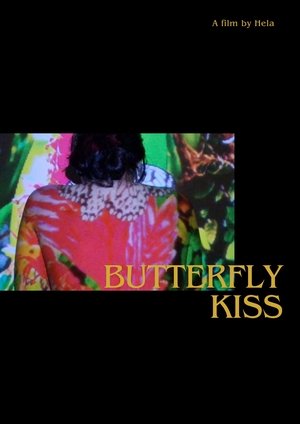
Beijo de Borboleta
Les Couturiers de l'Église
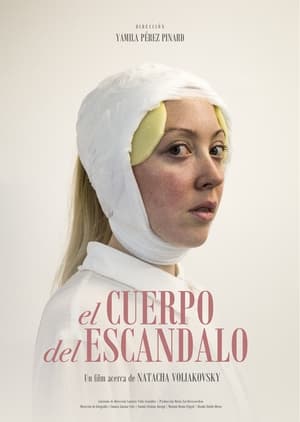
El Cuerpo del Escándalo - Un film acerca de Natacha Voliakovsky
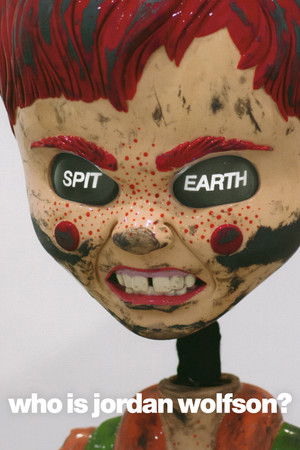
Spit Earth: Who Is Jordan Wolfson? is a feature documentary film about this controversial and divisive artist who in the ensuing five years has only solidified his stature with unnerving and provocative new works that elicit extreme reactions from both critical naysayers and vocal proponents alike. Wolfson is not content to play by the rules of a conservative self-policing art market that favors the status quo, instead preferring to make us squirm as he engages a host of lightning-rod issues facing our society today; homophobia, misogyny, racism, white nationalism, antisemitism and violence to name but a few. Wolfson is an art maker on the world stage whose immersive works take on today’s endemic virtue signaling and politically correct narratives, veritably throwing it all back into our faces.
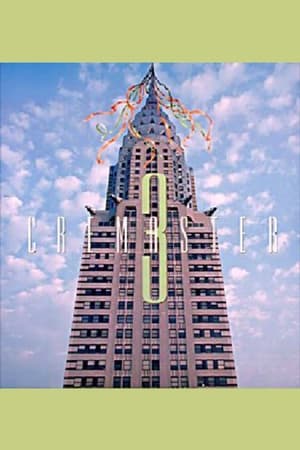
CREMASTER 3 (2002) is set in New York City and narrates the construction of the Chrysler Building, which is in itself a character - host to inner, antagonistic forces at play for access to the process of (spiritual) transcendence. These factions find form in the struggle between Hiram Abiff or the Architect ...