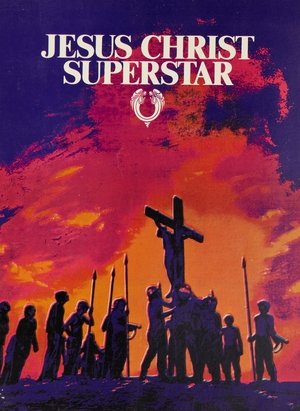
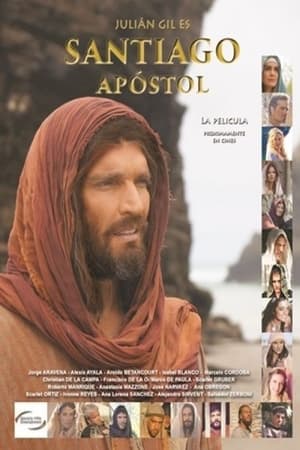
From his birth in Bethlehem to his death and eventual resurrection, the life of Jesus Christ is given the all-star treatment in this epic retelling. Major aspects of Christ's life are touched upon, including the execution of all the newborn males in Egypt by King Herod; Christ's baptism by John the Baptist; and the betrayal by Judas after the Last Supper that eventually leads to Christ's crucifixion and miraculous return.
In 1609, Henry IV sent Inquisition judge Pierre de Lancre to the French Basque Country to investigate witchcraft. In the trials, 80 people were sentenced to death at the stake. Between the 15th and 17th centuries, a total of between 40,000 and 60,000 people fell victim to such waves of persecution in Europe. How can this phenomenon be explained?
A falsely accused nobleman survives years of slavery to take vengeance on his best friend who betrayed him.
Packed with drama, high emotions and cliff-hanger moments, Australia Says Yes is the intimate and personal history of struggle and perseverance that propelled Australia to say Yes to marriage equality. The film shows how a group of determined individuals fought tirelessly against unjust laws that treated LGBTIQ people as second-class citizens, creating a movement that saw them go from criminals to legally equal over the course of five decades.
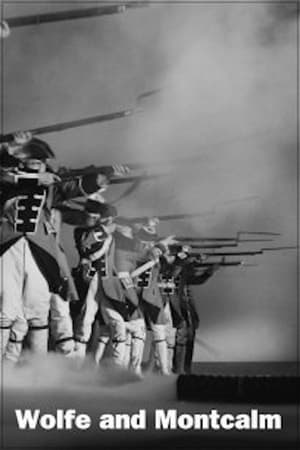
Two generals prepare for battle at the Plains of Abraham.
From May 10, 1940, France is living one of the worst tragedies of it history. In a few weeks, the country folds, and then collapsed in facing the attack of the Nazi Germany. On June 1940, each day is a tragedy. For the first time, thanks to historic revelations, and to numerous never seen before images and documents and reenacted situations of the time, this film recounts the incredible stories of those men and women trapped in the torment of this great chaos.
Santiago Apostol
In 1900, the eyes of the whole world are on Paris. The World's Fair welcomed 50 million amazed visitors, and the city celebrated itself in a glamorous era. This period went down in history as the "Belle Époque." Elaborately restored and colorized historical photographs bring to life the exciting life in Paris between the end of the 19th century and the beginning of World War I in 1914. Bicycles, cars, airplanes, moving pictures, newly founded film studios, revolutionary composers and painters, avant-garde ballet performances, fashion houses, summer resorts on the Atlantic coast – life was intoxicating. People celebrate in the variety shows, cabarets, and revue theaters of Paris. Moulin Rouge, Folies Bergères, Bal Tabarin—in Paris, the nights are long and life is too short to sleep through. It is a dance on the volcano, given the political developments in the world.
After his wife dies, a blacksmith named Balian is thrust into royalty, political intrigue and bloody holy wars during the Crusades.
Hirayama Jirou has lost his mother in the Great Kanto Earthquake and now runs a soba stall with his father. He decides to join the crew of the famous ocean liner Hikawa Maru and finds work cooking in the ship's galley. Through his eyes, the film explores the ship's 85-year history.
The King of Kings is the Greatest Story Ever Told as only Cecil B. DeMille could tell it. In 1927, working with one of the biggest budgets in Hollywood history, DeMille spun the life and Passion of Christ into a silent-era blockbuster. Featuring text drawn directly from the Bible, a cast of thousands, and the great showman’s singular cinematic bag of tricks, The King of Kings is at once spectacular and deeply reverent—part Gospel, part Technicolor epic.
In the chaotic, highly emotional period after the First World War in 1918, the foreign ministers Gustav Stresemann (1878-1929) and Aristide Briand (1862-1932) put all their energies into trying to lead their countries, Germany and France, which were at enmity with each other, into a peaceful future and a united Europe. After their deaths, Europe has to go through a second hell before the plan of these two visionaries succeeds. The cinematic mix of archive footage and re-enactments shows two statesmen, full of facts and emotion, who give each other nothing in difficult negotiations, but at the same time hold on to their shared vision. Even if these two human lives were not enough to reap the fruits of their labor, they sowed the seeds for the next generation. In 1926, Aristide Briand and Gustav Stresemann were awarded the Nobel Peace Prize. It is a sign that the peoples of the world believe in a Europe at peace.
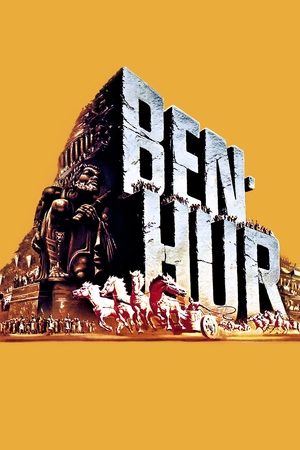
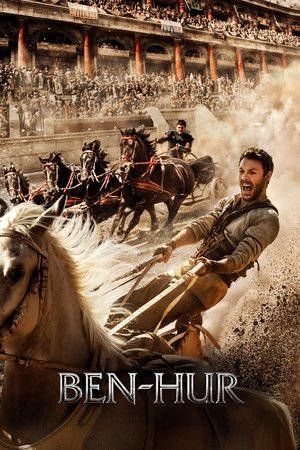
In 26 AD, Judah Ben-Hur, a Jew in ancient Judea, opposes the occupying Roman empire. Falsely accused by a Roman childhood friend-turned-overlord of trying to kill the Roman governor, he is put into slavery and his mother and sister are taken away as prisoners.
A documentary that traces the life and times of Bhagat Singh, a committed Marxist who most ably exemplified the spirit of revolutionary resistance against British imperialism in undivided India.
“Shellmound” is the story of how one location was transformed from a sacred center of pre-historic cultures to a commercial mecca for modern people. What began as a Native American burial ground three thousand years ago, was transformed first into an amusement park, and later an industrial age paint factory. Now, the tainted ancient soil sits beneath the glittering lights of Banana Republic, Victoria’s Secret, and the AMC movie theaters. “Shellmound” examines the decisions made during the recent toxic cleanup, excavation, and construction of the Bay Street mall through the eyes of the city of Emeryville, the developer, the archaeologists, and the native Californians who worked on the site.
Zbojník
The first American space station Skylab is found in pieces scattered in Western Australia. Putting these pieces back together and re-tracing the Skylab program back to its very conception reveals the cornerstone of human space exploration.
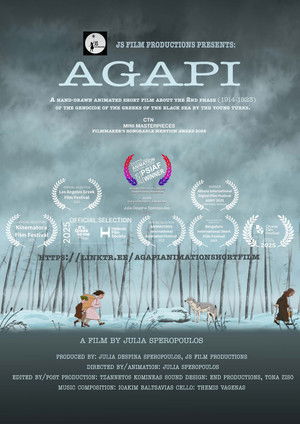
2010 documentary film on the Armenian Genocide by the Young Turk government of the Ottoman Empire during World War I. It is based on eyewitness reports by European and American personnel stationed in the Near East at the time, Armenian survivors and other contemporary witnesses which are recited by modern German actors.
During the Warring States Period, Nung-yuk, the Princess of Qin, denounces the mundane world and dreams of marrying an immortal. This extends to her criteria for choosing a husband: excelling in flute playing. Once, she is captivated by the tune 'Three Melodies of Rainbow Dress' and mistakes the qin player Siu Sze for a fairy. Yuk then persuades Sze to sit the national exam for a better future. Sze's music attracts hundred of birds. Yuk returns to the palace pleading with her father Esquire Muk to agree to their marriage. Despite the Empress Dowager's opposition, Yuk leads a secluded life with Siu afar; a noble breed thus living a hard life. The King lets her go, only granting an annual visit. A year later, Yuk and her husband returns for a visit. The Queen still wants to break them up. Later, Jin State sends people to discover the whereabouts of their Princes. Siu is in fact the Prince of Jin. With Muk’s blessings, Siu marries Yuk in Jin, a marriage which brings peace to both states.
A miraculous conception. A merciless king. A murderous pursuit. Mary's journey to give birth to Jesus unfolds in this biblical coming-of-age epic.