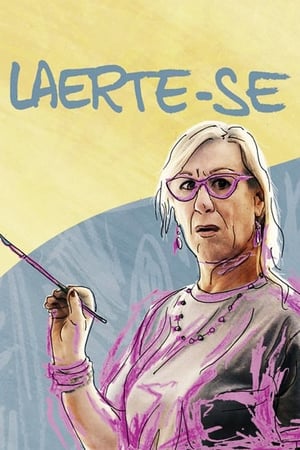
Sien (74) leaves for her hideout on the captivating island of Vlieland. Here she recollects her memories on an old tape recorder of her turbulent life as a mother, life-drawing model, squatter and activist in Amsterdam in the sixties.
Ashes and Snow, a film by Gregory Colbert, uses both still and movie cameras to explore extraordinary interactions between humans and animals. The 60-minute feature is a poetic narrative rather than a documentary. It aims to lift the natural and artificial barriers between humans and other species, dissolving the distance that exists between them.
Artist Katinka Simonse, alias Tinkebell, is a controversial, very mediagenic phenomenon. In her universe there is no distinction between life, art and activism; Tinkebell is her own work of art. Everything she encounters on her life path can become part of her story. Filmmaker Judith de Leeuw was given access to all images about Tinkebell, including her entire private archive. She thus constructed an archive film about how as a human being, living on the ruins of the past, you can be a character in your own story. What is the price you can afford if you continue to believe at any cost?
Raffaello – Il giovane prodigio
Podoby sveta
An installation film that consists of a six-hour-long monologue performed by Edith Clever, who reads texts by Syberberg and many different authors, such as Johann Wolfgang von Goethe, Heinrich von Kleist, Plato, Friedrich Hölderlin, Novalis, Friedrich Nietzsche, Eduard Mörike, Richard Wagner, William Shakespeare, Samuel Beckett, and Chief Seattle.
Benutzt und gesteuert – Künstler im Netz der CIA
A visual artist and a musician create a series of works in which paintings and musical scores form cohesive pieces intended to be experienced together. The works interpret the excitement and monotony of life in the urban desert sprawl from the diverse perspectives of the native and the newcomer.
A documentary film directed by seven famous directors, and narrated by several famous Hollywood actors. The film attempts to give the general filmgoing public a taste of art history and art appreciation.
The Haywain by John Constable is such a comfortingly familiar image of rural Britain that it is difficult to believe it was ever regarded as a revolutionary painting, but in this film, made in conjunction with a landmark exhibition at the V&A, Alastair Sooke discovers that Constable was painting in a way that was completely new and groundbreaking at the time. Through experimentation and innovation, he managed to make a sublime art from humble things and, though he struggled in his own country during his lifetime, his genius was surprisingly widely admired in France.
How do artists view their own work? How does actor Esko Salminen immerse himself in his roles, how does the writer/director Saara Turunen create a whole new world for the stage, and why does musician PK Keränen pick up his guitar time and time again? Is creativity a conscious or subconscious process, a pleasure or a compulsion? Veikko Aaltonen’s documentary takes us straight into the heart of creativity with artists from different fields and generations. Celebrating the various forms of passion and creative work, the film presents a compelling case for the significance of art.
After World War II a group of young writers, outsiders and friends who were disillusioned by the pursuit of the American dream met in New York City. Associated through mutual friendships, these cultural dissidents looked for new ways and means to express themselves. Soon their writings found an audience and the American media took notice, dubbing them the Beat Generation. Members of this group included writers Jack Kerouac, William Burroughs, Allen Ginsberg. a trinity that would ultimately influence the works of others during that era, including the "hippie" movement of the '60s. In this 55-minute video narrated by Allen Ginsberg, members of the Beat Generation (including the aforementioned Burroughs, Anne Waldman, Peter Orlovsky, Amiri Baraka, Diane Di Prima, and Timothy Leary) are reunited at Naropa University in Boulder, CO during the late 1970's to share their works and influence a new generation of young American bohemians.
Short documentary of David Lynch building a lamp.
About the artist Ian Hellström (1925-2012) with his own museum. A tour of Ian's house is an adventure in art, antiques, skulls and dolls, all in perfect balance. Ian created various jewelry sculptures, a kind of collage with glass beads, brooches, simple jewelry and various toys, which were sometimes pasted into boxes with small compartments. His colorful art and cross-border life is captivating but not always easy to understand.
The Whitney Museum of American Art presented the landmark exhibition Jeff Koons: A Retrospective from June 27 to October 19, 2014. It was the largest, most comprehensive survey of Koons’s art ever assembled, spanning four decades of his career and displaying 145 works from every series, including 13 new pieces exhibited publicly for the first time. The film follows Koons and Whitney Chief Curator, Scott Rothkopf, who conceived and organized the show, through every gallery of the exhibition. In addition, insightful interviews with Adam Weinberg, the Whitney’s Director, Robert Storr, Dean Emeritus of the Yale School of Art, and Michelle Kuo, Editor of Artforum, help to deepen the investigation into Koon’s art and process.
This film tells Jean-Michel's story through exclusive interviews with his two sisters Lisane and Jeanine, who have never before agreed to be interviewed for a TV documentary. With striking candour, Basquiat's art dealers - including Larry Gagosian, Mary Boone and Bruno Bischofberger - as well as his most intimate friends, lovers and fellow artists, expose the cash, the drugs and the pernicious racism which Basquiat confronted on a daily basis. As historical tableaux, visual diaries of defiance or surfaces covered with hidden meanings, Basquiat's art remains the beating heart of this story.
Hours and historical meetings, Pierre Assouline has composed an anthology of the best extracts presented in the form of a primer, which he had commented on by a surprised Bernard Pivot.
Martin Blaszko is considered one of the most important artists of geometric abstraction in Latin America. This documentary, which ends a trilogy, follows the setup of what ended up being his last art show, through only twenty sequences.
This documentary follows three parallel stories. First, that of the masterpiece, The Little Girl with the Blue Ribbon, this melancholic Renoir work with the "musical face" described by Henri Michaux. The painting was constantly tossed around, shelved by its patrons, looted by the Nazis, found by the Monument Men, recovered by the family, sold to a controversial collector, before finally arriving at the Kunsthaus Zurich. We also discover the painter's biography, and the eventful life of his model, Irene Cahen d'Anvers. Born into the Jewish upper middle class, this free and divorced woman long disowned the painting and left it to her daughter, who was murdered at Auschwitz. Discover the tumultuous journey of this painting, its model, Irene Cahen d'Anvers, and its connection to the dark hours of the Nazi regime.
We are in the midst of production on a one-hour film on seminal art historian John Richardson, and his work on the fourth and final volume of his biography on Picasso. Richardson shares his insights and observations on Picasso, whom he first met in the 1950s, with Shelley Wanger, his editor at Alfred A. Knopf (a division of Random House, Inc.).