May Whitley throws Charles Cawkell about using jujitsu techniques.
Norwegian researcher Petter Amundsen claims to have deciphered a secret code hidden in legendary playwright William Shakespeare's works that reveals a map leading to the location of certain treasures. British Shakespearean scholar Robert Crumpton embarks on a mission to prove he is spectacularly wrong. (A remake of “Shakespeare: The Hidden Truth,” including new discoveries.)
Documentary charting the experiences of projectionists who work or worked in cinemas in London, exploring the skills and dedication required for this unique role, set against changes in technology, society, and entertainment.
A short film about the changing face of London Soho and the implications of gentrification on Mimi, an aging transvestite.
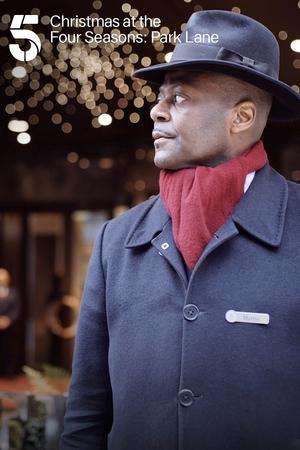
Exclusive access to the Four Seasons Hotel, London, in the run-up to Christmas. Expect festive photoshoots, afternoon teas, Christmas trees and sackfuls of presents.
The history of Westminster Abbey and a tour of the monuments within it; accompanied by choral music and including footage of the coronation of King George VI in 1937.
David Jones investigates how 1960s council housing came to be built so poorly that thousands later needed to be demolished.
The Ultimate Survivor tells the story of a remarkable survivor from a bygone age: the former East Oxford Picture Palace, on Jeune Street in Oxford, now known as the Ultimate Picture Palace or UPP.
A biographical documentary about the great British actor and director Charlie Chaplin (1889-1977), from rags to riches, from the slums of London to glory.
A sock puppet explores a family history told from the perspective of a mother and father.
70 is definitely the new 20 in this heart-warming 1960s documentary portrait of the Darby and Joan Club for elderly Cockneys.
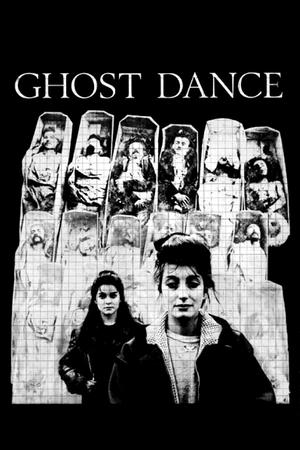
Through the experiences of two women in Paris and London, Ghost Dance offers an analysis of the complexity of our conceptions of ghosts, memory and the past. The film focuses on the French philosopher Jacques Derrida, who observes, 'I think cinema, when it's not boring, is the art of letting ghosts come back.' He also says that 'memory is the past that has never had the form of the present.'
A colour anamorphic musical look at London's Heathrow airport over 24-hours in November 1971. The subject was shot entirely at Heathrow airport without recording any direct sound. LHR's many layered tracks were all compiled, recorded and laid in post-production.
Dance for All
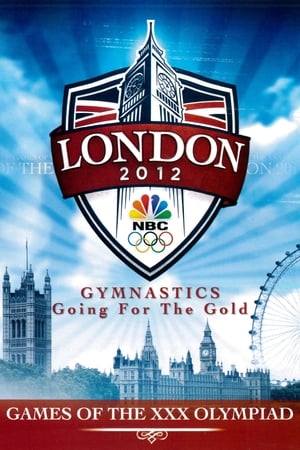
At the 1996 Atlanta Games, the Magnificent Seven became the first American women to ever win gymnastics team gold. Sixteen years later, in London, the Fierce Five joined them in the history books. Relive all the excitement as Gabby Douglas, Aly Raisman, Jordyn Wieber, McKayla Maroney and Kyla Ross take the lead from the first rotation and never look back on their way to gold. Follow Gabby Douglas on her way to the podium to make it three straight American gold medals in the individual all-around competition. Every individual event final is featured on this DVD, including Aly Raisman's historic gold-medal performance in the floor exercise, her bronze on the balance beam, as well as McKayla Maroney's silver medal in the vault.
A fragmented collection of independent closed cinemas, in London during lockdown, captured on Super 8mm film.
The baker, the pie-maker and the diminished long-term community of Hoxton Street face gentrification in this compelling portrait of a rapidly changing London.
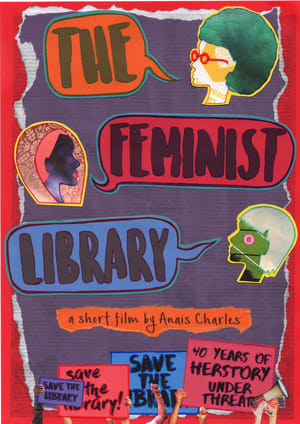
The Feminist Library: A Short Film was made in support of the Save the Feminist Library Campaign, documenting a crucial moment in the library's herstory as it fights for its very survival. Shortlisted for the Women's History Network Community Prize, the film revisits the story of the library's inception and emphasises why feminism remains essential today.
A video diary of a month-long immersion in the life of the Barbican, from the top floors of the towers to the underground levels of the arts centre. An intimate and lively map of this brutalist masterpiece.
The film takes us to the North of England to follow the migration of the black-headed gull down to London. There, the narrator asks viewers to "listen to their gossip", before demonstrating the bird’s flight in slow motion. We see a polecat feasting on gull eggs, and then a man collecting the eggs for human consumption, with the film telling us that they are considered a “delicacy” in London. Indeed, according to the British Trust for Ornithology, around 300,000 gull’s eggs were sold every year in Leadenhall Market in London during the 1930s, when London Visitors was made.