The film starts with the earliest form of cinema and how Shama Zaidi became an integral part of the evolution of Indian Cinema.
An ethnographic exploration of women’s collectives in the village of Shiv Nath in Himachal Pradesh that has empowered local women since the 1980s, showcasing their journey towards social and economic empowerment and resilience through the narratives of its women.
A documentary made by Ghatak for the Government of Bihar observing the life of the Adivasis.
At the age of 54, Binode Bihari Mukherjee, an accomplished painter, lost his sight following an unsuccessful cataract operation. He continued to create art despite his loss of sight. The documentary explores Binode Bihari’s inner eye that guides his fingers to create art.
Amidst the urban transformation driven by progress, bulldozers dismantle 'illegal' settlements, leaving countless lives shattered. In the aftermath of such upheaval, one basti, sacrificed to conceal poverty during the G20 summit, and another basti, abandoned by authorities without alternative housing, illustrate the stark realities of displacement. The film delves into the daily struggles of individuals who persist in the rubble of their former homes.
An ascetic walks through the narrow streets of a village every morning while his family is still asleep. In his semi-somnolent state he dreams about the history of the village mixing up myths, folklore and facts.
The film explores the campaign waged by the Hindu right-wing organisation Vishva Hindu Parishad to build a Ram temple at the site of the Babri Masjid in Ayodhya, as well as the communal violence that it triggered. A couple of months after Ram ke Naam was released, VHP activists demolished the Babri Masjid in 1992, provoking further violence.
A short film that sets up an opposition between functional forms of industrial age and decorative ones from Indian tradition.
The film is inspired by a rural folklore from central India, centred around a concept known as “Maya” or "the buried treasure." According to folklore, this treasure possesses its own consciousness and has the ability to select its rightful bearer. When the treasure is acquired by the person it is destined for, no trouble arises. However, if someone other than the chosen or destined individual claims the buried treasure, it brings forth bad omens. The film explores the lives of two cousins and the choices they make, highlighting the conflict between greed and need, as well as the themes of prophecy and destiny.
A turbulent newsroom drama that intimately chronicles the working days of broadcast journalist Ravish Kumar as he navigates a spiraling world of truth and disinformation.
Krishnattam or Krishnanattam (Play of Krishna) is a temple ritualistic art performed at Guruvayur Temple (Guruvayur 680101, Trishshur District, Kerala) by a troupe owned by Guruvayur Devasvam. The performance of Krishnattam is based on Krishnagiti, a poetic text in Sanskrit containing verses and stanzas, written by the Zamorin King Manavedan in 1654. The story of Krishna, described in Bhagavata, Mahabharata and Harivamsha is presented in Krishnattam as songs, dance and acting in a sequence of eight plays (Avataram, Kaliyamardanam, Rasakrida, Kamsavadham, Svayamvaram, Banayuddham, Vividavadham and Svayamvaram) in eight days.
A charismatic Indian-Nepali boy, lives a bohemian life in a remote Himalayan village. As he transitions from childhood to teenagehood, his poetic journey of perseverance echoes issues that span across ages and communities.
In the dense forests of the Eastern Himalayas, moths are whispering something to us. In the dark of night, two curious observers shine a light on this secret universe.
Dancing is a passion of the rich, believes Manish Chauhan , the 21-year-old son of a taxi driver in suburban Mumbai. Yet he, like his friend, 15-year-old Amiruddin Shah daydream of becoming principal ballet dancers in big American companies.
A young woman, Srishti Bakshi embarks on a monumental journey, walking almost 4000km over 240 days, from Kanyakumari in the south, to Kashmir, in the North, along the way meeting and learning first hand about the experiences of many women from all corners of India. WOMB is a poignant and heart warming documentary exploring the social and political issues faced by women of today’s India. It is a unique testament to seemingly insurmountable challenges in these unprecedented times and the everyday sheroes who are battling to overcome.
Indian freedom fighter Gandhiji was killed by Nathuram Godse. But what made Nathuram Godse to take this extreme step?
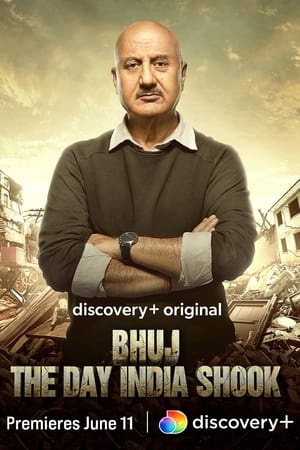
The documentary talks about of the devastating earthquake of 2001 and captures first-person accounts of survivors, rescuers, journalists, photographers, and earth scientists.
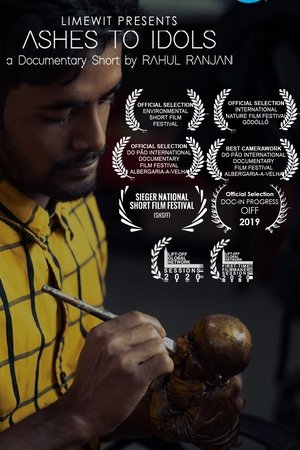
The journey from ashes to idols through the eyes of a teenager who has created many jobs in the process The documentary shows how a teenager decided to get rid of temple's waste by making idols from them and how few jail inmates became his helper in the process.
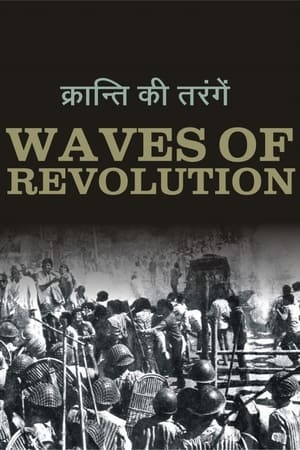
Film made during the repressive days of the Emergency in India documents the 1974-75 uprising of the people of Bihar in Eastern India.
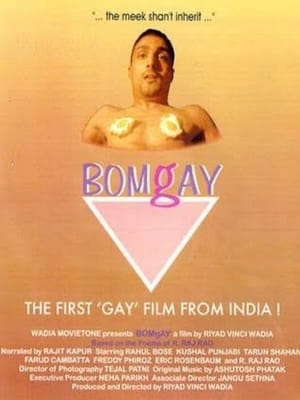
Based on the poetry of R. Raj Rao, Bomgay is a collection of six vignettes that depict the underground and complex nature of the gay identity in urban India. Part Genet, part Bollywood, this film combines acidic verse and insightful imagery to reveal the emerging gay community in the post-liberalized India of the 1990s.