An eight-hour fiction shot for a total of twenty-seven weeks, over a period of fourteen months, in a village population forty-seven in the mountains of Kyoto Prefecture, Japan. It is a geographic description of the work and non-work of a farmer. A portrait, over five seasons, of a family, of a terrain, of a soundscape, and of duration itself. A film-as-adaptive-landscape. A georgic in five books.
In the late 19th century, two Swedish emigrants, Lasse Karlsson and his son Pelle, arrive on the Danish island of Bornholm hoping to find work on a farm and save enough money to travel to the United States of America.
A strong-willed peasant girl is sent by her father to the estate of some local aristocrats to capitalize on a rumor that their families are from the same line, but is left traumatised from her experiences.
A young Pakistani Briton manages a rundown laundrette with his lover while dealing with tension in his family, the local Pakistani community, and a persistent mob of skinheads.
Members of three Commonwealth armies, an Aussie, a Canadian, and a New Zealander meet actor Leslie Howard who buys them a beer and makes them understand why they're fighting.
A film about the historical uprising of the seamen in Kiel: During the Russian October Revolution of 1917, German and Russian soldiers start to solidarize with each other. By disarming the officers, machinist Henne Lonke and stoker Jens Kasten prevent the attack on a Russian freighter. When German admiralty gives out orders for operation "Nibelungen", which would lead the German fleet into a suicidal attack against England and quell the revolutionary spirit, seamen and soldiers from different political backgrounds unite in protest.
In Margate, England, life is not easy for teenager Sarah Taylor, between being bullied at school, being exploited by a dominant boss and having to take care of her depressive mother and her two siblings. But Sarah finds a way to channel her growing despair and fight adversity when her drama teacher gives her a new purpose.
After completing jail time for beating up a man who tried to seduce his mentally-handicapped teenage daughter, the Butcher wants to start life anew. He institutionalizes his daughter and moves to the Lille suburbs with his mistress, who promises him a new butcher shop. Learning that she lied, the Butcher returns to Paris to find his daughter.
A married farmer falls under the spell of a slatternly woman from the city, who tries to convince him to drown his wife.
Kuhle Wampe takes place in early-1930s Berlin. The film begins with a montage of newspaper headlines describing steadily-rising unemployment figures. This is followed by scenes of a young man looking for work in the city and the family discussing the unpaid back rent. The young man, brother of the protagonist Anni, removes his wristwatch and throws himself from a window out of despair. Shortly thereafter his family is evicted from their apartment. Now homeless, the family moves into a garden colony of sorts with the name “Kuhle Wampe.”
La Califfa's husband was killed during the strikes so she takes the side of the strikers. Her conflict with the plant owner Doverdo gradually turns into a love relationship.
When Taeil gets hired as a tailor's assistant, he dreams of becoming a fully-fledged tailor to be able to financially support his family. But he finds himself constantly reminded of the laborers' inferior working conditions. The young 22-year-old Taeil decides to confront the reality and become the flame of hope himself.
No one expects much from Christy Brown, a boy with cerebral palsy born into a working-class Irish family. Though Christy is a spastic quadriplegic and essentially paralyzed, a miraculous event occurs when, at the age of 5, he demonstrates control of his left foot by using chalk to scrawl a word on the floor. With the help of his steely mother — and no shortage of grit and determination — Christy overcomes his infirmity to become a painter, poet and author.
Helen's mundane life at the chicken factory takes an unexpected turn with Joanne's return. They were each other's secret teenage passion. As they fall in love, Helen's zest for life returns but Joanne faces something darker from her past.
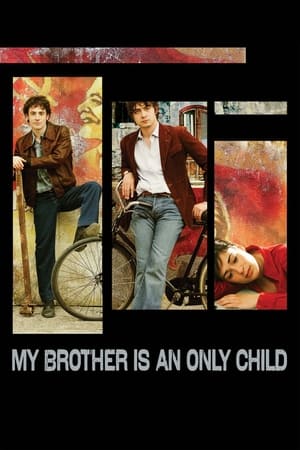
Accio and Manrico are siblings from a working-class family in 1960s Italy: older Manrico is handsome, charismatic, and loved by all, while younger Accio is sulky, hot-headed, and treats life as a battleground — much to his parents' chagrin. After the former is drawn into left-wing politics, Accio joins the fascists out of spite, but his flimsy beliefs are put to test when he falls for Manrico's like-minded girlfriend.
Babe is a little pig who doesn't quite know his place in the world. With a bunch of odd friends, like Ferdinand the duck who thinks he is a rooster and Fly the dog he calls mum, Babe realises that he has the makings to become the greatest sheep pig of all time, and Farmer Hoggett knows it. With the help of the sheep dogs, Babe learns that a pig can be anything that he wants to be.
Penny works at a supermarket and Phil is a gentle taxi-driver. Penny’s love for Phil has run dry and they lead joyless lives with their two children, Rachel, a cleaner, and Rory, who is unemployed and aggressive.
In this pitch black comedy the rivalry between two neighbors escalates into an all out war. Through a maintenance error on a tractor they both end up, paralyzed, in a wheelchair. It seems they are doomed to stay together. They no longer focus their rage on each other but on the manufacturer of the tractor, in Helsinki. So get ready for a hilarious wheelchair road movie.
In the 1950s, brothers Jacey and Doug Holt, who come from the poorer side of their sleepy Midwestern town, vie for the affections of the wealthy, lovely Abbott sisters. Lady-killer Jacey alternates between Eleanor and Alice, wanting simply to break the hearts of rich young women. But sensitive Doug has a real romance with Pamela, which Jacey and the Abbott patriarch, Lloyd, both frown upon.
A samurai answers a village's request for protection after he falls on hard times. The town needs protection from bandits, so the samurai gathers six others to help him teach the people how to defend themselves, and the villagers provide the soldiers with food.