Voices in Wartime is a 2004 documentary that explores the human experience of war through poetry. Combining interviews with soldiers, journalists, and historians, it reveals how war affects individuals and societies across time and place. The film features poets from around the world – from Homer and Wilfred Owen to Shoda Shinoe and modern writers in Iraq and Nigeria – showing how poetry expresses the pain, trauma, and truth of conflict. By linking verse with real-life accounts, Voices in Wartime highlights how poetry helps us understand the emotional and moral impact of war.
Hock Hiap Leong pays tribute to this a 55-year old coffee shop on Armenian Street that has been an incessant inspiration to many people. The urban re-development board’s demolishing plans in 2001 inspired the filmmaker to capture this epitaph of history.
The tragic story of four children who died at Grantham Hospital in early 1991, and how doctors and police gathered the evidence to convict killer nurse 'Angel of Death', Beverley Allitt.
The story behind the translation and performance of Shakespeare's "Hamlet" in Klingon.
When Gordon Gund went blind in 1970 at age 30 due to retinitis pigmentosa, he resolved to find a cure for the disease and created the Foundation Fighting Blindness. After decades of scientific research, a major breakthrough emerged, and this short film showcases the inspirational story of a 17-year-old Belgian boy who is a beneficiary of this work.
Short about the daily life of the Apaches, including their ceremonies.
A short documentary where director Dave Jackson digs into his catboy past and life after Cat Sick Blues.
A short documentary covering the conclave and election of Pope Pius XII.
Filmmaker Alain Resnais documents the atrocities behind the walls of Hitler's concentration camps.
Fulano de Tal
Into the Current tells the story of Burma's unsung heroes -its prisoners of conscience -and the price they pay for speaking truth to power in a military dictatorship.
An exploration of the interconnected experiences of queerness and illness, this film navigates personal and collective journeys through medical spaces, sexual violence, and survival, displays the profound impact on body and identity.
May the Lord Watch follows the rise, breakup, and reunion of Little Brother, detailing the vast impact of the preeminent 2000’s rap group.
Das Rätsel einer verlorenen Zivilisation - Die verschwundene Metropole
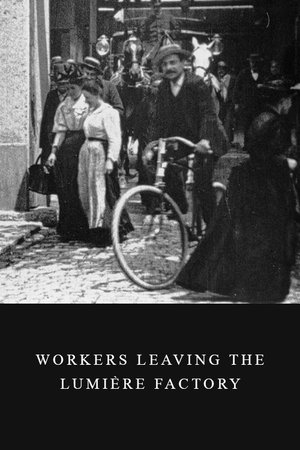
Working men and women leave through the main gate of the Lumière factory in Lyon, France. Filmed on 22 March 1895, it is often referred to as the first real motion picture ever made, although Louis Le Prince's 1888 Roundhay Garden Scene pre-dated it by seven years. Three separate versions of this film exist, which differ from one another in numerous ways. The first version features a carriage drawn by one horse, while in the second version the carriage is drawn by two horses, and there is no carriage at all in the third version. The clothing style is also different between the three versions, demonstrating the different seasons in which each was filmed. This film was made in the 35 mm format with an aspect ratio of 1.33:1, and at a speed of 16 frames per second. At that rate, the 17 meters of film length provided a duration of 46 seconds, holding a total of 800 frames.
A Experimental Docu-Drama about the Red Army Faction's formation, and events leading up to their imprisonment and death, from 1970 to 1977.
Rafale Confidential
This captivating film celebrates Porsche's storied legacy at Le Mans and the love of driving shared by both Porsche and Mobil 1. Look back at the last 100 years of Le Mans and 75 years of Porsche’s dominance through the film to prepare for this year’s race taking place June 10-11. Featuring archival footage from Le Mans, firsthand interviews from former and current racing drivers and notable collectors/enthusiasts, mixed with modern footage of iconic and production Porsches, “Racing with Giants: Porsche at Le Mans” has brought the Porsche history to life with the feel of a riveting sports docuseries!
Behind the scenes documentary on the making of the film.
In Baden-Baden, Nayo Titzin follows the producers of the opera Don Giovanni, created for the Innsbruck Festival of 2006. He is looking for a musical truth... What if Mozart's masterwork Don Giovanni had been interpreted in a wrong way for more than two centuries? Conductor René Jacobs, famous for his performance of Così fan tutte and laureate of a Grammy Award for his innovative recording of The Marriage of Figaro, comes back with new ideas on the comprehension of one of the greatest operas of all times. In this relevant documentary, Nayo Titzin clarifies and highlights all the brightness of those melodies and recitatives. Rewarded with many praises in the international press, this production shows the dramaturgical perfection of the "opera of the operas," the absolute of the genre, as Wagner once said. Once more, the Bulgarian director offers a fun and subtle report, and makes sure that everyone will understand this myth.