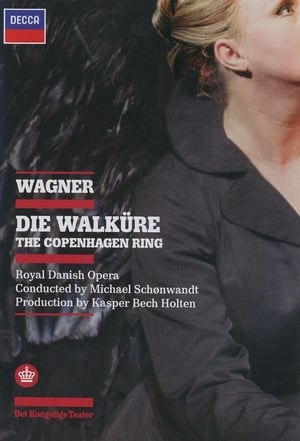
The gorgeous and evocative Otto Schenk/Günther Schneider-Siemssen production continues with this second opera in Wagner’s Ring cycle. Hildegard Behrens brings deep empathy to Brünnhilde, the favorite daughter of the god Wotan (James Morris) who nevertheless defies him. Morris’s portrayal of Wotan is deservedly legendary, as is Christa Ludwig, as Fricka. Jessye Norman and Gary Lakes are Sieglinde and Siegmund, and Kurt Moll is the threatening Hunding. James Levine and the Met orchestra provide astonishing color and drama. (Performed April 8, 1989)
Siegfried is the third of the four operas that constitute Der Ring des Nibelungen (The Ring of the Nibelung), by Richard Wagner.
The Glyndebourne Opera's 1981 production of the Benjamin Britten opera, based on Shakespeare's play.
As Blanche’s fragile world crumbles, she turns to her sister Stella for solace – but her downward spiral brings her face to face with the brutal, unforgiving Stanley Kowalski. This is the world premiere performance by the San Francisco Opera on September 19, 1998.
Valery Gergiev conducts Mariusz Trelinski’s thrilling new production of these rarely heard one-act operas. Anna Netrebko stars as the blind princess of the title in Tchaikovsky’s lyrical work, opposite Piotr Beczala as Vaudémont, the man who wins her love—and wakes her desire to be able to see. Nadja Michael and Mikhail Petrenko are Judith and Bluebeard in Bartók’s gripping psychological thriller about a woman discovering her new husband’s murderous past.
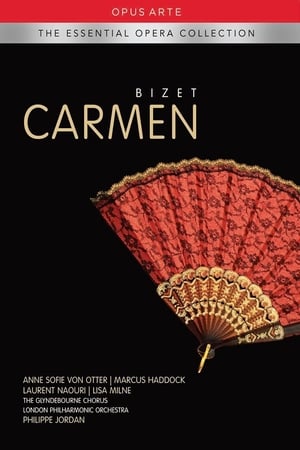
David McVicar's exhilarating new production, with Anne Sofie von Otter in the title role, restores the Opera Comique to Bizet's masterpiece. Philippe Jordan, in his Glyndebourne debut, conducts the London Philharmonic Orchestra, the Glyndebourne Chorus, and a cast which includes Marcus Haddock, Laurent Naouri, and Lisa Milne.
When the most voluptuous, sought-after courtesan in the world meets an ascetic monk whose life is devoted to God, you know erotic sparks are going to fly. And when the clash takes place in a glorious, but rarely performed, opera by Massenet, it’s a delight to the ear just as much as to the eye. Renée Fleming is every inch the glamorous Thaïs, swathed in elegant gowns designed by Christian Lacroix. Thomas Hampson is Athanaël, the tortured man of God. This production by John Cox, which premiered in December 2008, brilliantly sets the stage for a confrontation as old as civilization itself.
An Egyptian military commander, Radamès, struggles to choose between his love for the enslaved Ethiopian princess Aida, and his loyalty to the Pharaoh. To complicate the story further, the Pharaoh's daughter Amneris is in love with Radamès, although he does not return her feelings.
The Met’s spectacular production of Verdi’s Egyptian epic captures both the grandeur and the intimacy of this powerful tale of love and politics. Liudmyla Monastyrska is Aida, the Ethiopian princess-turned-slave in love with the Egyptian warrior Radamès, sung by Roberto Alagna. Olga Borodina is her rival, Amneris, daughter of the Pharao, and George Gagnidze sings Aida’s father, Amonasro, the King of Ethiopia. Principal Conductor Fabio Luisi is on the podium.
Captain's daughter Josephine and common sailor Ralph Rackstraw are in love. However, their relationship is complicated by her arranged marriage to the high-ranking Sir Joseph Porter. A secret about the characters' true identities revealed by Little Buttercup, which leads to a farcical resolution.
After the acclaimed Met premiere of Thomas Adès's "The Tempest" in 2012, the composer returned with another masterpiece, this time inspired by filmmaker Luis Buñuel's seminal surrealist classic "El Ángel Exterminador", during the 2017–18 season. As the opera opens, a group of elegant socialites gather for a lavish dinner party, but when it is time to leave for the night, no one is able to escape. Soon, their behavior becomes increasingly erratic and savage. The large ensemble cast tackles both the vocal and dramatic demands of Adès's opera with one riveting performance after another. Tom Cairns, who also penned the work's libretto, directs an engrossing and inventive production, using a towering wooden archway to trap the characters onstage. And Adès himself takes the podium to conduct the frenzied score, which features a host of unconventional instruments, including the eerie electronic ondes Martenot.
Sir David McVicar’s bold new staging of Tosca, Puccini’s operatic thriller of Napoleonic Rome, thrilled Met audiences when it rang in the New Year in 2018. Only weeks later, the production was seen by opera lovers worldwide as part of the Met’s Live in HD series of cinema presentations. In this performance, Bulgarian soprano Sonya Yoncheva is the passionate title diva, opposite charismatic tenor Vittorio Grigolo as her lover, the idealistic painter Mario Cavaradossi. Baritone Željko Lučić is the menacing Baron Scarpia, the evil chief of police who employs brutal tactics to ensnare both criminals and sexual conquests. On the podium, Emmanuel Villaume conducts the electrifying score, which features some of Puccini’s most memorable melodies.
Premiered immediately before the enduring masterpieces Rigoletto, Il Trovatore, and La Traviata, Luisa Miller incorporates the youthful vitality that had made Verdi an international sensation while also looking forward to the dramaturgical discipline and sophistication of those later works. In this Live in HD performance, soprano Sonya Yoncheva takes on the riveting title role, capping off a season in which she starred in three cinema transmissions. As her father, Miller, the legendary Plácido Domingo adds another baritone role to his extensive repertoire. Tenor Piotr Beczała as Rodolfo, Alexander Vinogradov as Count Walter, and Dmitry Belosselskiy as Wurm round out the illustrious cast, and Bertrand de Billy conducts.
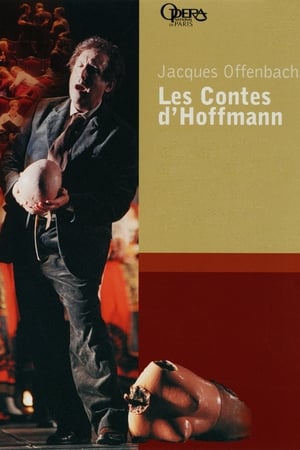
Among DVDs of "Hoffmann" currently available, this is the only one that even begins to stand comparison with the superlative Powell and Pressburger film (whose ideas it occasionally borrows). Olivier Py's baroque imagination, which sometimes leads him into self-indulgence and incoherence, is well suited to bringing out this opera's darkness and he does an excellent job
What happened to Figaro and his friends after the events told in Rossini’s and Mozart’s operas? One possible sequel is told in John Corigliano’s “grand opera buffa” The Ghosts of Versailles—an uproariously funny and deeply moving work inspired by Beaumarchais’s third Figaro play, La Mère Coupable, and commissioned by the Met to celebrate its 100th anniversary. This telecast captures its world premiere run, conducted by James Levine. Håkan Hagegård is Beaumarchais, Figaro’s creator, who is deeply in love with Marie Antoinette (Teresa Stratas in a heart-searing performance) and determined to rewrite history and save her from the guillotine. A young Renée Fleming, at the beginning of her international career, sings the unfaithful Rosina. Gino Quilico is the wily Figaro who tries to take matters in his own hands, and Marilyn Horne stops the show as the exotic entertainer Samira.
The Peter Sellars production of Handel's "Theodora", recorded live at the Glyndebourne Festival in May 1996. Dawn Upshaw stars as Theodora, with David Daniels as Didymus, Lorraine Hunt Lieberson as Irene, Richard Croft as Septimius, and Frode Olsen as Valens. William Christie conducts the Orchestra of the Age of Enlightenment.
Princess Fedora, who is to marry the Count the following day, arrives and sings of her love for him, unaware that the dissolute Count has betrayed her with another woman. The sound of sleigh-bells is heard, and the Count is brought in mortally wounded. Doctors and a priest are summoned, and the servants are questioned. It is proposed that Count Loris Ipanov, a suspected Nihilist sympathiser, was probably the assassin. De Siriex (a diplomat), and Grech (a police inspector) plan an investigation. Fedora swears on the jewelled Byzantine cross she is wearing that Count Andrejevich's death will be avenged.
Conducted by Riccardo Muti, the master of the Scala in Milan for twenty years, the Verdian melodrama unfolds before our eyes. This Cavani's approach is ageless and excellence is pre-eminent: to start with, the role of Riccardo is played by the wonderful Salvatore Licitra. As for Maria Guleghina, she plays an exceptionally good Amelia. Riccardo Muti proves once again what a wonderful Verdian he is.
Filmed at the 1992 Glyndebourne Festival in Lewes, England, this production won unanimous critical acclaim for its innovative interpretation of Tchaikovsky's opera "Pique Dame" ("Queen of Spades"). Although sung in Russian, the production features English sopranos Felicity Palmer as the old countess and Nancy Gustafson as Lisa. Russian tenors Dimitri Kharitonov, Sergei Leiferkus and Yuri Marusin co-star.
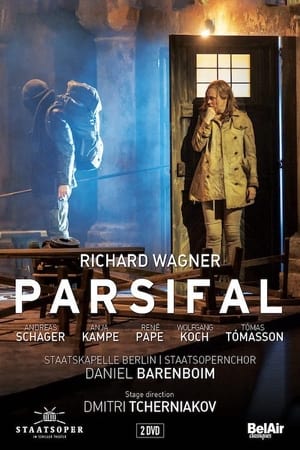
The Met assembled an ideal cast for François Girard’s acclaimed new production of Wagner’s final masterpiece: Jonas Kaufmann in the title role of the fool “made wise by compassion”, René Pape as Gurnemanz, the veteran Knight of the Grail, Katarina Dalayman as Kundry, Peter Mattei is Amfortas, the anguished ruler of the Grail’s kingdom, and Evgeny Nikitin sings the evil magician Klingsor.