Italomodern – Design
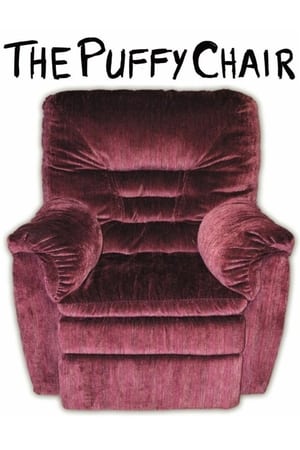
Josh, a struggling musician, wins a vintage recliner in an eBay auction. Since he lives in New York and the chair is in Atlanta, this poses a bit of a problem. He asks his girlfriend, Emily, to accompany him on the trip, and his hippie brother Rhett joins the pair along the way.
A frustrated couple blasphemes about their neighbor. Where do such people shop? A commercial promptly takes the two of them on a journey through the the “Sexy Furniture Store”, where furniture is not only practical but also provocative. Order now to unleash their long-hidden sexual energies!
A 1995 David Quinton film exploring the British origins of Newfoundland outport furniture design.
Yin Honqiang, a master carpenter from Jiangyin, has been working with wood for over 50 years. Along with his son and his grandson, they create handcrafted pieces of furniture of the highest level, what lead them to be one of the most important furniture makers in all of China. Take a seat is a close look at their way of working while keeping the tradition alive throughout generations.
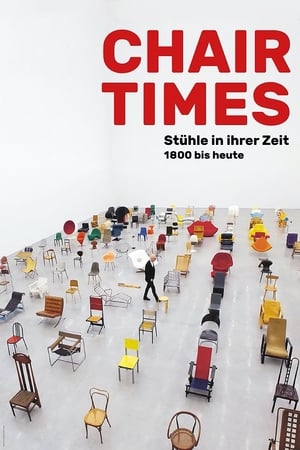
"Chair Times" charts a course through an ocean of chairs. In the focus are 125 objects from the Collection of the Vitra Design Museum. Arranged according to their year of production, they illustrate development from 1807 to the very latest designs straight off the 3D printer, forming a timeline to modern seating design. The film features many people whose vocations involve design and who are experts in the field, such as designers Hella Jongerius, Antonio Citterio and Ronan Bouroullec, architects and collectors Arthur Rüegg and Ruggero Tropeano, architect David Chipperfield, Director Emeritus of MAK Vienna/Los Angeles Peter Noever, Mateo Kries, Director of the Vitra Design Museum, Vitra Design Museum curators Amelie Klein, Jochen Eisenbrand and collection curator Serge Mauduit. And your guide through the history of chairs is Rolf Fehlbaum, Chairman Emeritus of Vitra.
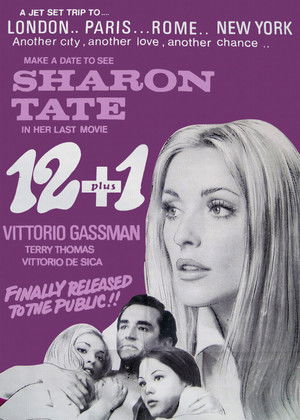
Mario, a young philanderer, receives 13 antique chairs in a bad state by inheritance and decides to sell off them to get some money. Afterwards he gets to know that one of them contains documents worth a lot of money. So he begins an adventurous trip to regain possession of the chair. On the way he meets many strange people who would like to help or to swindle him.
Paul Winkelmann is the CEO of a successful business in Hamburg that he took over after the death of his father eight years ago. But he is still strongly dominated by his 78 year old mother who cares for him as a child, and who cannot understand why he took an apartment on his own after all these years. The real "problem" starts when Paul gets to know psychologist Margarethe Tietze whose relationship to her parents is also not so easy after all.
Vývoj a mechanisace ohýbáren
Watch your eyes...
A short film focusing on a minimalist mime performance piece concerning man's relationship to television with the union of man, chair and television. Without dialogue.
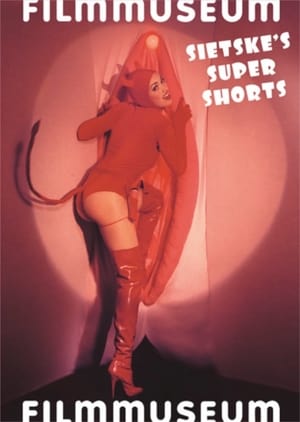
A side table and a chest of drawers (played by actors in ingenious soft-sculpture costumes) indulge in a bit of passive-aggressive furniture moving. Do you know what your household decor is up to when you’re not looking? Another characteristically eccentric bit of humor from Dutch filmmaker Sietske Tjallingii, aka "Miss T."
When her country is taken over by socialist revolutionaries, a wealthy woman can't bear to give up all of her wealth and possessions to the new government, so she hides all of her treasures in the 12 chairs of a dining-room set. After her death her nephew finds out what she had done and, since the chairs had been "nationalized" and are now in the possession of a dozen different people, he sets out to track them down and get the treasures he believes rightfully belong to him.
Friends gather in the venue room to set up a competition, requiring many chairs. The course of their lives changed when The Chair Event occurred. Now trapped in the sea of chairs, they must find a way to survive.
The A’dammer - The Man Behind the Cabinet follows the life of designer Aldo van den Nieuwelaar. He designed the iconic A’dammer cabinet, an international design icon, with over seventy versions sold worldwide. Museums acquired his work, and he became a promising name in the design world. But Aldo was more of an artist than an entrepreneur, and his perfectionism clashed with commercial interests. His tense relationship with director Harm Scheltens of furniture manufacturer Pastoe, in particular, escalated into a years-long legal battle over money, recognition, and control.
Moving Cretinetti style: a tornado of furniture.
This portrait of Vladimir Kagan-noted furniture designer, sculptor, and writer-documents his creative process, from initial drawings and design ideas through the creation of the Gigi and Gabriella chairs. His long career and continued inventiveness had a seminal influence on Twentieth Century design.
A young, newlywed couple learns to make their marriage work—on a budget.
On September 28th, 1903, the Urban Mountaineering Expedition, headed by Frank Ormiston-Smith, left Zermatt to attempt the conquest of the Matterhorn. On the 29th, the conquest was completed by the filming of the panorama from the actual summit of the mountain. The film consists of 20 scenes and illustrates the whole ascent from Zermatt through the Hornli Ridge. A copy of the film was found in Zermatt in 1953 and was was erroneously attributed to Frederick Burlingham and dated 1901. Since then, the film has been widely publicized as the first mountain film under the title of 'Cervin 1901', but this is incorrect. Ormiston previously had made 'Alpine series' (1901), 'The ascent of Mont Blanc' (1902), 'Climbing the Great Schreckhorn' (1902) and 'Ascent of the Jungfrau' (1903). The pictures and descriptions of the Charles Urban Trading 1903 film catalogue show without any doubt that 'Ascent of the Matterhorn' and 'Cervin 1901' are the same film.
Filmed in Tripoli, Lebanon, Concrete Forms of Resistance is a documentary centred upon the city’s abandoned ‘Permanent International Fair’, designed by Brazilian architect Oscar Niemeyer in the mid-1960s. Progress and crisis, labour and capital, material and memory, are reflected through a very intelligent rhyme between image and sound. The touching voice and words of Niemeyer as a call for life, and the beautiful camerawork as a weaving of ghosts in the present landscapes.