Born in Berlin in 1896, Lotte Eisner became famous for her passionate involvement in the world of both German and French cinema. In 1936, together with Henri Langlois, she founded the Cinémathèque Française with the goal of saving from destruction films, costumes, sets, posters, and other treasures of the 7th Art. A Jew exiled in Paris, she became a pillar of the capital's cultural scene, where she promoted German cinema.
Singer, dancer, and actress, Liza, daughter of Vincente Minnelli and Judy Garland, with whom she had a close relationship, made a name for herself on Broadway and in Hollywood with her unique voice and flamboyant style. A sensitive portrait of the unforgettable Sally Bowles from Cabaret.
More than anyone in the cynical film industry, legendary artist Robert Redford embodies the United States' brightest side: perseverance, independence, idealism, and integrity. A champion of active environmentalism and the right to openly criticize any institutional abuse, he has put his artistic work at the service of his political commitments, whether as an actor, director, producer, or founder of the Sundance Festival, a formidable forum for his struggles since 1985.
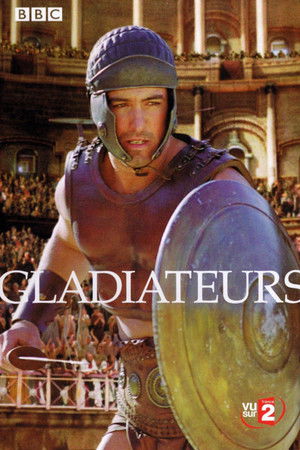
Come back with us to Ancient Greece, 2,500 Years ago to the original Olympic Games. The ancient Games, like our modern Olympics, included champions and cheaters, glory and scandals, bitter rivalries and contests of strength, speed and savage combat. Set in 448 BC when the pounding of horse's hooves and the brutal hand-to-hand combat could be heard and seen by the crowds that filled the Olympic stadium. This one-hour special event follows the glory and corruption of the arc of a single, five-day Olympiad. The competitions include chariot racing, running, jumping, discus, javelin and two man-to-man combat finals-boxing and pankration, a form of extreme fighting in which death was not uncommon. With the help of sports historians and great athletes such as George Chuvalo and Olympic medallists Donovan Bailey and Angela Schneider, viewers travel back to a very different life-in a very different world.
Born into the chaos of the French Revolution, Mathias Loras would come to develop a vision for a state of spirituality in the New World that few dare dream. Brought up in an elegant, bourgeois family he would eventually become a missionary assigned to a remote outpost in the frontier territory of Iowa. There he would sew the seeds of the church to rough miners and farmers, while battling the unending hardships of life on edge of civilization.
On the occasion of his 80th birthday, we look back in pictures at the unusual and flamboyant career of the prodigy from Liverpool.
Tony Curtis, the man who influenced Elvis Presley and James Dean. A sex symbol, a matinee idol, a powerful and magnetic actor, Tony Curtis was the original movie star.
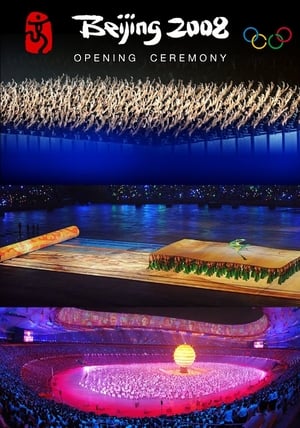
The 2008 Summer Olympics opening ceremony was held at the Beijing National Stadium, also known as the Bird's Nest. It began at 8:00 p.m. China Standard Time (UTC+8) on August 8, 2008, as 8 is considered to be a lucky number in Chinese culture. Featuring more than 15,000 performers, the ceremony lasted over four hours and cost over $100 million USD to produce.
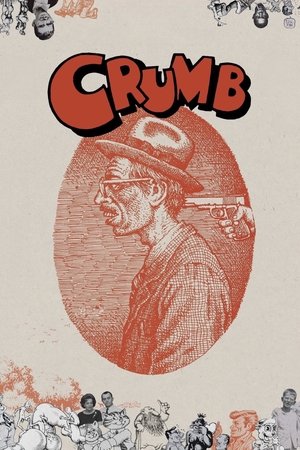
This movie chronicles the life and times of R. Crumb. Robert Crumb is the cartoonist/artist who drew Keep On Truckin', Fritz the Cat, and played a major pioneering role in the genesis of underground comix. Through interviews with his mother, two brothers, wife, ex-wife and ex-girlfriends, as well as selections from his vast quantity of graphic art, we are treated to a darkly comic ride through one man's subconscious mind.
At the 1996 Atlanta Games, the Magnificent Seven became the first American women to ever win gymnastics team gold. Sixteen years later, in London, the Fierce Five joined them in the history books. Relive all the excitement as Gabby Douglas, Aly Raisman, Jordyn Wieber, McKayla Maroney and Kyla Ross take the lead from the first rotation and never look back on their way to gold. Follow Gabby Douglas on her way to the podium to make it three straight American gold medals in the individual all-around competition. Every individual event final is featured on this DVD, including Aly Raisman's historic gold-medal performance in the floor exercise, her bronze on the balance beam, as well as McKayla Maroney's silver medal in the vault.
This documentary about legendary French chanteuse Edith Piaf begins at her birth (which was helped along by a cop), travels through her turbulent romantic history, follows her to the pinnacle of her success and reports on her death. Piaf was queen of the torch song, her plaintive wail speaking volumes of the tragedy and joy she'd faced. Hers wasn't exactly, in the words of one of her famous songs, "La Vie En Rose," but it was quite a life.
How the 1948 Olympic Games came into being, as the world struggled to cope in the aftermath of the Second World War, and the Games were held for the first time in 12 years. With Britain in the midst of widespread poverty and rationing, hosting the event seemed unlikely, but existing venues were renovated despite a low budget and little time to play with, and the British people pulled together to make the Games a success.
In the 1980s, Nastassja Kinski was an international star and a true sex symbol. In just a few films, she established herself as one of the most talented and promising actresses of her generation. Discovered at age 13 by Wim Wenders and revealed by Roman Polanski at 18, she built her career around the images that directors projected onto her, seeking to break the stereotypes that people wanted to box her into. However, after a 10-year career, Nastassja Kinski disappeared, leaving us with a mystery.
A story of the LGBT struggle from the 1960s to the present, after the Stonewall riot sparked the militant action in New York that was to spread around the world. From San Francisco to Paris via Amsterdam, between the first Gay Pride, the election of Harvey Milk, the French "decriminalization", the AIDS epidemic and the first homosexual marriages, these few decades of struggle are embodied through numerous testimonies of actors and actresses of this revolution rainbow.
The legendary treasure of Tutankhamun, which contains over 5,000 objects, including 2,000 pieces of jewelry and goldsmith's work, was discovered in 1922 by the British archaeologist Howard Carter. Now the pharaoh's treasure reveals a new secret: hidden traces of a mysterious pharaohess. In addition, a British archaeologist is said to have stolen some of the grave goods...
Biography on the famous writer-director, Billy Wilder.
Ozzy Osbourne faces his identity and mortality after his world stops. Dealing with health issues and Parkinson's, he questions if he can perform again while music remains his life's cornerstone.
French writer Jean-Claude Carrière (1931-2021) traces the life and work of Spanish painter Francisco de Goya (1746-1828).
Archival film maestro Göran Hugo Olsson has assembled—from a vast catalogue of footage in the vaults of Sweden’s national television service SVT—accounts of the Israeli-Palestinian conflict as witnessed and represented by Swedish journalists. Stories of the beginning of the Israeli state interwoven with the Palestinian struggle for independence. News coverage with Yasser Arafat and interviews with Israeli foreign minister Abba Eban during a visit to Sweden unseen since first broadcast. From the tenth anniversary of Israel’s founding to the First Intifada, perspectives and encounters with statesmen, civilians, revolutionaries, and intellectuals tell the story from myriad angles of an evolving media landscape, revivifying a history of the ongoing conflict.
A gripping documentary about the courage and determination of a young English stockbroker who saved the lives of 669 children. Between March 13 and August 2, 1939, Nicholas Winton organized 8 transports to take children from Prague to new homes in Great Britain, and kept quiet about it until his wife discovered a scrapbook documenting his unique mission in 1988. Winton was a successful 29-year-old stockbroker in London who "had an intuition" about the fate of the Jews when he visited Prague in 1939. He quietly but decisively got down to the business of saving lives. We learn how only two countries, Sweden and Britain, answered his call to harbor the young refugees; how documents had to be forged and how once foster parents signed for the children on delivery, that was the last he saw of them.