Welcomed by two Italian friends who have settled in Japan, Blady and Roversi arrive in Tokyo. Patrizio gets the chance to ski inside an "indoor ski dome," take part in a karaoke session, and spend an evening at a sadomasochistic club. Meanwhile, Syusy visits a Zen temple and an elementary school, before meeting the inventor of the Tamagotchi...
Patrizio and Syusy’s adventure continues as they explore the city of Kyoto and the Japanese Zen philosophy.
The final leg of Patrizio and Syusy’s journey through Japan, where they explore the cities of Osaka and Hiroshima, delve into the culture of geishas and samurai, and enjoy some delicious sushi.
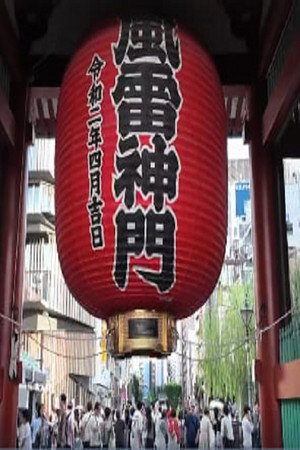
A journey through contemporary Japan: a nation suspended between tradition and innovation, grappling with profound social, economic, and demographic shifts. From high-tech metropolises to the most secluded corners, Marco Clementi’s reportage explores a complex society, touching upon phenomena such as hikikomori (social withdrawal), an aging population, and emerging forms of loneliness. Spanning Tokyo, Kyoto, Osaka, and Nara, the narrative traverses both the world of robotics and ancient, time-honored traditions: from the art of kintsugi and the crafting of katana swords to the rituals of sumo wrestlers and the culture of the geisha. The account also delves into gastronomy, craftsmanship, and daily life, encompassing everything from sushi and sake to exquisite kimonos.
Documentary featuring Dr. Fink (keyboards), Susan Rogers (sound engineer), Steve Purcell (editor), Leroy Bennett (stage and lighting design), Gert de Bruijn & Michiel Hoogeboezom (sound engineers), Dave Rusan (Rusan Guitarworks) and Edgar Kruize (author of ‘Prince: The Dutch Experience’).
Most people think that World War II started on September 1st, 1939, when the Germans invaded Poland, and then spread to Asia on September 7th 1941, after the Japanese attacked Pearl Harbor. However, World War II actually started ten years earlier, when Manchuria was invaded by a now-forgotten Japanese general: Kanji Ishiwara. This is the little known truth about the most famous war in history.
Marcus Garvey: Look for me in the Whirlwind uses a wealth of archival film, photographs and documents to uncover the story of this Jamaican immigrant, who between 1916 and 1921 built the largest black mass movement in world history. It explores Garvey’s dramatic successes and failures before his fall into obscurity. Among the film’s most powerful sequences are interviews with people who were part of the Garvey movement decades ago. These interviews communicate the appeal of Garvey’s revolutionary ideas to a generation of African Americans, and reveal how he invested hundreds and thousands of black men and women with a newfound sense of pride.
A film about the life of the Roma people, the most closed ethnic group today. Influential thieves' clans, barons and drug lords, early marriages, artists on stage and in life, anti-Roma riots in Europe and Roma riots in Russia - the whole truth about the problems, sorrows and joys of the modern Roma community.
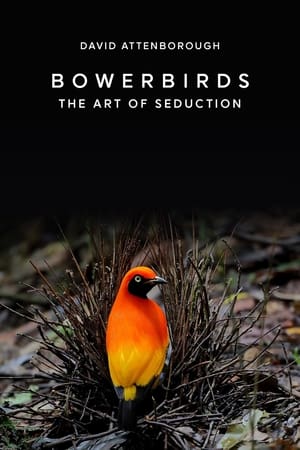
The male bowerbirds of Australia and New Guinea display an incredible artistic talent -- and all in the name of love! Collecting 'jewels' they set them in specially-built showcases and some even paint the walls with mashed berries. If all this isn't enough to woo potential mates, they also perform a most bizarre stiff-winged dance. But displaying darker emotions associated with sex, such as envy and jealousy, males will sometimes destroy a rival's construction and steal his jewels.
Is there a connection between animal sounds and the music that humans create? Using a surprising and wide variety of evidence from the animal kingdom -- including the humpback whale, the lyre bird, the siamang gibbon and the great reed warbler -- Sir David Attenborough seeks to prove that the origions of music lie in territory, emotion and sex.
Special TG3 by Giorgio Chiecchi of 8 May 1980.
Bakou, 1920 : quand l’Internationale communiste invitait les peuples colonisés du monde entier en Azerbaïdjan
The story of three people retiring from work in the textile mills of Nelson in Lancashire, their families, and their changed way of life and community.
In 1910, Arrigo Frusta and the operator Giovanni B. Vitrotti took the camera up to the 4000 meters high of the Mont Blanc chain to make three short mountaineering films for the Società Anonima Ambrosio. They were the first in Italy to realize documentaries in the high mountains. In this first film, a party of three mountaineers, including Arrigo Frusta make a mountaineering traverse in the Mont Blanc Massif. The purpose of the film is not to show a concret ascent, but to show the beauty and spectacularity of the high mountain landscapes and the the fascination of those who venture to conquer the high peaks. The other two films of the series are: 'Da Courmayeur al Colle del Gigante' and 'Sulle dentate scintillanti'.
Documentary about the Belgian surrealist artist who died in 1967.
Vienna is surrounded by nature – a green belt encloses the city and contributes to the high quality of life in Austria’s capital.However, it is not just these woods the citizens of Vienna can name their own. The city of Vienna also owns the protected source areas in the Hochschwab and Schneeberg-Rax region, where Vienna’s Water comes from.2005 marks the 100th anniversary of the creation of the green belt around Vienna. On that occasion Georg Riha and his team have produced this ORF-UNIVERSUM documentary, commissioned by the City of Vienna.Sit back and enjoy the rough beauty of the Hochschwab region, the majestic peak of Schneeberg, picturesque autumn sceneries, the „classic“ Vienna Woods and the fascinating winter wonderland of the Danube Wetland Forest National Park.
In the year 2001 the acclaimed violin vituoso Julian Rachlin founded a festival of chamber music in Dubrovnik. He introduced a new and successful concept of gathering some of the most famous world musicians and letting them play the music that they personally enjoy. In 2008 the austrian filmmaker Georg Riha joined the festival to cinematically accompany the star violinist: Masterly, as usual, and in the highest aesthetics as well as in technical quality, he succeeded with this film composition to tape the magical atmosphere of the city at the sea and the relaxed artistic work of Julian Rachlin and his friends. See the Rector’s Palace, rehearsals, the sea, conversations, sun and wind, concerts and a lot of fun.
In no other province have as many cultural buildings been erected in the last two decades as in Lower Austria.The documentary Building for the Arts presents a few outstanding examples of this cultural development.Starting with St. Pölten’s cultural district and the “Art Mile” in Krems, we show how contemporary architecture has uniformly established itself - from the revitalization of historic sites, including monasteries and castles, to the construction of sensational new buildings. The viewer will be led through the broad spectrum of exceptional building culture in Lower Austria, a culture which provides art, theater and music with the plentiful and spectacular stages it deserves.
As all the world knows, Vienna is a city on the Danube.Day after day, the metropolis and its inhabitants consume roughly 370,000 cubic metres of water – hardly unusual for a city as big.It may come as a surprise that not one drop of this water is abstracted from the Danube.All water drunk, used for cooking, showering and flushing or drawn from wells, all water that enters sewers and treatment plants originates in the Alps.Crystal-clear drinking water adds glamour and brilliance to the city.How this valuable resource travels to Vienna, changing itself and the city in the process before ending up in the river, is the stuff of stories. This is the story of Vienna’s water.
In this found-footage remake of James Benning’s found-footage film of the same name, editor Jane Evelyn comments on the evolving digital landscape through a collage of historical records, home movies, ASMR videos, song covers, animations, and film clips.