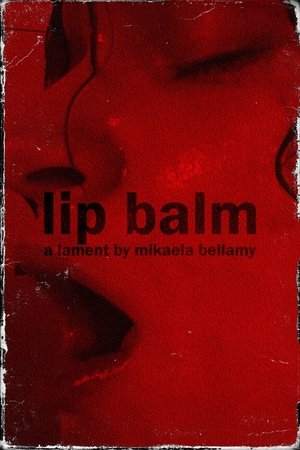
Women enter and exit a science fiction author's life over the course of a few years after the author loses the woman he considers his one true love.
The comic mishaps and adventures of a young boy named Ralph, trying to convince his parents, teachers, and Santa that a Red Ryder B.B. gun really is the perfect Christmas gift for the 1940s.
A 2002 live performance of Mikel Rouse's Dennis Cleveland, a multimedia opera set entirely on a television talk show in the late 20th century.
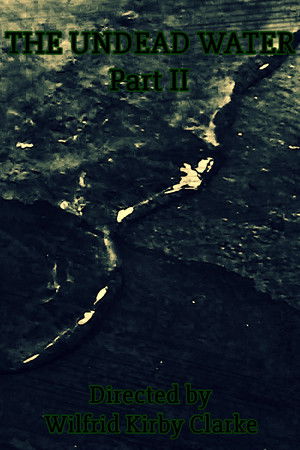
Experimental movie, where a man comes home and experiences LSD. His kaleidoscopic visions follow, with readings inspired by the Tibethan Book of the Dead.
Enfants de Daech, les damnés de la guerre
Barnaby and Maxine Pierce, an embattled married couple in Connecticut, are on the verge of divorce. Their son is getting married in California and they decide to drive across the country to attend. Along the way, as they visit family and friends, they reflect on their tattered relationship and the events that transpired to create the estrangement.
Yadira, a creative young Cuban girl, struggles packing on her final day home. Embarking on an immigration journey alone, her suitcase feels too small to carry everything her heart holds.
This is a story about a man who believes that he has two “selves” - external and internal. That is, an organism is a certain conglomerate of cells, each of which is a separate individual. This hybrid creature has a certain common personal “I” that uses the entire organism, and is the organism itself, which has its own will. According to the character, one can communicate with him, which is what he is trying to do. He wants to reach him and comes up with different ways of communication: injecting substances under the skin or intravenously, tattooing texts on the body, swallowing objects. The answer would come in the form of a rash or other physical manifestation that had to be interpreted. As a result, communication is carried out and the second “I” agrees to die.
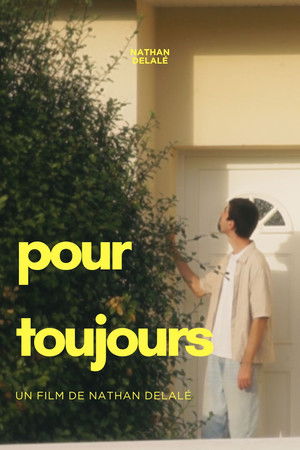
When Jean drives by the house of his childhood years later, he faces the dramas of his family’s past.
A scientist in a surrealist society kidnaps children to steal their dreams, hoping that they slow his aging process.
A young orphan wakes up after wetting his bedsheet. Living under the supervision of nuns, he'll spend night and day attempting to amend his "mistake".
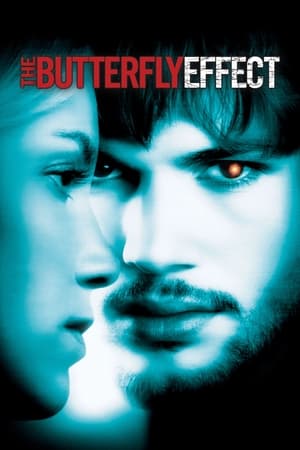
A young man struggles to access sublimated childhood memories. He finds a technique that allows him to travel back into the past, to occupy his childhood body and change history. However, he soon finds that every change he makes has unexpected consequences.
A collection of five short films tackling the military industrial complex, the rise of fascism, political polarization and various issues in modern society.
To commemorate the passing of their beloved father, four brothers very much at odds congregate for one final week at their summer house in the Magdalen Islands. As they bid their final goodbyes, the four brothers revisit their past joys and hardships as each one of them struggles to give meaning to their very different lives.
Travel films have an established format with their own conventions, history and baggage. It is a medium that has all too often sought to control, define and dictate perceptions of ”other” places. Comprised of footage shot while travelling on group excursions across Russia in 2019, An Uncountable Number of Threads is an attempt to draw out the ethical restrictions of a travelogue, while questioning how (and why) to make one. At times there is an awkward tourist-gaze, aware of its outsider position. But as a self-reflexive work that considers its own creation, it ultimately unravels, as the artist rationalises themselves out of a particular way of working, inviting the viewer into their uncertainty.
Recovering from a heart attack, a workaholic editor recalls the simple days of his youth. Robertson adds an emotional center to this messy, flashback-filled 'heavy' dramatic piece. Plenty of co-star talent.
A 16mm experimental film that analogizes the discourse of racialized criminality and the carceral apparatus, which surveils and delimits the movements of Black people’s bodies, with the conventions and mechanics of the cinematic apparatus which regulates and standardizes the movement of the filmstrip through the motion picture camera and projector. Equal parts essay and visual art, Speaking in Tongues embodies the cinematic Black ecstatic that simultaneously re-envisions resistance defiance in the face of anti-Black state violence and subverts the conventions of cinematic realism through a manually and optically altered collage of original documentary and archival film sourced from Hollywood movies, television commercials, educational films, cartoons, European art cinema and miscellaneous ephemera.
X-ray images were invented in 1895, the same year in which the Lumière brothers presented their respective invention in what today is considered to be the first cinema screening. Thus, both cinema and radiography fall within the scopic regime inaugurated by modernity. The use of X-rays on two sculptures from the Bilbao Fine Arts Museum generates images that reveal certain elements of them that would otherwise be invisible to our eyes. These images, despite being generally created for technical or scientific purposes, seem to produce a certain form of 'photogénie': they lend the radiographed objects a new appearance that lies somewhere between the material and the ethereal, endowing them with a vaporous and spectral quality. It is not by chance that physics and phantasmagoria share the term 'spectrum' in their vocabulary.
A reflection on love and identity with detours towards magical realism, which winks at the oral tradition of coastal populations and introduces us to Leo, a young 21-year-old sailor who revisits his relationship with Jimena after his great-aunt reminds him of his favorite myth from when he was a child: the story of the nereids.