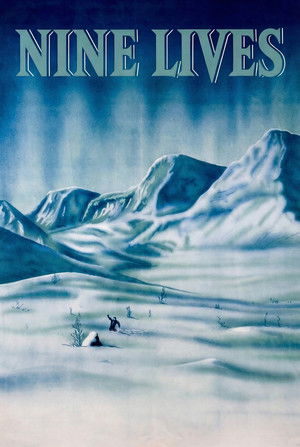
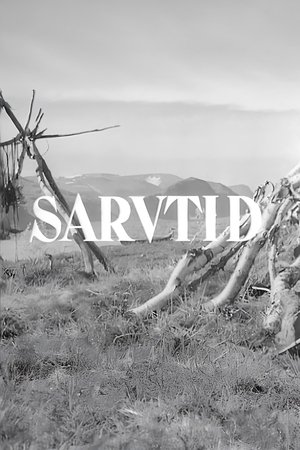
The movie takes place during World War II and depicts the true story of Jan Baalsruds amazing escape from the German army from the coast of Northern Norway and across the border to the neutral country Sweden.
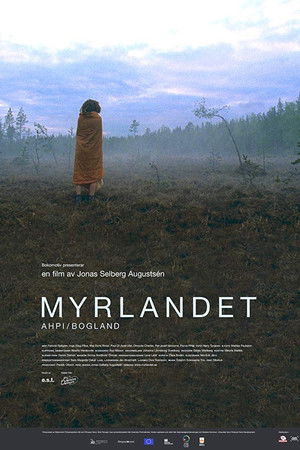
Why are gooseberries so much more valuable than deer trees and why did the Sami men lay naked on the marsh in the past? How do you respond to a mock execution and what is actually panic attack? Ella and Moa are two girls with more questions than answers and during a summer night they approach a little cautiously of their Sami origin. —Jonas Selberg Augustsén
Dr. Crumb, a scientist who never liked to leave home, invented a way to see the world without leaving your lab. Using a stone extraterrestrial Crumb, his assistant and his two nephews Zoox: the beautiful Amanda and irreverent Guto, will make his house float through the world in search of adventures. The problem is that this stone has other special powers, can hypnotize people and open portals to other dimensions. To fall into the hands of a greedy French archaeologist, the stone eventually releasing four monsters creatures and muddled fleeing to different corners of the world. Now these monsters need to be captured before they destroy the main monuments of the world and the stone must be recovered before the archaeologist hypnotize them all.
Lapland, Sweden. The Sami Arvi wants to marry young Aino but her mother will not give her permission as long as Arvi does not have a herd of 400 reindeer. The only one who has reindeer to sell is the rich Oula, but he wants to marry Aino as well. The only way for Arvi to get the animals is buying them from Norway - but this is highly illegal.
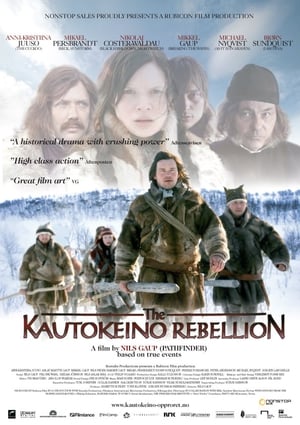
The Sámi people (also spelled Sami or Saami) are an indigenous Finno-Ugric people inhabiting Sápmi, which today encompasses large northern parts of Norway and Sweden, northern parts of Finland, and the Kola Peninsula within the Murmansk Oblast of Russia. A single daily newspaper is published in Northern Sámi, Ávvir. There are short daily news bulletins in Northern Sámi on national TV in Norway, Sweden and Finland. There is a Sámi theatre, Beaivvas, in Kautokeino on the Norwegian side, as well as in Kiruna on the Swedish side. The largest Sami Publishing house is Davvi Girji. In this program "Topic: Sámi" filmmaker Nils Gaup presents his latest production, "The Kautokeino Rebellion" (2008), author Ann-Helen Laestadius talks about to seek ones roots, and Isabel Pavval share how it is being a young Sámi and youth culture.
The everyday life of the Karesuando Sámi at the Sarek Mountains, near their camp, the sita. Traditionally, the Sámi have pursued a variety of livelihoods, including coastal fishing, fur trapping, and sheep herding. Their best-known means of livelihood is semi-nomadic reindeer herding. The genetic makeup of Sámi people has been extensively studied for as long as such research has been in existence. Ethnographic photography of the Sámi began with the invention of the camera in the 19th century. This continued on into the 1920s and 1930s, when Sámi , against their will, were photographed naked and anatomically measured by scientists,.
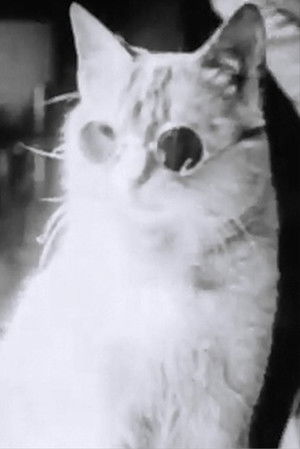
Funny story about short sighted cats being given glasses.
About being young and Sámi, focusing on the topics, pride, love and conflict. Isabel moves from her mother in Stockholm to her father in Jokkmokk. Amoc rap in Aanaarsämikielâ, Inari Sámi, a language used among 400 people. Alette doesn't feel like a Sámi. Thomas is a drummer, snowboards and dream of being an actor. The skier Tonje always fall in love with a Sámi. Why? Jon is adopted from Colombia and joiks a lot. Thomas and Petra plan for their future. Ritva loves horseback riding. Amanda likes theatre and politics. Vocalist Sandra wonders how much Sámi she is. Johan is brought up in a religious home where music is prohibited. Aslak love scooters. Marit was bullied in school because she is a Sámi.
Justin and his uncle find X-ray goggles misplaced by an evil crime ring. The criminals kidnap Justin, his uncle, and the Feds and Justin has to rescue everybody.
An essay film about how it may feel to grow up as a young Sami in Sweden, with poetry written by Ella-Maria Nutti and graphics by Irma Bergdahl. The partying of a typical teenager together with the labels put on you that wont go away, the questions which are thrown on you as knives in the back. A tribute to our ancestors who fought for our rights and a declaration of love to the young Samis who continues to fight
A 10-year-old boy is thrust into the tumultuous world of puberty when he gets a new pair of eyeglasses.
After finding a seemingly ordinary pair of glasses, Michael decides to show them off - unaware of the darkness that could soon consume him and endanger his friends.
When Mats' grandfather dies the family opens a wooden box containing evidence of the family's Sami heritage. Why has this been kept secret? Why did they stop being Sami? And why do they know so little about their history?
A woman returns home to her father and childhood home, after being gone for over 20 years. Her purpose for the visit is to deliver the message that her fathers former wife has passed away.
Religious and cultural reawakening inspires rebellion in a 19th century Norwegian village.
A lone drifter stumbles upon a unique pair of sunglasses that reveal aliens are systematically gaining control of the Earth by masquerading as humans and lulling the public into submission.
The documentary Rap and Reindeer follows the life of 18-year-old Sámi rapper Mihkku Laiti, who lives in the northernmost corner of Sámiland. The film is a coming-of-age story, following Mihku on his journey towards a career as a musician and rise to stardom in the midst of varying expectations. He’s charmed the crowd on Talent Suomi and proudly wears the Sámi clothing he has styled himself. He raps and yoiks in harmony, designs his own brand on his computer but also masters the skill of laborious reindeer herding. Above all, he sees his own unique roots and the Sámi language as his greatest strength. The future makes him wonder: to follow his father’s footsteps or to reach for his dreams.
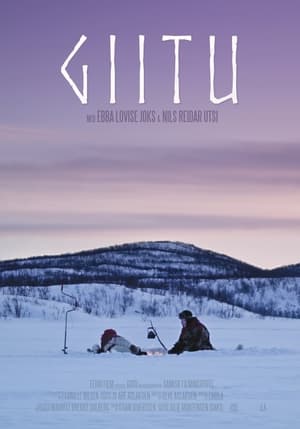
Sami dance students Birit and Katja Haarla dance through the villages and lost woods of Sápmi all the way to where the important decisions are made. The polarity of Nature and the Western way of life is filtered through sharp humour.
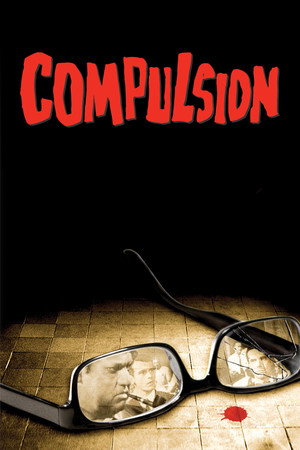
Two close friends' plan to execute a flawless crime is crushed when one of them inadvertently leaves his glasses at the crime scene.
Iida, an elderly Sámi woman, who has abandoned her roots under the pressure of forced Finnishization, is conflicted between selling her old homestead and hiding her cultural heritage from her niece, as the rural way of life she has suppressed begins to creep back in.