Developments in the Canadian forestry industry during the 1970s are shown being carried out both as lab experiments and in the field to protect and conserve the country's vast forests. These include turning a Newfoundland bog into woodland, fostering British Columbia seedlings that withstand mechanical planting, inoculating Ontario elms against the bark beetle, devising ways of controlling fire, and more.
Werner Herzog's documentary film about the "Grizzly Man" Timothy Treadwell and what the thirteen summers in a National Park in Alaska were like in one man's attempt to protect the grizzly bears. The film is full of unique images and a look into the spirit of a man who sacrificed himself for nature.
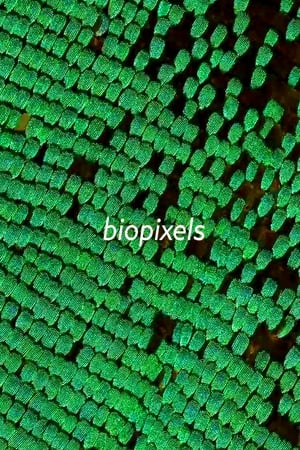
Shot at two cutting-edge research labs which specialize in the evolution of butterflies and moths, BIopixels is an animated short film exploring the world of evolutionary biology on the microscopic scale. The images - rendered from collections containing over 50,000 specimens - were take by microscopists over three years to create the animated shorts Nanoscapes and Biopixels. Both the animation and the score play with concepts of pattern, time, density and other means of development common to biological evolution.
For more than 30 years, scientist, broadcaster and environmental activist David Suzuki has served as the host of The Nature of Things, a CBC program that is seen in more than forty nations. Suzuki Speaks is an hour of thought-provoking television. David Suzuki delivers one of the most powerful messages of his career - the relationship between the four "sacred" elements and their influence on the "interconnectedness" we feel individually, with each other and with the rest of the world.
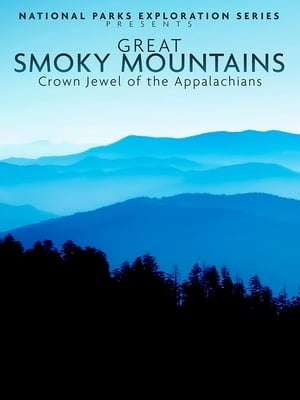
Great Smoky Mountain National Park covers over 500,000 acres of breath-taking beauty: lush highland meadows, glorious waterfalls, pristine mountain streams, and one of the most biologically diverse ecosystems in the world.
Anita Chitaya has a gift: she can help bring abundant food from dead soil, she can make men fight for gender equality, and maybe she can end child hunger in her village. Now, to save her home in Malawi from extreme weather, she faces her greatest challenge: persuading Americans that climate change is real. Traveling from Malawi to California to the White House, she meets climate sceptics and despairing farmers. Her journey takes her across all the divisions that shape the USA: from the rural-urban divide, to schisms of race, class and gender, and to the American exceptionalism that remains a part of the culture. It will take all her skill and experience to help Americans recognise, and free themselves from, a logic that is already destroying the Earth.
Hosted by Keeley Hawes, star of the popular television series The Durrells, this documentary reveals the adventures of the eccentric Durrell family once they left Corfu, Greece.
Filmed over 23 years, Rise of the Warrior Apes tells the epic story of an extraordinary troop of chimpanzees in Ngogo, Uganda – featuring four mighty warriors who rule through moral ambiguity, questionable politics, strategic alliances and destroyed trust.
This documentary focuses on the Green Gabon program in the Congo Basin and explores rainforest conservation efforts as a way to stem climate change.
Mountain Gorilla takes us to a remote range of volcanic mountains in Africa, described by those who have been there as ""one of the most beautiful places in the world"", and home to the few hundred remaining mountain gorillas. In spending a day with a gorilla family in the mountain forest, audiences will be captivated by these intelligent and curious animals, as they eat, sleep, play and interact with each other. Although gorillas have been much-maligned in our popular culture, viewers will finally ""meet the legend"" face to face, and learn about their uncertain future.
In Missing 411: The UFO Connection, David Paulides continues the story of people who vanish in the wild without a trace. In his third documentary, David reveals the first evidence documenting a link between UFOs and missing people.
The transcript discusses the prevalent drug culture, particularly marijuana use, among youth in national parks. It highlights the perception that marijuana is less harmful than harder drugs and reflects on the challenges park rangers face in enforcing drug laws. While acknowledging the existence of drug trafficking, the narrative emphasizes that marijuana use is often seen as a minor issue compared to alcohol consumption or harder narcotics. The conversation also touches on the need for a more nuanced understanding of drug use, suggesting that current laws may be overly stringent and not reflective of societal attitudes.
Over 90 percent of the available lands in the Greater Chaco region of the Southwest have already been leased for oil and gas extraction. Witness the Indigenous-led work to protect the remaining lands that are untouched by oil and gas, as well as the health and well-being of communities surrounded by these extractive industries.
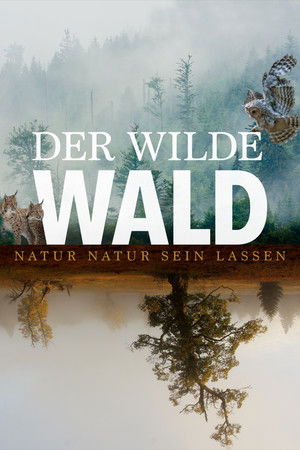
70 years after the last wolves roamed the national park, a total of 41 wolves were reintroduced between 1995 and 1997. A globally unique experiment that had many supporters, but also resolute opponents, then as now.
This short film focuses on how conservationists endeavor to protect wildlife.
Jane Goodall-Reasons For hope is an uplifting journey with stories to inspire people to make a difference in the world. Three different conservation stories illustrate Jane's pillars of hope.
What does it mean to lose a colour? Losing Blue is a cinematic poem about losing the otherworldly blues of ancient mountain lakes, now fading due to climate change. With stunning cinematography, this short doc immerses the viewer in the magnificence of these rare lakes, pulling us in to stand on their rocky shores, witness their power and understand what their loss would mean—both for ourselves and for the Earth.
This documentary captures the beauty of Maine's Acadia National Park, as well as detailing the history of the location which happens to be the first area east of the Mississippi River to be declared a National Park.
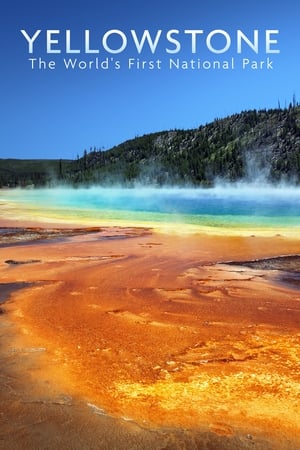
On March 1, 1872 President Ulysses S. Grant signed into existence the world's first national park, Yellowstone National Park. The 2.2 million acres of wilderness is the only complete mid-latitude ecosystem left on the planet.
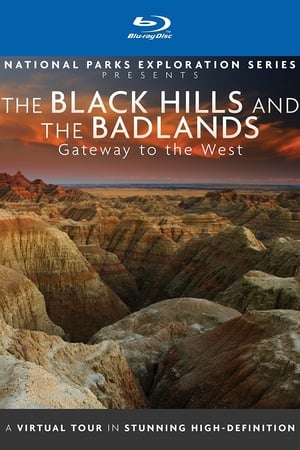
Nestled in the heart of America s great plains are contrasting tastes of a sacred land that beckons the visitor to enter the nation's mysterious and glorious West. A land of soaring pinnacles, deep canyons, hidden caves, national monuments and countless wildlife sanctuaries. It is also the place of the inglorious death of famed gunslinger, Wild Bill Hickok and the most sacred spot for the Lakota Sioux. Enjoy breathtaking aerial views and amazing tours with park rangers. Discover the wonder and awe of these contrasting spectacles of the West, one soaring, rich in forest and water and other barren and deeply eroded, which are brought to together by a shared geology and history. They are the Gateway to the Great American West. They are the Black Hills and the Badlands.