Chronicles April 2014 Ukrainian protests against Russian occupation intentions in Donetsk, Ukraine.
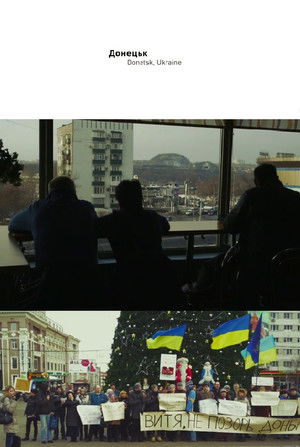
Chronicles a Ukrainian march in Donetsk, that happened in solidarity with Euromaidan in November 2013, despite threats from pro-Russian forces.
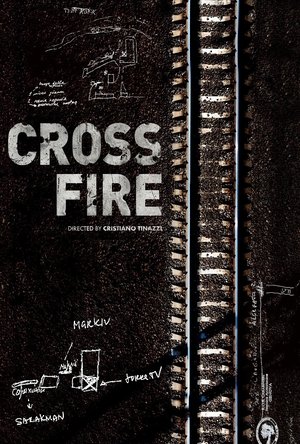
Crossfire is the investigative documentary by an international team of journalists about two reporters, Andrea Rocchelli and Andrej Mironov, killed in eastern Ukraine, and the Ukrainian soldier Vitaly Markiv accused of their murder
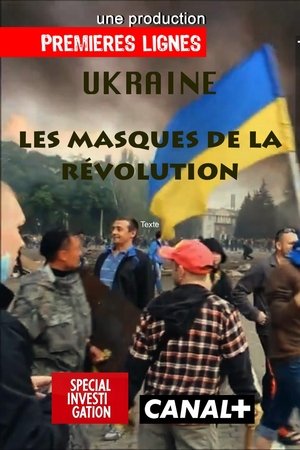
In February 2014, paramilitary groups fought against the police in the streets of Kyev and ousted President Yanukovych. They settled a new government. According to western media, they were the revolution heroes. But they are actually heavily armed extreme-right militias. The Right Sector, Azov or Svoboda created parallel irregular forces that easily go out of control. In Odessa, in May 2014, they were responsible for burning 45 people to death without facing any charges. How come western democracies haven’t raised their voice in protest? Most likely because these Ukrainian nationalist militias actually played a significant role in a much larger scale war. The Ukrainian revolution was strongly supported by the US diplomacy. In the new cold war that opposes Russia to the USA, Ukraine is a decisive pawn. A tactical pawn to contain Putin’s ambitions. “Ukraine, masks of the revolution” by Paul Moreira sheds light on this blind corner.
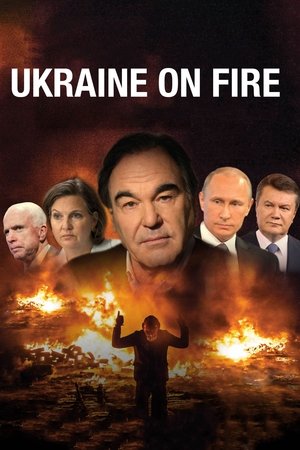
Ukraine. Across its eastern border is Russia and to its west-Europe. For centuries, it has been at the center of a tug-of-war between powers seeking to control its rich lands and access to the Black Sea. 2014's Maidan Massacre triggered a bloody uprising that ousted president Viktor Yanukovych and painted Russia as the perpetrator by Western media. But was it? "Ukraine on Fire" by Igor Lopatonok provides a historical perspective for the deep divisions in the region which lead to the 2004 Orange Revolution, 2014 uprisings, and the violent overthrow of democratically elected Yanukovych.
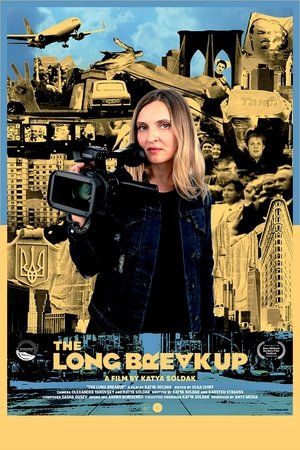
Ukrainian journalist Katya Soldak, currently living in New York City and working for Forbes magazine, chronicles Ukraine's history: its strong ties to Russia for centuries; how it broke away from the USSR and began to walk alone; the Orange Revolution, the Maidan Revolution, the Crimea annexation, the Donbass War; all through the eyes of her family and friends settled in Kharkiv, a large Ukrainian city located just eighteen miles from the Russian border.
The film collects the memories of five different people about the events on the Maidan. Among them are the stories of the mother of Roman Huryk, who was killed on Maidan, Radio Liberty correspondent Andrii Dubchak, artist Oleksii Sai, human rights activist Sasha Matviichuk, and Andrii Prepodobnyi, a former police officer and now the regional representative of the Ukrainian Parliament Commissioner for Human Rights in Rivne region. ‘MAIDAN. Six letters of our freedom’ consists of six chapters. Each letter of the word ‘Maidan’ is the title of a chapter, which symbolises a topic related to the events of the Revolution of Dignity, the memories shared by the film's characters.
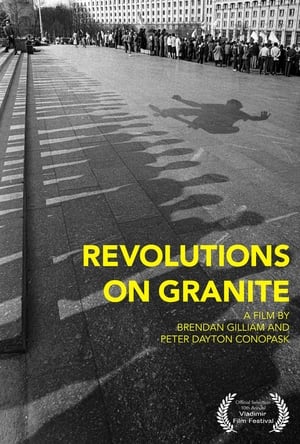
Revolutions on Granite is a documentary about Maidan Nezahlezhonsti, a public square in the heart of Kyiv, Ukraine — famously home to a number of political revolutions, but also the birthplace of a cultural revolution after the fall of the Iron Curtain. The film takes a look at the burgeoning skateboard scene at Maidan in the early 1990’s, and investigates the idea of a counterculture being created in a place of strict uniformity.
A metaphor of the Flood in our times, The Flood is the rain of violence that washes over us. Noah´s Ark is the train that runs through Mexico toward the United States and migrants are the species attempting to save their lives. For the directors, cinema moves people not just by condemnation, but by confronting and fostering emotions which lead to new, constructive ideas. This documentary became a cinematographic diary for their first viewer, their three-year-old daughter, Zafirah.
Johan van der Keuken went against the grain in 1980: from Amsterdam (on April 30 with the coronation riots and squatting actions) via Paris, southern France and Italy to Egypt. He made his personal travelogue in three parts for VPRO television. Later, he fused the three parts into one long movie.
Punishment in Capitals is a live CD and DVD-release by the band Napalm Death. It was recorded at the London ULU on 12 April 2002 at an animal rights benefit gig.
With the use of montage sequences, voiced over with the observations of the children, van der Keuken was able to use artistic expression to portray the sightless children’s unique perspective of the world.
Documentary that portraits the social issues faced by the community of Chacahua in Oaxaca, through a group of kids who dream of surf.
Porto 2001 project, made in the prison of Paços de Ferreira. Nuno Cardoso, the play director, develops this work with the prisoners during the time period of one year. Documentation of the process: conversations with the prisoners in the context of the process of artistic creation and the theater project. Interviews and testimonials with various people who cross their experiences, their view of life and their life behind bars, with the development of the play.
Life and legacy of Agostinho da Silva. Traversing the biographical journey, the life and work of the Luso-Brazilian philosopher, this work has testimonies from himself and various personalities of Portugal and Brazil that allow us to unravel his personality and multifaceted thought.
Today it is the city of Montreal, but 3 centuries ago the tiny band of missionary founders called it Ville-Marie, the holy city of Mary. This film goes back to its beginning and those who felt called to plant an oasis of Christianity in the North American wilderness. In an imaginative, at times almost surrealistic, way the film recalls the highborn company from France, and shows what survives of Ville-Marie in the Montreal of today.
In China more people are on death row than the rest of the world combined. The children of the convicts are often left alone, stigmatized and living in the streets. Grandma Zhang, as the kids call her, is a former prison guard who has founded an orphanage in Nanzhao.
Short film about General Eduardo Cano, who after the military coup became director of the Chilean central bank in the Pinochet dictatorship. Cano withdraws money from the circulation, which were described by opposition parties with resistance piles. From the Chile cycle by Walter Heynowski and Gerhard Scheumann.
An in-depth and provocative look at the 1992 Los Angeles riots exploring the roots of civil unrest in California and the relationship between African Americans and LAPD.
Discover the brilliant dancers and choreographers who are shaping the art of movement around the world in this documentary.