Speed - the obsession of the modern world - is determining what people should eat and how. Traditional foods are at risk of disappearing forever. An international eco-gastronomic movement known as Slow Food champions the protection of traditional culture, the environment and biodiversity while encouraging regional production, food education and pleasure. For these passionate and dedicated food lovers, sustainability, community and lifestyle are as important as seasonality, quality and taste.
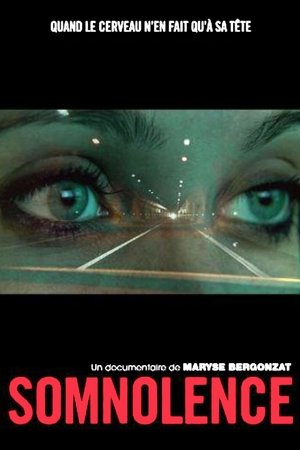
Close and daily, sometimes comical but often tragic, sleepiness takes an important place in our lives. Suddenly falling asleep, sometimes with their eyes still open, affects more than 10% of the population. The leading cause of fatal accidents on motorways, drowsiness is also prevalent in the world of work. A silent, irrepressible phenomenon... a flaw in a system of performance, speed, reactivity. So what is happening in our brain? Can we control the conditions of sleepiness? By working on sleep and especially on the functioning of wakefulness, researchers are trying to understand the biological and environmental mechanisms that keep humans at the peak of their abilities. After a clear technological improvement, it turns out that man, having become an expert and process controller, finds it very difficult to focus his attention over time.
214 million years ago a gigantic meteorite broke up and impacted Earth. 65 million years ago, the impact that killed the dinosaurs occurred where the country of Belize stands today. 200 thousand years ago early humans were walking and died when they were hit by a 40 meter wide meteorite hit South Africa creating a 1.4 km wide crater. This meteorite fragment, the largest ever found hit Namibia 80 000 years ago and more recently a major impact occurred in Toungouska, Russia in 1908. Every year 10 000 tons of meteoritic matter fall onto Earth in much smaller but not necessarily less influential pieces. This film will explore how the impact of these meteorites big and small through the ages have changed our world and what they brought from outer space with them that may have been the seed of life itself on Earth.
In the year 1957 the cold war expands to space. The Soviet-Union sends Sputnik as the first manmade object into earth-orbit. 3 years later Yuri Gagarin enters space as the first man in space. The so called "Space Race" seems to be decided. But in 1961 President Kennedy promised to send American Astronauts to the Moon. The Apollo Project was born. A space ship had to be built that is strong enough to escape earth's gravitation, land on the moon and bring the crew safely back to earth. Motion Designer Christian worked with his brother and Composer Wolfgang for 18 months on this shortfilm. The foundation were thousands original NASA photographies, taken from the Astronauts during the Apollo Missions, which were released in September 2015. It is an animated collage using different techniques to bring the stills to life.
Archival material from the original NASA film footage – much of it seen for the first time – plus interviews with the surviving astronauts, including Jim Lovell, Dave Scott, John Young, Gene Cernan, Mike Collins, Buzz Aldrin, Alan Bean, Edgar Mitchell, Charlie Duke and Harrison Schmitt.
Did Mars ever have life on it? To answer this question, Europe and Russia have launched a unique and ambitious 2-stage project: ExoMars 2016-2018. This documentary is a thrilling look behind the scenes of a magnificent human and scientific adventure. We will uncover the most fascinating aspects of this mission and the search for signs of life on Mars.
Comets pose one of the greatest threats to life on Earth - a threat that can only be countered if we find out more about them. In 2005, in an audacious bid to do just that, NASA scientists launched a space probe to collide with a comet in the emptiness of deep space. This film follows the amazing story of mission Deep Impact, from its inception through to the final nail-biting moments when the probe and comet Tempel 1 met head-on.
An epic journey around Mars — built from real satellite and rover data — revealing the red planet as you’ve never seen it before.
William Shatner presents a light-hearted look at how the "Star Trek" TV series have influenced and inspired today's technologies, including: cell phones, medical imaging, computers and software, SETI, MP3 players and iPods, virtual reality, and spaceship propulsion.
Destination astéroïdes
Top Gear presenter James May presents this informative program that examines the historic moon missions. Traveling to America, May meets three of the men who walked on the surface of the moon, learning how it felt and how the now antiquated technology was used to achieve such an historic feat.
The film features amazing scenes of places never before seen gathered by key space missions that culminated with groundbreaking discoveries in 2015. It features a spectacular flight though the great cliffs on comet 67P, a close look at the fascinating bright "lights" on Ceres, and the first ever close ups of dwarf binary planet Pluto/Charon and its moons.
Artificial intelligence is taking on different roles in the filmmaking space. The questions we must ask ourselves are: what are the pros and cons of this advancement? How can we work with it, and what power do we have as human beings in the face of this technology?
The 1960s was an extraordinary time for the United States. Unburdened by post-war reparations, Americans were preoccupied with other developments like NASA, the game-changing space programme that put Neil Armstrong on the moon. Yet it was astronauts like Eugene Cernan who paved the uneven, perilous path to lunar exploration. A test pilot who lived to court danger, he was recruited along with 14 other men in a secretive process that saw them become the closest of friends and adversaries. In this intensely competitive environment, Cernan was one of only three men who was sent twice to the moon, with his second trip also being NASA’s final lunar mission. As he looks back at what he loved and lost during the eight years in Houston, an incomparably eventful life emerges into view. Director Mark Craig crafts a quietly epic biography that combines the rare insight of the surviving former astronauts with archival footage and otherworldly moonscapes.
A scientific expedition travels to an alternative Earth in hope of finding a new home for humanity, which has destroyed its own planet. But is it even possible to escape old patterns?
Gravitation - Urkraft des Universums
In the first decades of the 20th century, when life was being transformed by scientific innovations, researchers made a thrilling new claim: they could tell whether someone was lying by using a machine. Popularly known as the “lie detector,” the device transformed police work, seized headlines and was extolled in movies, TV and comics as an infallible crime-fighting tool. Husbands and wives tested each other’s fidelity. Corporations routinely tested employees’ honesty and government workers were tested for loyalty and “morals.” But the promise of the polygraph turned dark, and the lie detector too often became an apparatus of fear and intimidation. Written and directed by Rob Rapley and executive produced by Cameo George, The Lie Detector is a tale of good intentions, twisted morals and unintended consequences.
European Space Agency astronaut Alexander Gerst and his NASA colleague Reid Wiseman are launched into space from the Baikonur Cosmodrome in Kazakhstan. Gerst and Wiseman spend six months in humanity's outpost in space and film many of their activities.
In a studio setting, Stephen Hawking, Arthur C. Clarke and Carl Sagan (who joins them via satellite) discuss the Big Bang theory, God, our existence as well as the possibility of extraterrestrial life.
Twelve men who belong to one of the world's most exclusive fraternities -- people who've walked on the surface of the moon -- are paid homage in this documentary. Using newsreel footage, rare NASA photographs, and digitally animated re-creations, Magnificent Desolation: Walking on the Moon examines the Apollo missions between 1969 and 1972 which put astronauts on the moon.