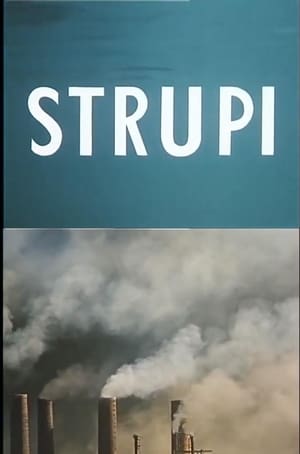
In this documentary, scientists reveal their findings on the influence of solar storms on animal behavior and human transport infrastructure. The documentary explains why solar storms pose a threat to humanity: In extreme cases, they can damage satellites, slow down air traffic and paralyze high-voltage and telecommunications networks.
In southern Germany, winter can still be admired in all its glory every year. With its white coat of snow and icicles and myriads of small crystals that look like geometric works of art. In the valleys and on the slopes the snow is still so thick every year that the alpine huts are snowed in up to the windows. Cows and dairymen are safe in their farms at lower altitudes. But not the wild creatures of the mountains! They need strategies to survive the cold season and to defy snow masses, cold and ice. And some seem to do it so easily that they even raise their young in the middle of winter. But how do animals, plants and fungi cope with the annually recurring ice age, which from our perspective is a time of need? The many adaptations in nature prove that winter is an integral part of the natural cycle of the year and the living environment of species. They are adapted to cold and frost. That is why the animals and plants at the edge of the Alps suffer particularly from climate change!
A place of biological superlatives with a flora and fauna that have only just begun to be researched: Lord Howe Island, between Australia and New Zealand. This is the first documentary on what may be the most isolated nature reserve on the planet.
In September 2022, Bengaluru made national news when the IT hub region of Bellandur faced major flooding resulting in a nightmare for all its residents. The idea of the film is to explore the two main factors contributing to this - the area’s topography and the rapid urbanization interfering with the natural water network - using visuals of a sprawling, developing metropolis contrasted with that of the chaos and breakdown of essential services that happened during the floods.
Short documentary about eels
The white chalk cliffs of Rügen are among the most impressive natural monuments on earth, which the painter Casper David Friedrich immortalized for posterity as early as the 19th century. Germany's largest island with its seaside resorts from the Gründerzeit, its smaller side islands and peninsulas that give it its shape, its lagoon-like Bodden waters, the dense beech forests, the yellow rapeseed fields and the meadows, the shady tree avenues and the white sandy beaches is not only a magnet for tourists, but also a unique natural paradise in the middle of the Baltic Sea, a habitat for the rare white-tailed eagle, fallow deer, raccoon dogs and badgers as well as a resting place for huge swarms of migratory birds such as geese and cranes that can be heard trumpeting from afar. In this nature documentary, the unique landscapes and the diversity of the animal world of Rügen are captured with beautiful pictures during the changing of the seasons.
Journey alongside a young tigress raising her cubs in the fabled forests of India.
Where there are humans, are also ravens and crows. No animal knows us better.
Standing almost alone in the great Southern Ocean, South Georgia island plays host to some of the largest concentrations of animals anywhere on Earth during the spring and summer months. This is the story of these vast animal cities, and of the order that lies beneath their seeming chaos.
The film shows the daily life of indigenous village Piyulaga, home of Waurá tribe --an ethnicity of 560 people who live at Xingu Park in Mato Grosso, Brazil. It also reveals how the indigenous community keeps its traditional culture while incorporating habits and technologies from the “white”.
From the scorching sand dunes of Namibia, to the tropical Tasmanian rainforest, to the bitter waters of the Baltic Sea, this film visits the most extraordinary ecosystems and the creatures that inhabit them. We also learn how human activity has forced species into extinction and reflect on the importance of preserving diverse environments. Discover how nature has developed new methods of survival over millions of years, and learn how modern society uses these solutions in our everyday lives, through manufacturing medicines, new technologies and designs. Whilst celebrating the wonders of our natural world, this film also shares an important message on the impact of human activity on our ecosystems, encouraging us to reflect on the importance of preserving diverse and rich environments
A tactile exploration of the inherent duality of violence and sensuality in nature.
The video companionship to Carole Jackson's best -selling book on make-up.
Hidden deep within the Pony Pasture Rapids Park of Richmond, Virginia there lives a creature whose ancestors span back a half a billion years. This short film explores the life history of an ancient species, Fairy Shrimp, that survive in harsh habitats here and around the world.
More beautiful than butterflies, more spectacular fliers than hummingbirds, and with intriguing behavior as complex as mammals or birds. They’ve been flying around for hundreds of millions of years, crossing paths with dinosaurs before we mammals were even a twinkle in the eye of evolution.
Dr Michael Mosley explores the bizarre and fascinating world of parasites by turning his body into a living laboratory and deliberately infesting himself with them.
Sundance-and-Emmy-Award-winning filmmaker Judy Irving (with her first film since the widely acclaimed and loved “The Wild Parrots of Telegraph Hill”) follows a wayward California brown pelican from her “arrest” on the Golden Gate Bridge into care at a wildlife rehabilitation facility, and from there explores pelicans’ nesting grounds, Pacific coast migration, and survival challenges of these ancient birds, sometimes referred to as the flying dinosaurs. The film is about wildness, and asks the following questions: how close can we get to a wild animal without taming or harming it? Why do we need wildness in our lives, and how can we protect it? PELICAN DREAMS, stars “Gigi” (for Golden Gate) and Morro (a backyard pelican with an injured wing).
my birthday wish
In Pica Pica Kristersson invites the viewer to be enthralled for an hour and a half by the vicissitudes of magpie life. Opposing himself to the current nature films that tend to highly compress time in order to end up with a concentrated sequence of action-elements Kristersson leaves rhythm and tempo almost completely up to the magpies themselves. With great integrity he filmed the daily, social and emotional life of a species of birds that has many points of contact with human life. Thus, the movie offers us the oppurtunity to view our own everyday existence through other eyes, from a world right above our heads, but yet so far away.
Ashes